What Size Drain Pipe for Toilet: A Practical Guide
Learn the right toilet drain pipe size, how to measure flange and rough-in, and upgrade options for reliable flushing and fewer clogs. Drain Guide Analysis, 2026.


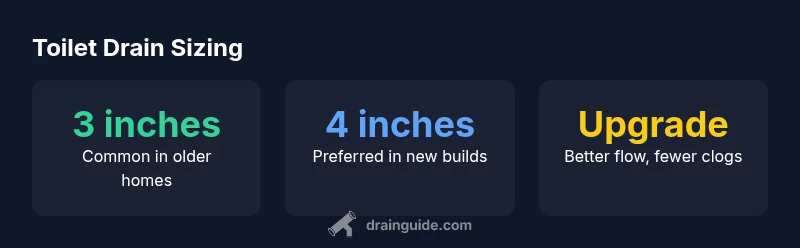
To answer what size drain pipe for toilet, the standard waste line is typically 3 inches in older homes and 4 inches in newer installations. In practice, 4-inch lines are preferred for new builds and high-flow toilets. Always verify local codes and the toilet flange size before replacement for your installation project.
What size drain pipe for toilet: standard sizes and codes
Toilet drainage sizing is more than guessing a number. It is about ensuring a reliable flush, preventing backups, and meeting local plumbing codes. The drain pipe size influences flow capacity, venting requirements, and compatibility with the toilet flange. In the United States, the most common waste-line diameters are 3 inches for older homes and 4 inches for many newer installations. While 3 inches may be adequate for single-toilet setups, 4 inches is widely recommended for new construction or homes with higher water use. According to Drain Guide, analyzing typical installations shows that upgrading to a 4-inch waste line can reduce clogging frequency in high-usage households. In any case, always verify your flange size and rough-in measurements before purchasing a toilet or making changes for your installation project.
3-inch vs 4-inch: where they apply
The choice between a 3-inch and a 4-inch drain pipe is usually determined by the fixture count, existing plumbing, and local code. A 3-inch line is common in older homes or where a single toilet was installed in a simple rough-in. It can handle typical household use, but it may be more prone to clogs if the toilet produces high flush volumes or if mineral buildup reduces capacity. A 4-inch line, while less common in retrofits, provides more headroom for flow and can accommodate multiple fixtures on the same waste line. In new builds, plumbing codes often specify a 4-inch main waste line, especially when the stack must serve more than one bathroom. Drain Guide Analysis, 2026, indicates that the shift toward 4-inch systems correlates with higher toilet flush efficiency and longer-term reliability. When ambiguity arises, consult a licensed plumber to confirm the right size for your home.
How to measure your current drain size
You can determine your current drain size without removing wall coverings by following these steps:
- Turn off the water to the toilet and flush to empty the tank.
- Remove the toilet to access the flange and waste pipe opening.
- Measure the inside diameter of the waste pipe or the flange opening with a ruler or caliper. If you measure an inside diameter of about 3 inches, you likely have a 3-inch line; around 4 inches indicates a 4-inch line.
- Check the rough-in measurement from the finished wall to the center of the waste opening; typical rough-ins are 12, 14, or 15 inches, which can influence flange and toilet compatibility.
- If in doubt, bring a sample of the flange or a photo to a plumbing supplier or a licensed pro. Drain Guide notes that accurate measurement avoids mismatches and costly redo work.
How pipe size affects performance: flow, clogs, and venting
Pipe size directly influences how wastewater flows from the toilet to the sewer line. A larger 4-inch line provides more cross-sectional area, which helps prevent backups during peak flush cycles or after multiple fixtures discharge. It also tends to handle mineral buildup and root intrusion more gracefully. However, larger pipes require compatible fittings and proper venting to prevent siphoning and trap seal loss. Proper slope—at least 1/4 inch per foot—ensures gravity-driven flow remains steady. If your system is undersized, you may experience frequent clogs, slow drainage, or sewer gas concerns. Drain Guide’s guidance emphasizes that when replacing an old toilet, upgrading to a 4-inch line is often the simplest way to boost long-term reliability, provided the rest of the system can accommodate it.
Upgrading or replacing: choosing the right size for new installs
For new construction, a 4-inch main waste line is standard in many jurisdictions, particularly if multiple fixtures drain into the same stack. A 4-inch line reduces the risk of clogs during high-flow events and supports higher-efficiency toilets. When upgrading, ensure all components—flange, wax ring, bolts, and fittings—are compatible with the chosen size. If space or existing plumbing restricts you to a 3-inch line, you can still optimize performance by using a high-efficiency toilet and ensuring clean, smooth pipe interiors and proper venting. Always check local codes before deciding on a size, and consider consulting a licensed plumber for a precise plan. Drain Guide’s analysis supports prioritizing 4 inches in new builds for durable performance.
DIY safety and installation best practices
Working with toilet drains involves potential exposure to wastewater and hazardous materials. Always shut off the water supply, wear gloves, and use eye protection. Avoid chemical drain cleaners; they can damage pipes and seals and may not resolve underlying clogs. When disassembling a toilet, support the unit and have a helper nearby. Use proper wax rings, gaskets, and stainless bolts to prevent leaks. If you’re unsure about flange height or alignment, pause the project and consult a professional. A careful, code-compliant installation is the foundation of long-term reliability.
Practical maintenance tips to prevent clogs across sizes
Regardless of pipe size, proactive maintenance helps minimize clogs. Regularly flush with hot water and a mild cleaning solution, avoid flushing non-flushable items, and inspect the trap and vent for obstructions. In homes with hard water, mineral buildup can reduce pipe diameter over time, so consider periodic preventive cleaning by a professional. Drain Guide recommends annual checks of flange connections and a simple, non-acid cleaner routine to keep lines clear. A well-maintained system reduces emergency calls and extends the life of the toilet installation.
Common sizes and notes for toilet drain piping
| Pipe Size | Notes | Typical Use |
|---|---|---|
| 3 inches | Common in older homes; standard toilet connection | Standard toilets |
| 4 inches | Preferred for new installs; reduces clog risk | High-flow toilets or multi-fixture homes |
| 3-4 inch transition | Requires proper fittings | Retrofit scenarios |
Got Questions?
What is the standard toilet drain pipe size?
Most toilets connect to a 3-inch or 4-inch waste line, with 4 inches common in new construction for better flow and fewer clogs.
Most toilets use 3- or 4-inch waste lines; 4 inches is common in new homes for better flow.
Can I upgrade from 3 inches to 4 inches without replacing the toilet?
In many cases, yes, with proper fittings and professional help, though compatibility with existing plumbing must be confirmed.
Yes, often you can upgrade with the right fittings and a pro.
Does pipe size affect toilet performance?
Yes. Larger pipes reduce clog risk and improve flow, especially in high-use homes or multi-fixture layouts.
Yes, pipe size influences flow and clog risk.
How do I measure my toilet drain size?
Measure the interior diameter of the waste pipe or the toilet flange opening, and confirm the rough-in distance from the wall.
Measure the pipe opening and rough-in distance.
Are there codes requiring 4-inch lines?
Code requirements vary by location; many areas specify 3- or 4-inch lines depending on the setup and number of fixtures.
Code depends on your area; check local regulations.
Should I consult a plumber for sizing?
If you’re unsure about measurements or compatibility, a licensed plumber can confirm the correct size and install.
If unsure, consult a licensed plumber.
What maintenance prevents clogs?
Regular cleaning, avoid flushing non-flushables, and monitor venting. Preventive checks reduce emergency calls.
Keep drains clean and avoid flushing inappropriate items.
Is upgrading to 4 inches expensive?
Costs vary by home, but upgrading can be cost-effective over time due to reduced clogs and fewer repairs.
Costs vary, but may pay off over time.
“Choosing the right drain pipe size isn't just about fitting the toilet; it's about reliable performance over years and avoiding future headaches.”
The Essentials
- Check local building codes before replacing or upgrading.
- Prefer 4-inch waste lines for new installations when possible.
- Measure flange and rough-in accurately to avoid fit issues.
- Upgrade may reduce clogs and backups in busy homes.