How is drain tile installed
A practical, step-by-step guide for homeowners on installing drain tile around foundations, including planning, trenching, fabric, gravel, piping, backfill, and testing.


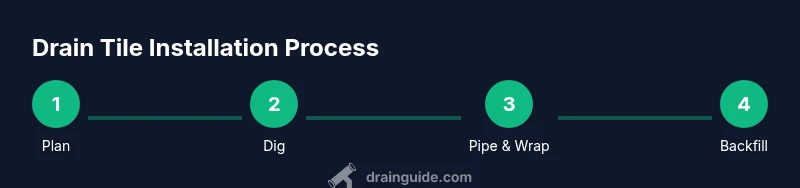
According to Drain Guide, drain tile installation starts with planning the layout and slope, digging a sloped trench, laying perforated tile wrapped in filter fabric, and connecting it to a drain outlet or sump. Then you backfill with coarse gravel and soil, test flow, and restore the surface. Critical requirements are correct depth, consistent slope, clean fabric, and proper backfill to avoid clogging.
What drain tile is and when to install
Drain tile, also called a perforated foundation drain, is a perforated pipe wrapped in fabric that collects groundwater around a foundation and channels it away from the slab. Installing drain tile is a common remedy for wet basements, bowed walls, or crawlspaces with high moisture. You typically install it when you’re excavating a new footing, performing a foundation repair, or upgrading an old drainage system that backs up after heavy rain.
Plan installation before you start. Inspect your site: grade around the foundation should direct water away, downspouts should discharge away from walls, and there should be a clear outlet to receive the drained water. Check local code, homeowners association rules, and permit requirements. Drain tile is most effective when combined with a gravel or stone base, a geotextile fabric wrap to keep sediment out of the pipe, and a reliable outlet to daylight or a sump basin. The Drain Guide team emphasizes that the system must be sized to handle the volume of water you expect during a major storm and that the trench should extend beyond the problem area to prevent re-wetting the soil behind the footing. In short, drain tile installation is a proactive measure for long-term foundation moisture management.
Planning and site assessment
Before you dig, map out the problem area and plan a trench that directs groundwater away from the foundation. Measure the length along the lowest side of the foundation wall, determine the slope needed for gravity drainage, and identify an outlet location (sump pit, daylight outlet, or storm sewer). Consider soil type: clay soils hold water longer and may require a wider gravel base; sandy soils drain faster but can lose fines if the fabric isn’t well seated. Local codes may dictate minimum trench depth and required materials. Drain tile works best when you pair it with proper grading around the home and downstream discharge. Drain Guide recommends documenting existing drainage patterns and creating a simple sketch showing trench lines, outlet points, and any interfering utilities to avoid costly mistakes later.
Tile types and layout options
Drain tile comes in perforated HDPE pipes with different perforation patterns, and sometimes in corrugated shapes that resist crushing. For most residential installations, a 4- to 6-inch perforated tile paired with a geotextile wrap works well. The tile layout can be linear along the foundation wall or looped in a U- or L-shape that surrounds the problem zone, depending on soil and grading. A well-designed layout often uses a combination of straight runs and short turns to minimize dead zones where water can collect. Some homeowners opt for integrated sump connections, while others rely on gravity to daylight outlets. In all cases, ensure the perforations are not obstructed by fabric and that there is adequate space for gravel to surround the tile evenly, which improves flow and reduces clogging. Drain Guide recommends cross-checking layout against the site’s seasonal water patterns for best results.
Trench design: depth, slope, and drainage calculations
The trench should be deep enough to accommodate the tile, fabric wrap, and a substantial gravel base, yet shallow enough to remain practical. Typical practice is to maintain a gradual slope (often around 0.5% to 1% depending on climate) so water flows toward the outlet without pooling. Depth varies with frost line and local codes; in colder climates, frost protection and deeper basements drive deeper trenches. A consistent slope matters more than perfect depth, so use a string line and laser level to keep the trench bed uniform. Avoid sharp turns that create stagnant pockets; instead, space out turns to minimize resistance. Drain tiles perform best when the surrounding soil remains compact but not crammed. Drain Guide highlights that a uniform trench cross-section promotes even water collection and reduces the risk of perched water near the footing.
Base layer, fabric wrap, and backfill materials
Base the trench with a clean, angular gravel (3/4 inch to 1 inch) to create a robust drainage prism that water can easily travel through. Wrap the tile with a geotextile fabric to prevent sediment intrusion; extend fabric to cover the sides of the trench and flare out around the tile to seal the gravel channel from fine soils. Place the perforated tile on a bed of gravel, ensuring its perforations have space to collect water from the surrounding soil. After the tile is in place, cover it with additional gravel to form a consistent envelope around the pipe, then fold the fabric over the top to keep sediment out. The goal is a free-draining zone that won’t clog from silt or clay. Drain Guide notes that fabric selection is critical—poor wrapping leads to rapid decline in performance, especially in clay-heavy soils.
Placing drain tile and perforated pipe
Lay the drain tile along the trench with perforations facing the soil to collect groundwater. Connect sections with appropriate couplers and ensure the outlet side aligns with your planned drainage path. Back-to-back runs should be level and well-supported to prevent sagging that can block flow. If you’re tying into a sump or a gravity outlet, verify that the connection is watertight and accessible for maintenance. Keep sand and silt out of the pipe during installation by handling the fabric and gravel carefully and limiting exposure of the pipe ends. A clean, straight run reduces resistance and improves long-term performance, according to Drain Guide.
Backfill, grading, and compaction around the foundation
Backfilling should begin with a coarse gravel envelope to protect the tile and then transition to topsoil. Do not pile soil directly over the trench without enabling drainage; instead, bring the surface back to grade gradually. Use a light touch when compacting to prevent damage to the pipe or fabric; over-compaction can crush the gravel pack and hinder drainage. Create a gentle slope away from the foundation to encourage surface runoff rather than infiltration that can collect near the footing. Restore any disturbed landscaping and ensure downspouts discharge away from the walls. Drain Guide emphasizes that the final grade should promote surface drainage as well as subsurface relief to keep foundations dry over time.
Testing the system and finishing touches
Once backfill is complete, run water into the drainage system to verify flow through the outlet. Look for any signs of leakage, misalignment, or standing water near the trench. If the area is prone to freezing, monitor for frost heave or hydraulic pressure that could affect the system’s performance. Document the trench path and outlet location for future maintenance and seasonal checks. Finally, replace or restore any surface materials (pavers, grass, mulch) to blend with the landscape while keeping the trench accessible for inspection. Drain Guide recommends annual checks after heavy rains to confirm the system remains clear and functional.
Common mistakes and troubleshooting
Common mistakes include using insufficient depth, skipping the fabric wrap, omitting a gravel base, or failing to maintain a consistent slope. Poor backfill quality and compacting too aggressively can choke the gravel matrix and reduce drainage efficiency. If water appears near the foundation after installation, inspect for gaps in the fabric wrap, sediment intrusion, or blockages at the outlet. In clay soils, extra care with fabric and a larger gravel envelope reduces clogging. When in doubt, consult local guidelines or a drainage professional to ensure the tile system is designed for your site conditions. Drain Guide advises homeowners to plan for the long term—properly installed drain tile should improve moisture control for decades.
Tools & Materials
- Perforated drain tile (HDPE)(Typically 4-6 inch diameter; length matches trench; perforations oriented to collect groundwater)
- Geotextile fabric wrap(Wrap the tile to prevent sediment intrusion; extend beyond trench edges)
- Clean angular gravel (3/4 inch to 1 inch)(Forms the drainage base around the tile)
- Shovel/trenching tool(For digging trenches; ensure width accommodates tile plus fabric)
- Measuring tape and marker(Accurate length and slope checks; mark trench lines)
- Level or laser level(Maintain consistent slope along trench)
- Sump pump or outlet connection kit(Optional, depends on drainage plan)
- Gloves, safety glasses(Personal protective equipment)
- Utility knife or scissors(Trim fabric cleanly around tile ends)
- Tamper or hand rammer(For gentle compaction if needed)
Steps
Estimated time: Estimated total time: 4-8 hours
- 1
Plan the trench layout
Map the foundation with a simple sketch, marking the trench path, outlet, and any utilities to avoid conflicts. Determine the required slope (consistent with local guidance) to ensure gravity flow from high to low points. Clear the work area and prepare tools.
Tip: Use string lines or chalk to keep the trench straight and aligned with the outlet. - 2
Dig the trench
Cut the trench to a width that accommodates the tile, fabric, and gravel envelope. The depth should allow for tile, fabric, and a gravel base while leaving space for backfill. Remove rocks and roots as you go to keep a clean channel.
Tip: Check depth with a level and adjust sides to stay true to the planned slope. - 3
Prepare base and wrap
Spread a layer of gravel as a stable base, then lay the geotextile fabric along the trench walls and bottom. Overlap fabric edges to prevent sediment intrusion. The fabric should extend over the trench edges before tile placement.
Tip: Keep fabric clean—avoid dragging soil across the fabric surface. - 4
Lay drain tile
Place the perforated drain tile along the trench, ensuring a smooth lay with the perforations oriented to collect water from the surrounding soil. Connect tile sections with appropriate couplers and tighten fittings. Do not kink or excessively twist sections.
Tip: Support long runs to prevent sagging that can trap sediment. - 5
Install outlet connections
Attach the tile to your planned outlet (sump or daylight outlet) using approved fittings. Verify the joints are watertight and accessible for maintenance. Ensure the outlet path remains clear of obstructions.
Tip: Seal joints properly to prevent leaks at the connection point. - 6
Backfill and seal
Add gravel around the tile to create a uniform envelope, then fold fabric over the top and backfill with soil to restore grade. Avoid stepping directly on the tile; provide a stable surface for compaction if needed.
Tip: Avoid dense compaction directly over the tile to prevent restricting flow. - 7
Test and finalize
Run water toward the trench to observe flow to the outlet. Check for leaks, shifts, or blockages. Restore surface materials (soil, grass, or pavers) and note maintenance steps for future checks.
Tip: Document outlet location and the trench path for quick future inspections.
Got Questions?
Do I always need drain tile around a foundation?
Drain tile is a common solution for moisture problems around foundations, especially in clay soils or areas with high groundwater. It’s not always required, but it provides reliable subsurface drainage when properly installed.
Drain tile is often recommended for moisture-prone foundations, especially in clay soils. It’s not always mandatory, but it helps keep basements dry when installed correctly.
What is the recommended trench depth for drain tile?
Depth depends on frost line, soil type, and local codes. Typically the trench includes space for tile, fabric, and gravel; frost considerations may push depth deeper in colder climates.
Depth varies by climate and codes; check your local zoning or extension service for exact depths.
Can a homeowner install drain tile themselves?
Yes, a motivated homeowner can install drain tile with careful planning, proper tools, and adherence to safety guidelines. For complex soil conditions or large foundations, consider consulting a drainage professional.
You can do it yourself if you’re comfortable with trenching and installing piping, but for tricky soils or large jobs you might want a pro.
What materials make the most reliable backfill?
A clean gravel base around the tile provides the best drainage, with fabric wrap to prevent sediment entry. Avoid fine soils directly contacting the pipe, which can clog the system over time.
Use clean gravel around the tile and wrap it with fabric to keep fine soils out.
How do I test the drain tile after installation?
Flush the system with water toward the outlet and observe flow. Look for leaks, blockages, or unusual backup. A simple rainfall scenario or temporary water test works well.
Run water into the system and verify that it drains smoothly to the outlet.
What maintenance is required once installed?
Periodically inspect the outlet area, ensure vegetation isn’t encroaching, and check for sediment buildup near the fabric wrap. Clear blockages if reduced drainage is observed.
Check the outlet and trench area after heavy rains and clean any sediment if needed.
Watch Video
The Essentials
- Plan the layout with outlet access in mind
- Maintain a continuous slope for gravity drainage
- Wrap tile in fabric to prevent sediment ingress
- Use a gravel base to promote rapid drainage
- Backfill gradually and test the system after install