How long can you leave Drano in drain: safe usage and tips
Learn how long you can safely leave Drano in a drain, what the label requires, risks to pipes and septic systems, and safer alternatives for persistent clogs. Drain Guide provides a practical, step-by-step approach for DIY homeowners.


Short answer: How long can you leave drano in drain is defined by the product label—never exceed the recommended dwell time. For most household clogs, wait the label’s time (often 15–30 minutes) and flush with cold water. Never leave the chemical unattended or overnight, especially with older pipes or septic systems. If the clog persists after the dwell time, repeat as instructed or call a plumber for guidance.
how long can you leave drano in drain
Drano products are designed for quick relief, but their safety hinges on following the label. According to Drain Guide, the length of contact should never exceed the manufacturer’s guidance. The dwell time is chosen to maximize clog-busting power while protecting your pipes from damage and avoiding hazardous fumes. While many homeowners experience success with a single treatment, the duration you leave the product in the drain is a key factor in preventing corrosion of older pipes and potential leaks. If you’re asking how long you can leave drano in drain, the safe answer is: adhere to the label and never improvise longer contact.
How Drano works and what it does to clogs
Drano uses chemistry to break down common clog culprits—hair, soap scum, grease, and mineral buildup. The active components create heat, soften organic matter, and shift solids into a flowing suspension that can be flushed away with water. This process is powerful but not endless; prolonged exposure increases the risk of pipe damage, especially with older PVC, metal, or corroded lines. Drain Guide emphasizes that the exact mechanism and dwell time depend on the product variant, so always read the package directions for results and safety.
Read and follow label directions
Labels aren’t merely formalities. They define the correct dose, dwell time, and whether the product is suitable for septic systems or plastic versus metal pipes. Always use the recommended amount and do not mix cleaners. Label guidance may differ between gel, liquid, and foam formulas. Drain Guide highlights that failing to follow directions is the leading cause of ineffective treatment and potential pipe harm.
Safety and risk considerations
Chemical drain cleaners are caustic and can cause burns if they contact skin or eyes. Ventilate the area, wear eye protection and gloves, and keep children away. Never mix products with other cleaners, ammonia, or bleach, as dangerous fumes can form. If fumes are present or you experience a strong chemical odor, stop and exit the area immediately. These products can also be corrosive to metal pipes and certain finishes in sinks and tubs.
Drano with septic systems
Most standard drain cleaners are not recommended for septic systems because they can disrupt beneficial bacteria that break down waste. If you rely on a septic tank, consult the product label and your local extension service before use. Drain Guide notes that many septic-safe options exist, but chemical drain cleaners are not always compatible; the safe path is to avoid use when you’re unsure and to consider mechanical clearing methods first.
Alternatives to chemical cleaners when dealing with clogs
For many homeowners, mechanical methods can clear a clog without harsh chemicals. Try a plunger with a good seal, a drain snake, or a Zip-It tool to physically dislodge hair and debris. Hot water (not boiling) can help flush light grease from pipes, but it should be used carefully and never with chemical cleaners in the same drain. Enzymatic cleaners are another option, especially for maintenance, though they work more slowly than caustic cleaners.
Step-by-step safe use (quick roadmap)
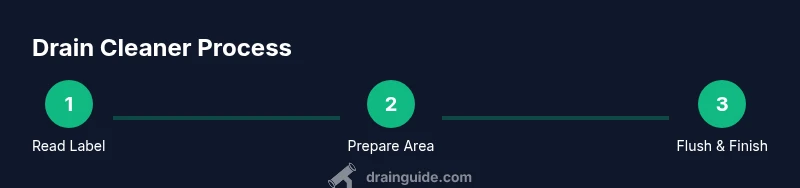
- Read the label and prepare the area. 2) Put on gloves and eye protection; ensure the area is well ventilated. 3) Remove standing water if possible and clear the area around the drain. 4) Measure the product per label and pour slowly into the drain. 5) Wait the labeled dwell time, then flush with cold water. 6) If needed, repeat exactly as instructed. 7) Rinse the area and clean up. 8) If the clog remains after a second treatment, contact a plumber.
Note: Always follow the product’s dwell-time requirements, and never mix products or exceed recommended doses.
Maintenance tips to avoid future clogs
Preventative steps save time and avoid harsh chemicals. Use a drain screen to catch hair and debris, avoid pouring fats or grease down the drain, and run hot water down sinks after washing greasy dishes. Periodic enzyme-based cleaners can help maintain clear pipes without the harsh effects of caustic formulas. Regularly inspect exposed pipes for signs of corrosion or leaks, and address slow drains early before they become full clogs.
Authority sources and further reading
- University extension resources on household plumbing maintenance: https://extension.psu.edu/keeping-plumbing-clean
- EPA guidance on household chemical cleaners and safety: https://www.epa.gov/saferchoice
- CPSC guidelines on consumer product safety and chemical cleaners: https://www.cpsc.gov/
Tools & Materials
- Drano or equivalent drain cleaner(Choose a product appropriate for the drain type (PVC, metal) and follow label directions)
- Disposable gloves (nitrile)(Protect skin during handling and pouring)
- Safety goggles(Eye protection in case of splashes)
- Measuring cup or spoon(For accurate dosing as per label)
- Cold water(For rinsing after dwell time; avoid hot water during chemical treatment)
- Bucket or towels(Contain spills and protect surfaces)
- Plunger(Optional tool for additional clearance after draining)
Steps
Estimated time: 60-90 minutes
- 1
Read the label
Inspect the product label for the recommended dose and dwell time. Confirm compatibility with your drain materials and whether it’s septic-safe. Understand the warnings before proceeding.
Tip: If the label differs from your usual method, trust the label guidance over general tips. - 2
Prepare the area
Ventilate the area by opening a window. Put on gloves and eyewear. Clear the area around the sink or drain to prevent splashes on clothing or counters.
Tip: Keep children and pets away from the work area. - 3
Remove standing water
If there is standing water, remove as much as possible with a cup or sponge to improve contact with the cleaner. This helps the product reach the clog more effectively.
Tip: Do not seal the drain completely; allow venting to minimize fumes. - 4
Apply the product
Pour the measured amount slowly into the drain, aiming for the visible blockage. Do not mix with other cleaners. Avoid splashes and ensure the product enters the drain directly.
Tip: Use the measuring tool provided by the product for accuracy. - 5
Wait the dwell time
Let the cleaner sit for the time specified on the label. Do not run other cleaners through the drain during this period.
Tip: Set a timer; do not guess the time based on past experiences. - 6
Flush with cold water
After the dwell time, flush the drain with cold water in a steady stream. Repeat if the label allows, but avoid overfilling.
Tip: A gentle, continuous flush is more effective than a quick burst. - 7
Assess the clog
If water still backs up, repeat the dwell time once as permitted by the label or try a mechanical method (plunger or snake) before calling a professional.
Tip: Persistent clogs may indicate a larger blockage or a failed chemical treatment. - 8
Rinse and clean
Rinse the area, wipe surfaces, and store the remaining product according to the label. Dispose of any protective gear appropriately.
Tip: Do not mix leftover cleaner with other household chemicals. - 9
Know when to seek help
If recurring clogs occur, or if you notice slow drainage after treatments, consider professional inspection to avoid pipe damage.
Tip: A plumber can diagnose issues like tree roots or buried blockages that DIY cleaners can’t fix.
Got Questions?
Can I leave Drano in the drain overnight?
No. Do not leave Drano or any chemical drain cleaner in the drain overnight. The label provides a dwell time specifically to reduce the risk of pipe damage and chemical exposure. If a clog remains after the recommended dwell time, repeat as directed or seek professional help.
No overnight use. Follow the label's dwell time, and seek help if it remains clogged after treatment.
Is Drano safe for septic systems?
Many Drano products are not recommended for septic systems because they can disrupt beneficial bacteria. Always check the label, and consult your septic service provider if you’re unsure. If septic compatibility isn’t stated, consider non-chemical methods first.
Check the label for septic compatibility; if unsure, avoid chemical cleaners and use mechanical methods first.
What should I do if Drano contacts skin or eyes?
Rinse exposed skin or eyes immediately with plenty of water for several minutes. If irritation persists, seek medical attention. Always wear protective gear when handling Drano to minimize risk.
Rinse with water for several minutes and seek medical help if irritation continues.
Can I use Drano with a garbage disposal?
Some formulas are labeled for use with garbage disposals, while others are not. Read the label carefully to confirm compatibility. If in doubt, avoid running the disposal during treatment and consider mechanical clearing methods.
Only use the product if the label confirms compatibility with garbage disposals.
What happens if the drain isn’t cleared after treatment?
If a single treatment doesn’t clear the clog, do not repeatedly flood the drain with chemical cleaners. Instead, follow the label for any allowed повтор or switch to mechanical methods or call a professional. Repeated chemical treatments can damage pipes.
If it doesn’t clear, stop chemical treatments and try mechanical methods or call a plumber.
Are there safer alternatives to chemical drain cleaners?
Yes. Mechanical methods like plungers and drain snakes, along with enzyme-based cleaners for maintenance, are safer options for many homeowners. Regular hot water flushes (not with chemicals) can also reduce grease buildup. For stubborn clogs, a professional inspection is advised.
Mechanical tools and enzymatic cleaners are safer maintenance options; for stubborn clogs, consult a pro.
Watch Video
The Essentials
- Follow label directions exactly for dwell time.
- Do not leave cleaner in the drain overnight.
- Use mechanical methods or enzymes for safer maintenance.
- Avoid chemical cleaners on septic systems unless labeled safe.
- Seek professional help if clogs persist after treatments.