How Much Does Drain Jetting Cost in 2026?
Discover how much drain jetting costs in 2026, including key factors, typical price ranges, and budgeting tips for homeowners encountering clogs and slow drains.


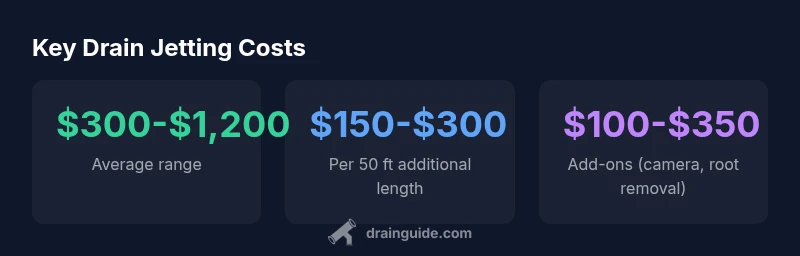
Drain jetting for a standard residential line typically costs about $300 to $1,200, with the exact price driven by access, pipe length, and how stubborn the clog is. A basic jetting job without extras lands toward the lower end; long runs, limited access, or root intrusion push costs higher. According to Drain Guide, planning for a mid-range project is prudent.
How much does drain jetting cost in 2026?
The question most homeowners ask is: how much does drain jetting cost? In practical terms, jetting prices span a broad range, typically from a few hundred dollars to well over a thousand, depending on several real-world factors. The exact figure is driven by the accessibility of the clogged line, the total length that must be treated, and how resilient the blockage is. In general terms, you should expect a baseline price for a straightforward job, with incremental costs added for complexities like root intrusion, multiple cleanouts, or restricted access. How much you pay is a function of labor, equipment wear, and the need for supplementary checks. Drain Guide emphasizes that a clear upfront quote helps prevent sticker shock after the job begins, and the team notes that most homeowners benefit from comparing a few reputable bids before committing.
Why the price matters: jetting uses high-pressure water to scour pipelines and remove buildup, which can save you from repeated plumbing calls if done correctly the first time. The upfront investment can be worthwhile when it eliminates recurring blockages, reduces the risk of sewer backups, and extends pipe life. When budgeting, think about the long-term value rather than the immediate sticker price alone.
Key cost factors that influence drain jetting prices
Several core factors consistently shape what you’ll pay for drain jetting:
- Pipe length and run direction: Longer runs require more time and water, nudging the price upward. Typical charges scale with distance, often in increments for every additional 50 feet of piping.
- Access and location: A line that’s easy to access from a cleanout or basement floor is cheaper to jet than one behind finished walls or under concrete. Tight spaces or difficult maneuvering can require extra labor or specialty equipment.
- Blockage severity and type: Light buildup is cheaper to remove than a stubborn, hardened clog or root intrusion. In some cases, multiple passes are needed, increasing both time and water usage.
- Equipment and service model: Jetting may be billed as a flat service or hourly work. Some providers bundle a camera inspection, disposal fees, or aftercare flushing, while others quote those separately.
- Add-ons and required inspections: A follow-up camera inspection to verify clearance or root-removal services add to the total, often presented as add-on items rather than core jetting.
- Regional labor costs and demand: Prices can drift with regional wage expectations and seasonal demand. Drain Guide Analysis, 2026 notes that some markets consistently run higher than others, especially during peak clog season.
Understanding these drivers helps you evaluate quotes critically and spot common pricing tactics that inflate costs without delivering added value.
How price ranges are typically presented and how to read quotes
Most reputable plumbers present drain jetting costs as a range rather than a single figure. A standard residential jetting job without extras might cluster toward the bottom of the range, while jobs requiring camera checks, root work, or multiple access points land toward the top. When you receive quotes, ask for a breakdown that shows:
- Base jetting fee
- Labor hours or rate
- Cost per additional foot or per pass
- Add-ons (camera inspection, root removal, disposal)
- Any minimum service call or emergency surcharge
- Expected timeline and a brief warranty or follow-up policy
Comparing line-by-line quotes helps ensure you’re comparing apples to apples and avoids hidden charges. Drain Guide’s guidance is to request written estimates that clearly name each service element and any potential contingencies so you can budget confidently.
Flat-rate vs hourly pricing: what to expect
The billing model can significantly affect the final total. Flat-rate pricing covers a predefined scope—jetting plus a basic inspection—in a single price. Hourly pricing increases transparency for variable workloads but can surprise you if the technician spends extra time due to access issues or unexpected complications. For homeowners, flat-rate options are generally easier to budget, while hourly pricing can be advantageous when access is straightforward and the scope is clear. When in doubt, ask for a bundled quote that includes a limit on time or a cap on add-ons to avoid runaway costs.
Drain Guide recommends requesting a written contract that outlines the scope, inclusions, exclusions, and a clear payment schedule to prevent disputes as the job progresses.
Jetting vs. alternatives: cost considerations and value
Jetting is often compared with traditional snaking (drain augers) and enzymatic cleaners. Snaking can be cheaper upfront but may only push the clog or leave mineral deposits behind, potentially leading to recurring problems. Enzymatic cleaners can lower immediate costs but may be ineffective for inorganic blockages like mineral buildup or tree roots. When facing thick scale, tree roots, or heavy grease, jetting can provide thorough cleansing with less risk of pipe damage than aggressive mechanical methods. If you’re deciding between options, weigh not just the upfront cost but the likelihood of preventing future calls. Drain Guide notes that, in many cases, jetting offers better long-term value for stubborn clogs compared to simple snaking.
Common add-ons that affect the final bill
Beyond the jetting itself, several services commonly accompany the project:
- Camera inspection to confirm clearance and identify downstream issues
- Root intrusion removal or partial pipe repair
- Cleanout installation or enlargement for future access
- Disposal fees for wastewater and sludge
- Emergency call-out surcharge for after-hours work
Each add-on changes the total, so pre-approve any recommended extras and request a written estimate that itemizes each component. A thoughtful plan reduces the chance of budget shocks when the work nears completion.
Budgeting and planning: practical tips for homeowners
To manage costs effectively, start with multiple quotes from reputable, licensed plumbers. Ask for a scope-of-work breakdown and a firm price for each line item. Confirm whether a warranty covers the jetting results and any subsequent follow-up if the issue recurs within a specified period. Consider performing regular maintenance checks and scheduling preventive jetting when drains show early signs of slow drainage or frequent backups. If you’re unsure, the Drain Guide team recommends partnering with a service professional who offers transparent pricing, a clear workplan, and a reasonable expectation of outcomes.
Drain Guide’s practical checklist and closing note
- Check local licenses and read customer reviews.
- Get at least three written quotes with line-item detail.
- Ask about camera inspections and post-work verification.
- Confirm warranties and service timelines before booking.
- Plan for preventive maintenance to minimize future costs.
As the Drain Guide team notes, a proactive approach to drain maintenance and a transparent pricing discussion save homeowners time and money in the long run. The Drain Guide team’s verdict is that well-communicated scope and realistic expectations are the keys to fair pricing and effective results.
Factors influencing drain jetting cost
| Factor | Impact on Cost | Notes |
|---|---|---|
| Pipe length | Moderate to high | Longer runs require more time and water |
| Blockage severity | Higher | Severe clogs may require more passes |
| Accessibility | High | Tight spaces or blocked cleanouts increase labor |
| Root intrusion | High | Removal adds labor and risk |
| Additional services | Moderate to high | Camera inspection or jetting upgrade costs |
Got Questions?
What is drain jetting and how does it work?
Drain jetting uses high-pressure water to scour the inside of pipes, removing mineral buildup, grease, and roots. It’s most effective for stubborn clogs and leads to longer-lasting clearance than snaking in many cases. A professional should assess whether jetting is appropriate for your specific piping and blockage type.
Jetting blasts away buildup with high-pressure water to clear pipes, usually a good choice for stubborn clogs when a professional confirms it’s suitable.
What factors affect jetting costs?
Costs depend on access, pipe length, blockage severity, and whether add-ons like camera inspections or root removal are needed. Regional labor rates and demand also influence the final price. Always request a detailed written estimate.
The price is driven by access, length, and how tough the clog is, plus any extra checks or root work.
Is jetting cheaper than snaking?
Jetting is often more expensive upfront but can prevent recurring clogs and reduce future service calls, especially for tough blockages. Snaking might be cheaper initially but may require more frequent follow-ups if it doesn’t fully clear the line.
Jetting costs more upfront but may save you money long-term if it fully clears the clog.
Can I perform jetting myself?
Professional jetting requires specialized equipment and high-pressure water safety protocols. DIY attempts can damage pipes or pose safety risks. Always hire a licensed plumber for jetting.
It’s best to hire a licensed plumber for jetting due to safety and equipment concerns.
How should I budget for jetting?
Start with a price range for your home and add estimated add-ons like camera inspection. Get written quotes from multiple plumbers and consider the long-term value of a thorough cleanup.
Get several quotes with itemized costs to budget accurately.
What maintenance helps prevent future jetting costs?
Regular maintenance, mindful waste disposal, and periodic camera inspections can catch early signs of trouble and reduce the likelihood of costly blockages requiring jetting.
Keep drains clean with regular maintenance to avoid big jetting bills.
“Jetting is one of the most effective ways to clear stubborn clogs while protecting pipe integrity when performed by a trained technician.”
The Essentials
- Define scope clearly to avoid price creep
- Expect a price range: base jetting plus add-ons
- Ask for a line-item, written estimate
- Consider long-term value over upfront cost
- Compare multiple licensed quotes for the best deal