How Much Does Drain Relining Cost in 2026? A Homeowner's Guide
Discover the true cost of drain relining for homes in 2026, including price ranges, factors that affect price, and tips to compare quotes from Drain Guide.


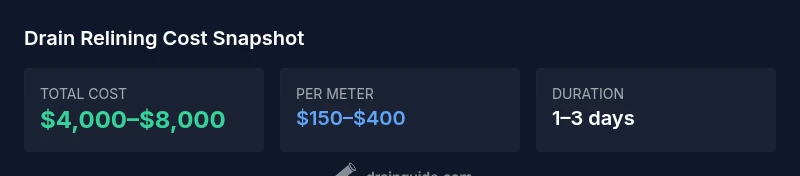
Typically, residential drain relining costs range from about $4,000 to $8,000, with most projects landing around $5,000–$7,000. Costs depend on pipe length, bends, access, and liner material. Drain Guide Analysis, 2026 notes a per-meter rate of roughly $150–$400, plus site-specific fees for restricted access or multiple drains. Final quotes often include preliminary inspection, liner installation, testing, and a warranty.
What drain relining is and why costs vary
Drain relining is a trenchless repair method that installs a resin-impregnated liner inside damaged pipes to seal cracks and restore flow. It avoids extensive digging, reduces disruption, and can be completed in a fraction of the time of traditional excavation. However, the price tag is not fixed; it varies with the pipe length, the number of joints, the access route, and the liner material chosen. The question many homeowners ask is how much does drain relining cost? In many residential projects, the total bill reflects three layers: the base service charges, the material and liner quality, and site-specific conditions. Drain Guide's nationwide review in 2026 found that prices can swing based on how accessible the pipe is and whether the run is a short section or a full-length network. For example, a short, straight run with good access will typically be toward the lower end of the range, whereas a long, winding network routed through walls, slabs, or crawl spaces will push the cost higher. The key takeaway: the pricing is highly context-dependent, and a good quote should spell out what is included, what might trigger extra charges, and the projected lifespan of the liner. In practical terms, if you ask how much drain relining cost, expect a range with a few adjustable levers depending on your home’s specifics.
Key cost components in drain relining
The total price is rarely a mystery when you break it into components. The liner itself is only part of the equation. Major cost drivers include materials (liner grade and resin chemistry), skilled labor (technicians with camera experience and linering expertise), equipment usage (survey cameras, liners, curing devices), site setup (protective measures, ventilation, containment), and access geometry (long runs, multiple bends, or vertical sections). Some contractors bundle the pre-inspection and warranty into the base price; others itemize them separately. If a pipe run is long, features many joints, or requires work under concrete or behind walls, you should expect incremental costs. Regional labor taxes and permit fees can also impact the final figure. Drain Guide emphasizes requesting a transparent, itemized quote that clearly states inclusions and exclusions, so you can compare apples to apples across quotes.
Typical price ranges by project scenario
Pricing is often presented as ranges based on project scope. For a typical residential setup: - Standard relining (short run): $4,000–$6,000. - Full-length relining: $6,000–$10,000. - Complex access (restricted access or multiple bends): $7,000–$12,000. - Post-relining checks and warranty: $1,000–$2,500. These figures reflect common industry ranges and assume standard liner materials and no extraordinary site constraints. Always verify what’s included (final camera survey, pressure tests, and warranties) and what could trigger extra charges (concrete cutting, floor restoration, or temporary closures).
Regional and access considerations that influence price
Prices can vary by geography and site conditions. Urban areas with higher labor costs and restricted spaces tend to push quotes higher, while rural regions may be lower but could incur travel fees. Access plays a critical role; a clean, straight run is cheaper than a long path through walls, under slabs, or through tight crawl spaces. If the job requires permits or specialized safety measures, expect further adjustments. Drain Guide notes that while the per-meter cost provides a baseline, the final price is a function of both the length and the complexity of the access route. Contractors may also price based on the anticipated duration and disruption, which can influence scheduling and incentives.
How to read quotes and compare prices
When evaluating quotes, align scope precisely. Ensure both quotes cover the same liner type and the same post-installation checks. Look for: a clear breakdown of materials, labor, equipment, and site prep; explicit inclusions such as a camera survey and warranty; and a defined project timeline. Ask how the liner’s warranty is enforced and what maintenance is recommended to maximize lifespan. Request a pre-work camera survey to assess pipe condition and confirm whether digging or additional steps could be avoided. A good comparison captures not just the price but the long-term value and risk transfer.
Money-saving tips and financing options
Smart budgeting can help reduce the sticker price. Obtain multiple quotes to benchmark pricing, and ask for bundled services (inspection plus relining). Schedule work during slower seasons if possible and explore financing options or installment plans offered by contractors or lenders. Some installers offer warranty extensions or loyalty discounts for future maintenance. Ensure you understand what is and isn’t included in the quote, and avoid upsells that do not add long-term value. A lower upfront price may come with shorter warranties or hidden costs later.
Common myths and reliability expectations
Myth: relining lasts forever. Reality: liner life depends on pipe condition, liner quality, installation, and usage. A professional installation from a reputable contractor typically yields a durable solution, but extreme pipe conditions or poor prep can reduce longevity. Myth: relining is faster and easier than traditional digging in all cases. In reality, some jobs require careful planning, access solutions, and follow-up testing to guarantee performance. Drain Guide encourages homeowners to balance upfront cost with long-term reliability, and to verify that contractors provide evidence of performance through camera surveys and warranties.
Typical price ranges for common drain relining scenarios (Drain Guide Analysis, 2026)
| Service Type | Typical Cost Range | Notes |
|---|---|---|
| Standard relining (short run) | $4,000–$6,000 | Fixes a single section with one liner |
| Full-length relining | $6,000–$10,000 | Covers longer runs and multiple outlets |
| Complex access (restricted access) | $7,000–$12,000 | Higher labor and safety requirements |
| Post-relining checks & warranty | $1,000–$2,500 | Camera survey and workmanship warranty |
Got Questions?
Is drain relining cheaper than traditional pipe replacement?
Often yes, because trenchless relining avoids heavy excavation and property disruption. However, cost depends on length, access, and complexity. Short runs can be cheaper, while long, intricate networks may approach the price of digging. Always compare quotes that include similar scopes.
Relining can save on digging, but costs vary by length and access.
What factors most influence cost?
Major factors are pipe length, number of bends, accessibility, liner type, and regional labor costs. Rework, concrete cutting, or multiple drains can add to the price. A precise quote depends on a clear scope and pre-inspection results.
Length, bends, access, and liner type drive costs.
How long does drain relining take?
Most residential relining projects take about 1–3 days, depending on pipe length and access. Complex layouts can extend timelines. A pre-work assessment helps set realistic schedules.
Typically 1 to 3 days, longer for complex layouts.
Can I DIY drain relining?
Relining requires specialized equipment and training. DIY attempts risk improper sealing and backups, which can lead to more expensive repairs later. Always hire a licensed professional for proper installation.
No—relining should be done by pros.
What warranties or guarantees come with relining?
Most installers offer a warranty covering liner integrity and workmanship for several years. Read the contract for terms and coverage specifics, including what happens if issues recur.
Ask about liner and workmanship warranties.
How should I compare quotes effectively?
Request scope alignment across quotes, ensure same liner quality, and verify inclusions like inspections and warranties. Compare per-meter rates and any added fees. Check references and review past projects.
Get identical scope quotes and read the fine print.
“Drain relining offers a trenchless, low-disruption solution, but accurate pricing comes from understanding pipe length, access, and liner choice.”
The Essentials
- Get multiple quotes to compare costs.
- Consider long-term savings from trenchless relining.
- Factor in access and pipe length to costs.
- Expect additional charges for complex jobs.
- Review warranties and post-relining checks.