How Often to Drain and Fill Transmission Fluid: A DIY Guide
Meta description: Learn how often to drain and fill your transmission fluid, why intervals vary, signs you need service, and a clear, step-by-step DIY approach with safety tips and professional guidelines.


Definition: A drain-and-fill transmission service replaces old fluid with fresh fluid. The exact interval for how often you should drain and fill depends on your vehicle, transmission type, and driving conditions. Always start by checking the owner's manual or the manufacturer's maintenance schedule, then follow recommended procedures and safety precautions. If in doubt, consult a qualified technician.
What drain-and-fill transmission service is
A drain-and-fill service replaces old transmission fluid with fresh fluid, removing contaminants and helping maintain hydraulic performance. Unlike a complete flush, a drain-and-fill usually drains only a portion of the fluid and refills to a specified level, which makes it gentler on seals and gaskets. According to Drain Guide, this service is a common maintenance option for many automatic transmissions, but not all types are identical; some require removal of a transmission pan, others have internal cooling loops that complicate the process. The choice between a drain-and-fill and a full flush depends on the vehicle design, the transmission type, and the presence of contaminants that a simple drain cannot remove. For the typical household mechanic, understanding the general approach is enough to decide whether DIY maintenance is feasible or if a professional should handle the service.
When you perform a drain-and-fill, you’re not erasing all old fluid in one shot. Instead, you remove a portion and replace it with fresh fluid. This minimizes stress on seals and gaskets while restoring hydraulic performance. Always verify the latest specifications from the vehicle manufacturer and use the fluid type that matches the transmission’s requirements. Remember: maintenance practices can vary across brands and models, so consult your owner’s manual for model-specific steps and limits.
Why maintenance intervals vary by vehicle
There is no single universal interval for drain-and-fill transmission fluid. The frequency is influenced by design choices that differ between automatic transmissions, CVTs, and dual-clutch systems. Driving conditions—such as heavy towing, hot climates, and stop-and-go city traffic—can shorten the fluid’s effective life even if the vehicle supports longer intervals on paper. Fluid quality deteriorates as it ages, and contaminants can accumulate from normal wear and tiny particulates circulating through the system. Because of these variables, many manufacturers publish maintenance schedules that specify a range or approximate time/usage window. As a practical matter, owners should treat the interval as a guideline and use diagnostic signs, not a calendar alone, to decide when to service the transmission. Drain Guide recommends pairing the schedule with periodic fluid color checks and scent cues as part of a broader maintenance plan.
Key factors that influence drain-and-fill intervals
Several factors determine how often you should drain and fill transmission fluid. Transmission type matters: traditional automatics, CVTs, and dual-clutch transmissions each have distinct fluid formulations and service needs. Vehicle age and overall wear influence how quickly seals may degrade, which in turn affects how often a drain-and-fill can be performed without risking leaks or hydraulic inefficiency. Driving style also plays a role: frequent heavy acceleration, long highway trips at high temperatures, or frequent towing increases thermal stress and contaminant generation. Finally, fluid condition is a practical barometer: if the fluid shows dark color, a burnt smell, or metallic debris, it’s a sign that a service could be overdue or more urgent than typical maintenance. Drain Guide highlights that using the right fluid specification and following the manufacturer’s guidelines are essential when interpreting these factors.
How to determine your vehicle's interval
To determine your vehicle’s drain-and-fill interval, start with the owner’s manual and the manufacturer’s service schedule. If the manual doesn’t specify a drain-and-fill cadence, contact the dealership or a qualified mechanic familiar with your transmission type. Consider keeping a maintenance log that records the date, mileage, and any fluid color or odor observations. In addition, align your maintenance with your driving conditions: vehicles used for towing, in hot climates, or in dusty environments may benefit from more frequent service. Drain Guide suggests validating the interval with a quick check of the transmission fluid color and viscosity before performing any service to ensure you’re not masking a more serious issue.
Draining vs flushing: pros and cons
A drain-and-fill removes only a portion of the old fluid and replaces it with fresh fluid, which makes it gentler on seals while still improving hydraulic performance. A complete flush attempts to remove more fluid and contaminants by forcing cleaner fluid through the system, which can dislodge deposits and damage weak seals in some older transmissions. The downside of flushing is that it can introduce debris into tight passages and potentially compromise delicate components if not done correctly. For many DIY enthusiasts, a drain-and-fill is a safer, less invasive option that provides meaningful benefits without requiring specialized equipment. When choosing between the two, consider your vehicle’s age, transmission type, and whether a professional-level flush is warranted given the risk of seal damage.
Safety and environmental considerations
Working on a transmission requires attention to safety and the environment. Always work on a level surface with the transmission at a safe temperature, engage wheel chocks, and use jack stands if you must lift the vehicle. Wear gloves and eye protection to guard against hot fluids and sharp edges. Never dispose of used transmission fluid in household trash or drain water; take it to an approved recycling facility. Empty containers should be sealed and labeled to prevent spills. Proper disposal protects water sources and helps you comply with local regulations. Drain Guide emphasizes using the correct fluid specification and following proper safety procedures during any service.
Common mistakes and how to avoid them
Common mistakes include overfilling, using the wrong type of fluid, and neglecting to check the level after the fluid has warmed. Overfilling can cause foaming, which reduces lubrication and can lead to gear damage. Using an incorrect specification fluid can degrade seals or alter hydraulic dynamics. Failing to account for thermal expansion when the transmission heats up can give a false high or low reading. To avoid these issues, always verify the exact fluid spec, fill gradually, and recheck the level after the vehicle reaches operating temperature. Drain Guide advises documenting the service and keeping a record for future reference.
When to seek professional service
Some vehicles require special tools, precise fluid specifications, or sealed systems that demand professional equipment and expertise. If you recently purchased a used vehicle, have a high-mileage transmission, or encounter signs of trouble (slipping, hard shifting, or fluid leaks), it’s prudent to consult a licensed technician. A professional can perform a more reliable drain-and-fill, or a complete flush if warranted, and can diagnose potential issues in the cooling and hydraulic circuits that DIY maintenance might miss. Drain Guide recommends erring on the side of caution for complex transmissions or uncertain service histories.
How to verify your work after completion
After the service, drive the vehicle through a short, varied drive cycle to bring the transmission up to operating temperature. Recheck the fluid level while the engine is running and the transmission in park or neutral, depending on the vehicle’s guidelines. Inspect for leaks around the pan, drain plug, and filler plug, and note any unusual smells or color changes. If the fluid remains transparent and red or brown rather than burnt, and the level settles within the specified range, your drain-and-fill is likely successful. Maintain a service log with dates and mileage for future reference and to assess whether intervals are staying consistent with your driving conditions. Drain Guide emphasizes that consistent documentation helps homeowners plan ahead and avoid missed services.
Tools & Materials
- Drain pan(Large enough to hold used ATF without spilling (at least 2-3 quarts))
- Socket wrench set(Metric sizes; may include a universal joint for tight spaces)
- Funnel(Wide-spout funnel to avoid spills)
- Shop rags(Lint-free for clean-up and spills)
- Gloves(Chemical-resistant to protect hands)
- Replacement transmission fluid(Check the correct ATF specification for your vehicle (e.g., Dexron/ Mercon))
- New transmission filter (if applicable)(Only required for transmissions with serviceable filters)
- Jack stands and wheel chocks(Use if you must lift the vehicle; ensure solid support)
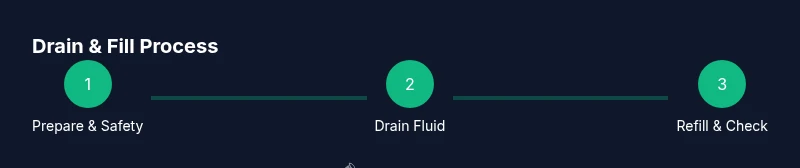
Steps
Estimated time: 1-2 hours
- 1
Prepare the vehicle and safety gear
Park on a level surface and apply the parking brake. If you will lift the vehicle, place wheel chocks and use jack stands. Warm up the engine to normal operating temperature to ensure the transmission fluid flows smoothly, then turn off the engine before starting the service.
Tip: Use a dedicated, clean workspace and organize tools before you begin to prevent spills and missteps. - 2
Locate drain pan, drain plug, and filler location
Refer to your vehicle service manual to locate the transmission pan drain plug and the filler plug. Position the drain pan under the pan to catch old fluid. If your transmission requires pan removal to access the plug, you’ll need additional steps.
Tip: Inspect the pan for metal shavings; excessive debris can indicate wear or a failing component. - 3
Drain old transmission fluid
Loosen the drain plug and allow the old fluid to drain completely. Once draining slows to a stop, remove the plug and reinstall with a new washer if applicable. Do not over-tighten, which can strip threads.
Tip: Keep fluids safe and away from skin; avoid letting hot fluid touch you. - 4
Replace filter and pan gasket (if applicable)
If your model has a serviceable filter, remove and replace it following the manufacturer’s recommended procedure. Inspect the pan and gasket for wear and replace the gasket if necessary. Reinstall the pan securely and clean any residual sealant.
Tip: Do not reuse an old gasket; a fresh gasket helps prevent leaks. - 5
Refill with the correct fluid and check level
Add transmission fluid gradually through the filler port, using the dipstick or the manufacturer’s procedure to reach the correct level when the transmission is warm. Do not overfill. If possible, use a funnel to minimize spills.
Tip: Check the level after the fluid warms up to normal operating temperature. - 6
Test drive and recheck
Take a short drive to circulate the new fluid, then recheck fluid level and inspect for leaks. If the level is off, adjust accordingly. Record the service in your maintenance log.
Tip: A final leak check saves you from a second, preventable drain.
Got Questions?
Is a drain-and-fill safer than a full transmission flush?
A drain-and-fill is generally gentler on seals since it removes only a portion of fluid at a time. A full flush can dislodge deposits and stress seals in some transmissions if not performed with proper equipment and technique. Always follow manufacturer guidance and consider professional help for complex or older systems.
A drain-and-fill is usually gentler on seals, while a full flush can be riskier unless done by a professional.
How often should I perform a drain-and-fill?
There isn’t a universal interval; it depends on your vehicle, transmission type, and driving conditions. Refer to the owner’s manual and speak with a technician if you’re unsure. Use maintenance signs like color and odor to guide timing.
Intervals vary; check your manual and monitor the fluid's condition to decide.
Can I reuse old transmission fluid after a drain-and-fill?
No. Transmission fluid should be replaced with fresh fluid during a drain-and-fill to restore proper lubrication and cooling. Reusing old fluid can leave contaminants that accelerate wear.
Don’t reuse old fluid; replace it with fresh fluid during the service.
What are the signs I need a drain-and-fill soon?
Look for slipping, delayed engagement, hard shifts, or metallic noises. If the fluid appears very dark or burnt, or there’s a strange smell, consider service and a fluid level check.
If you notice rough shifting or unusual smells, you may need a service.
Do CVT transmissions use the same drain interval as automatics?
CVT transmissions often have different fluid types and maintenance needs. Always use the manufacturer’s recommended fluid and intervals tailored to your CVT model, and consult a pro if you’re unsure.
CVTs often require different fluids; check your manual for specifics.
Watch Video
The Essentials
- Check your manual for interval guidance and stick to manufacturer specs
- Drain-and-fill is less invasive than a full flush and suits many DIYers
- Use the correct ATF specification and avoid cross-contamination
- Document service details to track maintenance over time