How Often to Drain a Hot Tub: A Practical Guide for Homeowners
Learn how often to drain a hot tub and what factors influence frequency. Drain Guide provides a practical, step-by-step approach to scheduling, water testing, safety, and rebalancing for clean, safe spa water.


By the end of this guide you’ll understand how often to drain a hot tub based on usage, water chemistry, and equipment health. You’ll also get a realistic draining schedule and a safe, step‑by‑step process to minimize chemical waste and protect the tub’s components. Whether your spa gets weekly use or seasonal visits, this plan keeps water clean, balanced, and inviting.
Why the frequency of draining a hot tub matters
According to Drain Guide, draining frequency is a core part of spa maintenance. Regular drainage helps stabilize water chemistry, keeps sanitizer effective, and reduces buildup of minerals and biofilm that can irritate skin or degrade components. When you drain on a sensible schedule, balancing pH, total alkalinity, and sanitizer levels becomes easier, which in turn protects pumps, heaters, seals, and liners. For many homeowners, this means less troubleshooting and more reliable, inviting water. The central idea is simple: less guesswork, more predictability, and fewer unpleasant surprises when you open your cover.
Beyond comfort, frequency matters for long‑term costs. Infrequent draining can lead to cloudy water, increased filter loading, and the need for more aggressive chemical adjustments. Conversely, draining too often can waste water, energy, and time. A balanced approach aligns with your family’s routine, water source quality, and maintenance habits. If you’re unsure where to start, a practical rule of thumb from Drain Guide is to anchor your schedule to actual water quality and use patterns rather than a fixed calendar date.
Factors that influence drainage frequency and why they matter
Several interdependent factors determine how often you should drain your hot tub. First, bather load and usage: more people and longer soaks introduce more organics and contaminants that drive sanitizer demand and biofilm formation. Second, water quality and chemistry: consistent pH, alkalinity, calcium hardness, and sanitizer levels reduce the need for frequent draining, while poor chemistry accelerates buildup. Third, the water source and refill quality: mineral content and metals can accumulate quicker, pushing drainage sooner. Fourth, spa cover condition and filtration: a tight seal and clean filters help maintain clarity and reduce the need for early drains. Fifth, climate and maintenance practices: hot climates with heavy sun exposure and constant heat tend to degrade water faster, while regular filter cleaning and post‑drain refilling improve stability. Drain Guide analysis shows that these factors collectively shape a personalized drainage plan rather than a one‑size‑fits‑all schedule.
How to tailor a draining schedule to your actual use
A practical drainage plan starts with observing water quality and your typical usage. For normal, moderate use (a few people, occasional soaks), many households drain every 3–4 months, with a rebalancing and fresh fill after each event. If you host regular pool parties or have high bather turnover, expect to drain closer to every 1–2 months, especially if you notice cloudy water, chlorine odor, or imbalanced pH. Seasonal users can push drainage farther apart, but plan a drain before winter shut‑down and another before reopening. Always be ready to adjust based on water tests and the tub’s performance. The goal is to keep water comfortable and safe while avoiding excessive chemical use and wear on components.
Tools & Materials
- Submersible pump with hose attachment(Choose a pump rated for garden or water features; ensure it can handle spa water chemistry.)
- Garden hose long enough for discharge(At least 20 feet if you can't drain directly to a nearby drain.)
- GFCI outlet or outdoor rated power source(Keep electrical work safe; never operate pumpless in wet areas.)
- Gloves and eye protection(Personal protective gear recommended when handling chemicals and wastewater.)
- pH and alkalinity test strips or test kit(Helpful for post‑drain balancing and when starting a refill.)
- Spa filter brush or gentle sponge(Clean filters after draining to remove trapped debris.)
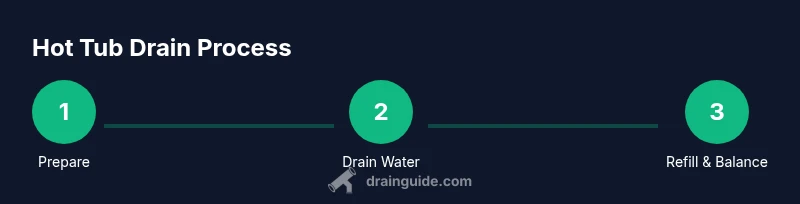
Steps
Estimated time: 60-120 minutes
- 1
Power down and prep
Turn off the hot tub at the breaker and unplug if possible. Remove the spa cover and clear the area around the drain to prevent tripping or spills. This step ensures safety and reduces contamination while you drain.
Tip: Double‑check the breaker is off before touching any wiring. - 2
Position the pump and hose
Place the submersible pump in the tub near the drain and attach the garden hose. Make sure the hose outlet is directed to a suitable drainage area away from plants and walkways. Secure connections to prevent leaks when starting the pump.
Tip: If the tub is large, use a second pump or a longer hose to speed draining. - 3
Start draining and monitor
Power on the pump and let water flow out until the water line is at or below the recommended maintenance level. Use a measuring tool or the tub’s built‑in marks to judge the level. Avoid running the pump dry for long periods to protect the impeller.
Tip: Keep an eye on water clarity; if you see excessive debris, turn off and remove the pump to clear it. - 4
Refill and rebalancing prep
When you reach the target level, turn off the pump and disconnect the hose. Move the pump out and start refilling with fresh water. This is a good moment to check for any visible residue on the surfaces and prepare to balance water chemistry.
Tip: Keep the water flow steady to prevent air pockets in lines. - 5
Test and balance after refill
Once half to three quarters full, test pH, total alkalinity, and sanitizer levels. Adjust as needed to bring values into the recommended ranges before using the tub. Reinstall filters and any accessories.
Tip: Small, incremental chemical additions prevent overshooting the target ranges. - 6
Bump and test again after a run
Run the jets for 15–30 minutes to circulate chemicals, then retest water. Rebalance if necessary, since agitation can shift pH and sanitizer levels. Replace the cover when tests read stable ranges.
Tip: Running the jets helps distribute chemicals evenly. - 7
Clean up and store gear
Drain line connections and store the pump, hose, and tools properly. Wipe down surfaces to remove any residue, dry the tub area, and ensure the cover is securely resealed. This reduces mold and odor buildup.
Tip: Keep a tidy drain area to avoid accidental slips.
Got Questions?
How often should you drain a hot tub?
Most homeowners drain every 3–4 months with normal use. If water quality declines, or you host frequent gatherings, drain more often. Adjust based on water tests and personal comfort with water clarity.
Most people drain every few months. If the water looks off or you're hosting a lot of guests, drain a bit sooner.
Can I drain hot tub water onto my lawn or garden?
Yes, you can discharge spa water onto a lawn or garden if local rules allow. Avoid dumping near plants sensitive to chemicals and direct the flow away from foundations. In some areas, municipal or storm sewer rules may apply.
Yes, but check local rules and avoid damaging plants that are sensitive to sanitizer or minerals.
What should I do after draining and refilling?
Test water chemistry again after refilling and balance pH, alkalinity, and sanitizer. Run the jets for a few minutes to distribute chemicals, then retest. Replace or clean filters as needed before regular use.
Test, balance, run the jets, and retest before using the tub again.
Is it safe to drain with the spa cover on?
No. Remove the cover before draining to avoid trapping moisture and causing mold or odor. Draining with the cover on can also obstruct the drainage path.
Don’t drain with the cover on; remove it first.
Should I use chemicals to speed up draining?
Avoid dumping concentrated chemicals into the yard or drain. Focus on mechanical drainage first, then balance water chemistry after refill. If you’re dealing with stubborn buildup, follow manufacturer guidance for safe treatment.
Don’t dump chemicals to speed drainage; drain first, then balance water.
Watch Video
The Essentials
- Drain based on water quality and usage, not a fixed date.
- Test pH, alkalinity, and sanitizer after refilling and balance before use.
- Use a pump and hose for efficient draining and proper disposal.
- Safety comes first: power off, protect eyes/skin, follow local disposal rules.