How to Clean Drains for Gnats
Learn how to clean drains to defeat gnats with a proven, safe approach. This guide covers why gnats breed in drains, step-by-step methods, tools, and prevention tips for a pest-free home.


Cleaning drains to eliminate gnats starts with identifying breeding sites, then removing organic buildup, and flushing with hot water. Use a combination of baking soda, vinegar, and an enzymatic cleaner to break down slime and siphon away attractants. Finish with a thorough rinse and preventive maintenance to stop future gnats from returning.
Understanding why gnats congregate in drains
According to Drain Guide, drain gnats are attracted to warm, moist environments and the slimy organic film that coats pipes. This film serves as both a food source and a breeding ground for larvae, making drains a magnet for gnats. Gnats can originate from kitchen sinks, bathroom sinks, or laundry drains when standing water, food debris, and biofilm accumulate. A slow drain or shared line can amplify the issue, letting adults emerge from the trap and swarm nearby. To tackle this, treat both the trap (P-trap) and the drain interior. Ensure the trap holds water to block upward movement, and remove visible buildup with a gentle brush. Regular maintenance reduces odors, slime, and pheromone cues that invite more gnats.
Common breeding sites and warning signs
Gnats thrive in wet, nutrient-rich environments. In drains, the most common sites are kitchen sinks, bathroom sinks, and shower drains where soap scum, hair, and organic matter collect. Look for a musty odor around the drain, persistent tiny flies hovering near the sink, and a slimy film on the interior of the drain cover. If you see larvae in the trap, or if the drain smells sour, it’s a sign you need a deeper clean. Drain Guide recommends targeting both the trap and the pipe interior for best results.
A practical cleaning plan you can follow
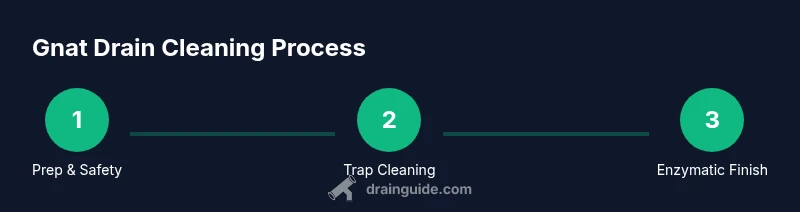
A reliable plan combines mechanical cleaning with chemical or enzymatic helpers. Start by removing standing water from the drain, then flush the interior with hot water to loosen biofilm. Follow with a baking soda rinse to lift residue, then pour white vinegar to create fizz that dislodges slime. Finish with an enzymatic cleaner designed for drains and run water for several minutes to rinse away debris. This multi-pronged approach disrupts the gnats’ food source and reduces breeding cues. Drain Guide emphasizes consistency—the goal is ongoing maintenance, not a one-time fix.
How to prevent gnats after cleaning
Prevention is as important as cleaning. Keep drains dry when not in use, particularly in kitchens and bathrooms. Use drain covers to reduce gnats entering from the pipe, and schedule regular cleanings (monthly or bi-monthly) to remove organic buildup before gnats can colonize. Address leaky fixtures and fix slow drains promptly, since standing water invites more gnats. Finally, consider routine use of a mild enzymatic cleaner after heavy cooking days to keep biofilm at bay.
Tools & Materials
- Nitrile gloves(Protect hands from cleaners and debris)
- Goggles(Eye protection optional but recommended for splashes)
- Old toothbrush or small pipe brush(Scrub interior surfaces and hard-to-reach areas)
- Bucket or tray(Catch wastewater when removing the P-trap)
- P-trap adjustable wrench(Helpful if nuts are tight or corroded)
- Baking soda(About 1/2 cup for baking soda step)
- White vinegar(About 1 cup for fizzing action)
- Boiling water/kettle(Only if your pipes can safely handle high heat)
- Enzymatic drain cleaner(Choose a product labeled for drains; avoid mixing with bleach)
Steps
Estimated time: 45-60 minutes
- 1
Prepare and protect the workspace
Clear the area, lay down towels, and put on protective gloves. Remove any personal items from the sink or shower area to prevent splashes. If your trap is under a sink, place a bucket nearby to catch water when you detach the trap.
Tip: Have a towel nearby for quick cleanup and keep children/pets away from the work area. - 2
Access the P-trap and trap area
Place a bucket under the U-shaped P-trap, then slowly loosen the nuts with a wrench or pliers. Remove the trap carefully, letting standing water drain into the bucket. Inspect for slimy buildup and gross residue inside the trap.
Tip: Keep the drain open to air for a minute to minimize splash risk when removing the trap. - 3
Rinse trap and remove buildup
Rinse the trap with hot water to remove loose debris. Use the toothbrush to scrub the interior surfaces and remove slime that may harbor gnats. Wipe the area clean before reattaching.
Tip: If you see corrosion, replace the trap instead of forcing it back on. - 4
Flush pipe interior with hot water
Run boiling or near-boiling water through the drain (where safe for your pipes) to loosen biofilm. This helps to reduce the organic material gnats feed on. Let the water run for 1–2 minutes.
Tip: Check your pipe material before using boiling water; PVC can warp under extreme heat. - 5
Apply baking soda and wait
Pour about 1/2 cup of baking soda into the drain opening and let it sit for 5–10 minutes. The gritty powder helps lift residue that cling to the interior walls.
Tip: Avoid inhaling the powder; consider turning on a fan or opening a window. - 6
Add vinegar and fizz
Pour 1 cup of white vinegar into the drain to react with the baking soda. The fizz helps loosen remaining biofilm and bio-residue. Wait 10 minutes.
Tip: Do not mix with bleach or other cleaners; this can release harmful gases. - 7
Scrub interior and reassemble
Scrub interior surfaces with the brush again, then reinstall the P-trap and tighten the nuts. Ensure there are no leaks by running water and checking for drips.
Tip: Hand-tighten all fittings; overtightening can crack plastic fittings. - 8
Finish with enzymatic cleaner and test
Pour an enzymatic drain cleaner according to product directions and flush with water for several minutes. Run the faucet to ensure the drain is clear and monitor gnats over the next days.
Tip: Enzymatic cleaners continue working after you finish the session; avoid using other cleaners that could neutralize enzymes.
Got Questions?
What causes gnats to breed in drains?
Gnats breed in drains where organic matter, moisture, and slime accumulate. The biofilm inside pipes provides food for larvae and serves as a habitat for adults.
Gnat breeding in drains happens when organic buildup and moisture create a tiny ecosystem inside your pipes; cleaning reduces their food source and habitat.
Can I use bleach to fix drain gnats?
Bleach can kill some gnats on contact but does not remove the biofilm that sustains them. It’s best to use baking soda, vinegar, and enzymatic cleaners in combination with hot water.
Bleach alone won’t solve the problem; combine mechanical cleaning with enzymes for lasting results.
Are drain covers helpful for prevention?
Yes, covers reduce the chance of gnats entering from the drain and help keep hair and debris from falling into the pipe.
A good drain cover can cut down gnats, but you still need regular cleaning to remove buildup.
Is removing the P-trap always necessary?
Not always. If you can access and clean the trap safely, that’s often sufficient. In stubborn cases, removing the trap provides a thorough cleaning.
If you’re comfortable, remove the trap; otherwise, focus on interior pipe cleaning and enzymes.
When should I call a professional?
If gnats persist after a thorough cleaning, or if you notice leaks, mold, or gas smells, contact a licensed plumber or pest control.
Persistent gnats or foul smells mean it’s time to call a pro for a deeper diagnosis.
Watch Video
The Essentials
- Identify drain sites and biofilm as gnat sources
- Use a layered cleaning approach (hot water, baking soda, vinegar, enzymes)
- Repair leaks and maintain traps to prevent future infestations
- Recheck drains after cleaning to confirm no gnats remain
- Establish a regular maintenance plan to keep gnats away