How to Drain an Above-Ground Pool
Learn how to drain an above-ground pool safely with a pump or siphon, plan the drainage area, protect surroundings, and rebalance water chemistry after draining.


To drain an above-ground pool safely, use a pump or siphon to lower the water gradually, directing discharge away from foundations and utilities. Check local rules and plan the drainage area in advance. Expect the process to take 30-90 minutes depending on pool size and method. Plan access to a suitable discharge area, and set up a temporary bypass to protect landscaping or concrete. If you are draining after chemical treatment, wait for chlorine and pH to settle before refilling or continuing drainage.
Why draining an above-ground pool is sometimes necessary
Drainage of an above-ground pool is commonly required for maintenance tasks such as refill balancing, winterization, or when heavy rainfall has diluted the chemical levels and you need to start fresh. Draining can also help when you notice persistent staining, cloudy water, or persistent algae that won’t clear with normal chemical adjustments. While the instinct might be to empty the pool completely, that approach can introduce risks and costs—so homeowners often drain to a safe, partial level first and then refill gradually. The Drain Guide team emphasizes planning ahead and selecting a discharge path that prevents damage to landscaping, structures, or nearby utilities. Remember, slow, controlled drainage reduces erosion and soil disturbance and minimizes the chance of shifting or bending walls during the process. Always consider local rules and neighborhood conditions before you begin, and ensure you have a clear plan for where the water will go.
Why draining an above-ground pool is sometimes necessary
Drainage is often tied to chemistry management. If the water is out of balance—low pH, too much chlorine, or extreme alkalinity—draining part of the water can help bring the pool back into balance more quickly than fighting with chemicals alone. Drainage also helps when you’re preparing for winter shutdown or if a repair requires lowering the water level for easier access around the liner. When performed correctly, draining reduces chemical waste and can preserve the liner’s integrity by avoiding over-pressurization from full water weight. In practice, most homeowners drain to a safe level that allows the skimmer and returns to be easily serviced while keeping the pool walls supported. Drain Guide’s guidance emphasizes working gradually and avoiding sudden surges that could disrupt the pool’s structure or the surrounding soil.
Why draining an above-ground pool is sometimes necessary
The decision to drain should weigh multiple factors, including climate, pool size, pool material, and local regulations. In freeze-prone regions, full drainage during winter may risk damage to the liner or structure if not followed by proper winterization steps. In contrast, in warm climates, a partial drain can help maintain chemical balance and extend the pool’s lifespan by preventing corrosion from concentrated chemicals or by reducing the load on the liner. Always verify that your drainage aligns with local ordinances and permits, and consider talking to a local pool professional if you’re unsure about the best approach for your specific setup. Drain Guide reminds homeowners that preparation is the key to a smooth, safe drainage process.
Why draining an above-ground pool is sometimes necessary
Finally, consider the environmental impact. Water from a pool often contains chlorine and other chemicals that, if released improperly, can affect plants and soil. The best practice is to discharge into a non-erosive area that won’t run into storm drains or into sensitive landscaping. If you’re not sure about the discharge destination, run a small test pour to observe where the water travels and how the soil responds. By planning ahead and following a measured approach, you can protect your yard while achieving the desired water level for the next step in maintenance.
Tools & Materials
- Submersible pump or siphon kit(Choose a pump with sufficient head for your pool height; a siphon is a low-cost alternative for small volumes.)
- Garden hose long enough to reach discharge area(Ensure the hose can reach at least 10–15 meters (30–50 feet) away from the pool vicinity.)
- GFCI-protected outlet or outdoor-rated extension cord(Electrical safety is essential when using an electric pump; keep connections dry and off the ground.)
- Tarp or old shower curtain(Protect surfaces from splashing and help keep drainage area clean.)
- Protective gloves and safety goggles(Water may contain debris or algae; eye protection helps if hoses slip or splash occurs.)
- Hose clamps or adapter (if needed)(Use clamps to prevent hose detachment in windy conditions or with high flow.)
Steps
Estimated time: 60-120 minutes
- 1
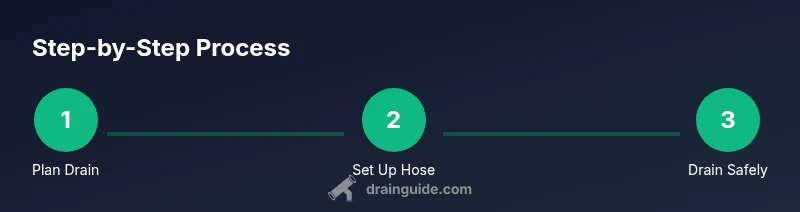
Check local rules and plan discharge path
Review any municipal drainage restrictions and identify a safe discharge location that won’t affect foundations, driveways, or neighbor property. This initial planning reduces the risk of runoff damage and helps you set realistic expectations for time and effort.
Tip: Call or check online for local codes before starting. - 2
Select draining method
Decide between a submersible pump or a gravity siphon based on pool size, availability of power, and slope to the discharge area. Pumps are faster but require electricity and a proper outlet; siphons are inexpensive but rely on gravity and may take longer.
Tip: If you choose siphon, start with a full, higher-water level to prime the line. - 3
Set up the discharge area
Position the hose so the water will flow away from your home, sidewalks, and garden beds. Place a tarp if needed and clear obstructions to prevent tripping hazards or hose kinks.
Tip: Avoid discharging toward clay soils that can clog or erode easily. - 4
Connect pump and hoses
Attach the hose to the pump outlet and secure any clamps or adapters. Ensure the pump is placed on a stable surface and the power cord reaches a grounded outlet with a dry connection.
Tip: Double-check connections before powering the pump to prevent leaks. - 5
Start draining and monitor
Power the pump or begin siphoning and monitor water flow closely. Drain gradually to avoid soil upheaval; check water level periodically to stay within a safe range that preserves liner integrity.
Tip: Avoid running the pump nonstop for long periods if your yard is sloped; pause if you notice any movement in the pool wall. - 6
Stop at a safe level
Cease draining when the water reaches a level that allows you to safely service the pool’s components and plan for refilling. Do not drop to zero if you’re planning to reopen soon, unless the manufacturer permits full emptying.
Tip: Leave enough water to cover the base and keep the liner supported. - 7
Power down and disconnect
Turn off and unplug the pump before detaching hoses. Store equipment in a dry place and check hoses for wear or cracks before reusing.
Tip: Never unplug while water is flowing through the hose; do this only after disconnecting. - 8
Refill gradually and balance chemistry
Begin refilling with clean water and test for pH, alkalinity, and sanitizer levels as you proceed. Rebalance chemicals according to the pool’s target range and your climate, then resume normal use once balanced.
Tip: Add chemicals slowly and test often to avoid shocking the water.
Got Questions?
Can I drain an above-ground pool completely?
Most above-ground pools should not be completely emptied, especially in freezing climates or if the liner has not been winterized. Drain only to a safe level and follow manufacturer guidance for full drainage.
Usually you should not drain an above-ground pool completely, particularly where freezing is possible. Drain to a safe level and follow your pool’s instructions for winterizing.
How long does it take to drain an above-ground pool?
Drain times vary with pump size and pool capacity. Expect a range from under an hour for small, pumped drains to several hours for larger setups or gravity siphons.
Drain time depends on your setup. It can take from under an hour to several hours.
Where should I discharge the water?
Direct the water away from your home, sidewalks, foundations, and into an area that won’t cause erosion or runoff problems. Avoid discharging into storm drains where prohibited.
Discharge water away from the house and outlets, and avoid storm drains unless permitted.
Do I need to rebalance chemicals after draining?
Yes. After draining and refilling, test pH and chlorine or sanitizer levels and rebalance as needed to maintain clear, safe water.
Yes—test and rebalance pH and sanitizer levels after draining and refilling.
What if I live in a freeze-prone area?
In colder climates, consider partial drainage paired with proper winterization or consult a local professional to avoid liner or frame damage.
In freezing climates, don’t fully drain unless you’re winterizing properly. Check local guidance or seek expert advice.
Can I drain while children are nearby?
Drainage should be performed with safety in mind. Keep children well away from the work area and hoses, and never leave the pump unattended.
Keep kids away from the drainage area and never leave the pump unattended.
Watch Video
The Essentials
- Plan drainage to protect property and comply with local rules.
- Choose pumping or siphoning based on pool size and slope, and drain gradually.
- Direct discharge away from foundations and plants to prevent damage.
- Rebalance water chemistry after draining before reopening the pool.