How to Drain an Inground Pool: A Step-by-Step Guide
Learn a safe, compliant method to drain an inground pool with a step-by-step plan, including tools, discharge options, safety checks, and post-drain balancing. This Drain Guide-informed guide helps homeowners avoid costly mistakes and protect lawns, plumbing, and local regulations.


You will learn how to drain an inground pool safely, including when it's appropriate, the key tools, discharge options that won't harm your yard, and what to do after draining to rebalance water chemistry. This guide emphasizes safety, local regulations, and practical tips for DIY homeowners. It covers pump setup, slope considerations, and how to stop early if conditions change.
Why draining an inground pool is sometimes necessary
Sometimes you need to know how to drain an inground pool for repairs, severe chemical imbalance, or when the water becomes cloudy beyond treatment. Draining gives you access to the pool shell, allows rebalancing or replacing liner, and helps address algae buildup that resists in-place treatment. When considering how to drain an inground pool, always weigh environmental impact, local regulations, and the effect on your landscaping. Drainage to storm drains or natural waterways can be illegal in some areas; always verify discharge options before you begin. According to Drain Guide, draining an inground pool safely starts with understanding local rules and water disposal options.
Know when you should drain vs water balance
Draining is not always the best first step. If the total dissolved solids are high or chemical balance is stubborn, partial drainage combined with a fresh fill and chemical balancing can restore water quality without stressing the pool structure. In vinyl liner pools, excessive lowering of water can cause liner wrinkling, while plaster surfaces risk cracking if left dry for long. In-ground pools with fiberglass shells may tolerate partial drains differently; consult the manufacturer if possible. If you’re unsure, start with a partial drain to re-balance chemistry and avoid unnecessary waste. This is why understanding when to drain helps prevent costly repairs and reduces water waste.
Environmental and safety considerations
- Always verify local regulations and HOA guidelines before starting any drainage project.
- Do not discharge into storm drains, natural waterways, or areas where prohibited; use a sanitary sewer connection or an approved landscape irrigation plan if permitted.
- Keep children and pets away from the discharge area; wear protective gloves and eye protection when handling chemicals; ensure any electrical equipment is GFCI-protected and shielded.
Drain Guide analysis shows homeowners often overlook local discharge rules. If you notice unusual odors or rapid chemical changes during drainage, pause and reassess with a professional.
Preparing for drainage: tools, discharge options, and permits
Prepare by confirming where you can legally discharge the pool water, and gather the necessary tools before you start. Choose a discharge path that minimizes erosion and protects plant roots. Obtain any required permits or approvals from your city or HOA if applicable. Assemble tools: a submersible pump, a garden hose long enough to reach the chosen discharge site, hose adapters, an outdoor GFCI extension cord, and a protective tarp for the pump area. Test all equipment outside the pool area with water in a bucket to verify correct operation. If your pool uses a high-chlorine regime, plan for neutralization before discharge to protect the environment.
What to monitor during drainage: signs of trouble and when to stop
Start slowly, observe pump performance and water level, and prevent the pump intake from running dry. If you notice loss of prime, unusual noises, overheating, or if water level approaches the bottom of the skimmer or returns line, pause drainage and troubleshoot. Keep an eye on drainage flow rate to avoid soil saturation or surface runoff that could damage landscaping. If weather shifts and rainfall increases, stop draining to avoid flooding, and resume only when conditions are safe.
Aftercare: refilling, balancing water chemistry, and maintenance
Begin refilling gradually to minimize stress on the pool shell and coping. Re-test water chemistry as soon as the pool is refilled to the target levels, then rebalance pH, total alkalinity, calcium hardness, and sanitizer levels. Rebalance stabilizers for UV protection, if needed, and re-clean the filter to remove any debris brought in during drainage. Inspect decks and coping for any stress fractures or settled areas that could benefit from minor maintenance. Maintaining the right chemistry after refill improves clarity, comfort, and safety.
Authority sources
This section provides external references for further reading and regulatory guidance. Always verify local rules before draining.
- U.S. Environmental Protection Agency (EPA): https://www.epa.gov
- Centers for Disease Control and Prevention (CDC) – Healthy Swimming: https://www.cdc.gov/healthywater/hwmain/pools.html
- Occupational Safety and Health Administration (OSHA): https://www.osha.gov
Tools & Materials
- Submersible pump or sump pump (outdoor-rated)(GFCI-protected outlet; choose 1/2 HP or larger for typical residential pools)
- Garden hose long enough to reach discharge site(3/4 inch diameter recommended; avoid kinks)
- Hose adapter and clamps(Match pump outlet to discharge hose)
- Outdoor extension cord with GFCI protection(Weatherproof, rated for outdoor use)
- Tarps or ground cover(Protect surfaces from splashing; catch runoff when needed)
- Pool test kit or pH meter(For post-drain balancing)
Steps
Estimated time: 3-6 hours
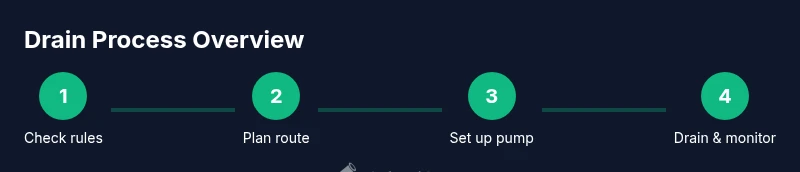
- 1
Check local regulations and permits
Research city/county rules and HOA guidelines before draining. This helps you avoid fines and ensures you discharge to an approved location. Understanding permitted discharge methods saves time and reduces environmental impact.
Tip: Call city or check the municipal code online to confirm allowed discharge sites. - 2
Choose a discharge location
Select a site that minimizes erosion and protects landscaping. Prefer sanitary sewer connections or approved landscape drainage if permitted; avoid storm drains unless explicitly allowed by local codes.
Tip: Walk the route to identify sloping paths and any potential runoff hazards. - 3
Set up pumping equipment safely
Place the pump on a stable surface, connect the hose, and run the cord to a GFCI outlet. Prime the pump in a bucket first to ensure it starts smoothly before lowering it into the pool.
Tip: Protections: use a ground fault circuit interrupter and keep electricity away from standing water. - 4
Start drainage at a controlled rate
Turn the pump to a slow, steady flow. Draining too quickly can cause soil erosion, sediment disturbance, and surface runoff around the pool deck.
Tip: Monitor the flow and adjust the pump speed if you notice excessive splashing or sediment plumes. - 5
Monitor water level and equipment
Watch the water level and listen for pump issues. Stop when the water is at an appropriate level to prevent the pump from running dry and to protect the pool structure.
Tip: If the pump loses prime, pause and re-prime before continuing. - 6
Shut down and begin refilling
Once discharged, disconnect equipment, secure the site, and begin refilling gradually. Plan post-drain chemistry balancing before using the pool again.
Tip: Keep a log of refill progress and chemical readings to guide future maintenance.
Got Questions?
Do I need a permit to drain an inground pool?
Permit requirements vary by locality and HOA rules. Check your city code and HOA guidelines; some areas require notification or approvals before discharge. If in doubt, contact your local building or code enforcement office.
Permit requirements vary by location; check your city code and HOA guidelines before draining.
Is it safe to drain into my yard or storm drain?
Discharge to storm drains is often prohibited. Use a sanitary sewer connection or an approved landscape discharge when permitted. Never discharge directly into stormwater systems unless explicitly allowed.
Discharge only to approved sites; avoid storm drains unless allowed.
What chemical considerations should I follow before draining?
Test and neutralize pool chemistry before draining to protect the environment. Drain gradually to prevent sudden chemical swings and always follow label directions for chemical neutralization.
Test and neutralize chemicals before draining; drain slowly.
How long does it take to drain a typical residential pool?
Drain duration depends on pool size and pump capacity. Plan for several hours and monitor progress to avoid environmental impact and pump strain.
Drain often takes several hours; monitor the process closely.
Can I reuse pool drain water for irrigation?
If local rules allow it, you may use treated pool water for irrigation, provided chemical levels are safe. Verify with local guidelines and avoid discharging high-chlorine water directly onto plants.
Only reuse if permitted and safe for plants; otherwise discharge to approved areas.
Watch Video
The Essentials
- Plan discharge location before starting
- Comply with local regulations and permits
- Drain at a controlled rate to protect landscaping
- Rebalance water chemistry after refilling