How to Make Drano: Safer Alternatives for Clearing Drains
Learn why making your own Drano is unsafe and discover safe, effective drain-clearing methods for homeowners. Mechanical methods, safe cleaners, and maintenance tips help you clear clogs without hazardous chemistry.


You should not attempt to make Drano at home. This guide explains safe, effective alternatives for clearing clogged drains without caustic chemistry. You’ll learn mechanical methods, safe cleaners, and when to call a professional. By the end, you’ll know practical steps that minimize damage and keep your plumbing healthier. This approach aligns with Drain Guide's safety-first philosophy.
Why the idea of 'how to make drano' can be dangerous
Thinking you can replicate Drano at home often leads to caustic mixtures that can burn skin, damage pipes, or release harmful gases. Drano products typically rely on strong base chemistry, and combining cleaners can create unpredictable reactions. This article guides safe, non-hazardous approaches and explains why DIY Drano is discouraged. By avoiding DIY caustic blends, you protect your plumbing and household safety. This guidance reflects Drain Guide's commitment to practical safety for homeowners.
Safer, non-chemical approaches that actually work
Many clogs respond to non-chemical methods that don’t expose your family to hazardous fumes or pipe damage. Start with a cautious hot-water flush in stages to loosen soap, grease, and residue, then add mechanical methods if needed. A well-fitted plunger can clear simple blockages, while a hair catcher and routine maintenance dramatically reduce future clogs. For persistent issues, enzymatic cleaners offer a gentler alternative to caustic formulas—though they may take longer to work. Drain Guide emphasizes patience and proper technique to protect pipes and plumbing systems. Natural options like baking soda and vinegar are best viewed as deodorizing aids and maintenance tools, not primary clog treatments.
Step-by-step mechanical methods you can try first
This section provides a practical, non-chemical approach to clearing most residential clogs. It focuses on mechanical tools and proper technique rather than home-brew chemical mixes. Start with temperature-safe methods, progress to a plumber’s snake if needed, and always test the drain with water after each action to ensure the clog is gone. Remember: if you encounter sewage odors, backflow, or multiple affected drains, stop and seek professional help. Drain Guide recommends keeping a lighted work area and using gloves to protect your hands while you work.
When to avoid DIY fixes and call professionals
Not every clog is a candidate for home remedies. Older metal pipes, roots intruding into the line, or multiple clogged fixtures can require professional equipment and expertise. If the clog recurs after two or three attempts, or you notice sewage odors, discharge on floors, or gurgling sounds from the pipes, it's time to contact a licensed plumber. Professional plumbers can diagnose the source of the blockage, check for pipe damage, and clear the line safely without risking your home. Drain Guide suggests using DIY methods for minor, isolated clogs and saving chemical cleaners for only if you fully understand the risks and follow all safety instructions.
Maintenance strategies to prevent clogs
Preventive maintenance is cheaper and safer than repeatedly chasing clogs. Use hair traps in every drain, avoid pouring grease down the kitchen sink, and run hot water after each dishwashing cycle to flush residues. Regularly flush drains with a mild, non-harsh cleaner and consider enzyme-based cleaners for odor control and ongoing maintenance. Keeping a simple record of maintenance tasks helps you spot patterns that lead to clogs and address them before they become a bigger issue. Drain Guide recommends a monthly check-in on drainage health as a simple habit that extends the life of your plumbing.
Quick checks after clearing and safe cleanup
Once the clog is cleared, run hot water for several minutes to ensure flow remains smooth. Inspect under sinks for leaks and clean the area of any spillages. Store tools in a dry place, and dispose of used rags and gloves properly. If you used an auger or snake, wipe the exterior to prevent rust, and avoid forcing the tool into hard-to-reach places that might damage pipes. Regular maintenance and mindful habits are the best defense against recurrent blockages.
Tools & Materials
- gloves(Chemical-resistant gloves)
- safety goggles(Eye protection)
- plunger(Flat-bottom rubber plunger)
- drain snake / auger(Hand-crank snake; 3- to 6-foot length)
- bucket(To catch water and debris)
- old towels or rags(Contain spills)
- kettle or pot of hot water(For staged hot-water flush)
- flashlight(Inspect dark pipes)
Steps
Estimated time: 60-90 minutes
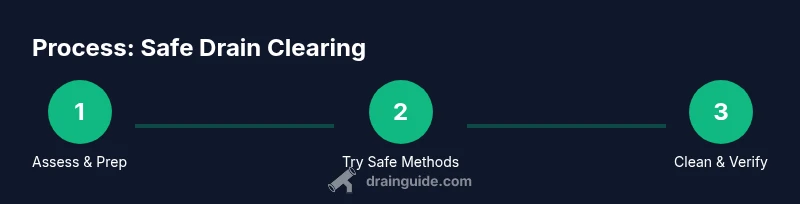
- 1
Prep and safety
Clear the area under the sink or near the floor drain. Put on gloves and safety goggles to protect skin and eyes. Gather all required tools before you start to minimize trips and keep the workflow smooth.
Tip: Wear protective gear and keep a trash bag handy for debris. - 2
Assess the clog and plan
Identify the type of drain (sink, tub, or floor drain) and confirm the clog location. Decide whether to start with hot-water flush or move directly to mechanical methods based on what you observe.
Tip: If there’s standing water, address it safely to avoid splashes. - 3
Hot-water flush in stages
Slowly pour hot (not boiling) water in stages to loosen soap, grease, and residue. Pause to test flow after each portion. Do not use boiling water on all pipe materials as it can damage older pipes.
Tip: Use 2-3 portions of hot water rather than a single pour. - 4
Plunge with proper technique
Create a tight seal around the drain and push/pull with steady pressure to create a water column that dislodges the clog. If water doesn’t move, reposition and try again with more force on short bursts.
Tip: Keep strokes steady and avoid over-pressuring to prevent leaks. - 5
Use a drain snake if needed
Feed the snake slowly into the drain, turning the handle to lock onto the clog and break it up. Retrieve the snake gradually, cleaning off debris as you go. Push water through to confirm clearance.
Tip: Do not force the snake; if resistance is high, stop and reassess. - 6
Flush and test
Run hot water for several minutes to confirm a clear drain. Check other connected drains for flow to ensure the blockage isn’t isolated to one fixture.
Tip: Leave cleaning supplies accessible in case you need a quick re-test. - 7
Cleanup and maintenance
Wipe tools dry, store safely, and consider preventive measures like hair traps and mindful disposal of grease. Document what worked for next time and schedule routine drain checks.
Tip: Keep a small maintenance kit handy for quick DIY fixes.
Got Questions?
Is it safe to make Drano at home?
No. Home-made caustic mixtures can burn skin, damage pipes, or release dangerous gases. Use safe, mechanical methods and store cleaners properly.
DIY Drano is not safe. Use mechanical methods first and follow safety guidelines when handling cleaners.
What should I try first when a drain is clogged?
Start with a plunger or hair catcher, then attempt a staged hot-water flush. If the clog persists, move to a drain snake before considering chemicals.
Try plunging first, then a warm-water flush, and only then a drain snake if needed.
Can hot water damage pipes?
Hot water can damage some plastic or older metal pipes if used excessively. Use warm-to-hot water in stages and monitor for signs of stress.
Heat can stress some pipes; use hot water in stages and check for leaks.
Why doesn't baking soda and vinegar fix clogs well?
Baking soda and vinegar mainly deodorize and loosen minor buildup. They usually fail against hair, grease, or solid blockages.
Baking soda and vinegar often won't clear stubborn clogs; they're better for maintenance and odor control.
When should I call a plumber?
If clogs persist after safe DIY attempts, or you notice sewage odors, multiple drains are affected, or there’s a leak, contact a licensed plumber.
Call a plumber if the clog returns after DIY attempts or if you smell sewage.
Watch Video
The Essentials
- Avoid DIY Drano-like mixtures; they can be dangerous.
- Start with mechanical methods before chemicals.
- Know when to turn to a professional.
- Prevent clogs with simple maintenance.