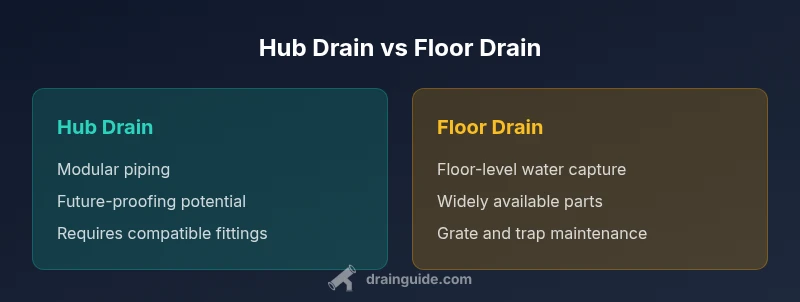
Hub Drain vs Floor Drain: A Practical Homeowner's Guide
A thorough, analytic comparison of hub drains and floor drains, covering installation contexts, maintenance, code considerations, and practical buying tips for homeowners and DIY enthusiasts.


Hub drain vs floor drain: which is best for your home? This quick comparison helps homeowners decide between these common drainage options in kitchens, laundry rooms, basements, and showers. We'll highlight where each type shines, how their traps and grates differ, and what maintenance or code considerations to expect. Use this to choose the right fit for your space and budget.
Understanding the basics: hub drain vs floor drain
When homeowners talk about hub drain vs floor drain, they mean two different approaches to collecting and channeling wastewater from living spaces. A hub drain typically refers to a unit designed for modular piping with a hub connection that accommodates specific fittings, often used in crawl spaces, garages, or utility rooms where space is tight or future upgrades are expected. A floor drain, by contrast, is a gravity-driven slot or grate set into floor surfaces to collect runoff, spillover, or seepage, with an integral trap and cleanout. The core difference is not only physical—it's about where water is expected to go, how often you access the drainage trap, and what maintenance routines you should plan for. In practice, homeowners who are upgrading a laundry sink, a basement utility area, or a workshop may encounter both options during planning. The phrase hub drain vs floor drain crops up in DIY discussions because the choice often hinges on space constraints, expected water load, and the ease of future component replacement. Understanding these distinctions helps you map the right product to your project's priorities: reliability, access, and long-term cost of ownership.
Why the terminology matters: hub drain vs floor drain
Terminology matters because the wording indicates likely configurations, replacement parts, and typical maintenance paths. A hub drain emphasizes a modular, linkable section of piping that can be adapted as a project evolves. A floor drain emphasizes floor-level water capture with a trap and grate designed for steady, passive drainage. For homeowners, recognizing this distinction helps avoid ordering the wrong part, reduces the risk of fit issues, and supports smoother remedial work if a space is renovated or repurposed. In practical terms, this means checking the space where you intend to install the drain, the kind of fittings available, and whether you anticipate future changes to the plumbing layout. Drain Guide’s guidance is to map your needs against a simple checklist: access to the trap, space for grille removal, and how water will flow into the system. By doing so, you reduce the chance of retrofit surprises during installation or maintenance.
Realistic expectations for robustness and longevity
Both hub drains and floor drains can be robust when properly installed, but longevity hinges on correct sizing, durable materials, and regular upkeep. A hub drain’s modular design can simplify component replacement after years of use or occasional reconfiguration, which is a strong advantage in spaces that change often. A floor drain’s straightforward, gravity-fed design is widely available and easy to source components for, making routine maintenance and cleaning more predictable in some homes. Regardless of type, the long-term success of either option rests on proper seal integrity, trap maintenance, and the ability to access the trap for cleaning. Homeowners should plan for periodic inspections, especially in areas with heavy water exposure or fluctuating temperatures that can affect seals and gasket materials.
Planning for home improvements: where to start
If you’re starting from scratch, begin with a dimensional survey of the space, existing piping routes, and floor slope. In kitchens and laundry rooms, a hub drain may offer flexible future layouts, while in showers or basements a floor drain can efficiently manage routine water exposure. For those upgrading an older home, identifying what fittings and hub connections you currently have can save time and money by avoiding incompatible replacements. Finally, consider whether you prefer a quick, factory-sealed solution or a modular approach that lets you swap components as needs change. The key is to align the drain type with how water will flow, how accessible the trap will be, and how much disruption you’re willing to tolerate during maintenance.
Quick maintenance mindset for hub drains vs floor drains
Maintenance philosophy differs slightly between the two types but shares core practices. Regular inspection of trap seals, testing for odor escape, and cleaning of grates are common across both. For hub drains, keep the hub connections tight and verify compatibility with current fittings during any remodeling. For floor drains, ensure the grate remains free of debris and that backflow risk is minimized by a functional trap. A simple annual check can prevent most clogs and odors, especially in spaces with hair, soap scum, or sediment. Always follow manufacturer guidance and local code requirements for sealants and venting to sustain performance over time.
Comparison
| Feature | Hub Drain | Floor Drain |
|---|---|---|
| Installation context | Modular, adaptable piping for spaces with evolving layouts | Floor-level installation in wet areas; best for static spaces |
| Typical water exposure | Variable exposure depending on space; common in utility areas | Consistent exposure in showers, basements, and laundry spots |
| Trap design and access | Modular traps with accessible hub connections | Integral floor trap with grate removal for cleaning |
| Maintenance frequency | Maintenance aligned with plumbing changes and component replacements | More routine cleaning for hair, sediment, and debris |
| Installation complexity | Can require specialized fittings; may need pro assistance for optimal fit | Typically straightforward; widely available parts and standard fittings |
| Code and compatibility considerations | Depends on space and method; verify hub sizing and venting requirements | Floor drains follow standard codes for basements/showers; verify grate design |
| Best for | Spaces needing modular design and future adaptability | Static wet areas where quick access is less critical |
Positives
- Hub drains offer modularity and easy future upgrades
- Floor drains are widely standardized and readily available
- Each option supports reliable water management when properly installed
- Accessible traps in both designs ease maintenance and cleaning
Cons
- Hub drains may require specialized fittings and expertise
- Floor drains can clog with sediment if not properly covered or maintained
- A retrofit can be invasive and costly depending on space constraints
- Incorrect sizing or incompatibilities can lead to leaks or poor drainage
Choose hub drain for modular layouts and spaces that may evolve; opt for floor drain where flat, simple, and widely available replacements matter most
Hub drains shine in adaptable spaces, while floor drains excel in straightforward, accessible wet areas. Your decision should hinge on future flexibility, installation practicality, and ongoing maintenance needs.
Got Questions?
What is a hub drain and how does it differ from a floor drain?
A hub drain uses modular piping with hub connections, allowing easier adaptation to layout changes. A floor drain sits flush in the floor with a grate and an integral trap. The main difference is modularity versus a static floor-level water collection point. This affects maintenance access and future upgrade options.
A hub drain uses modular piping for easy changes, while a floor drain is a floor-level grate with a built-in trap. The choice affects future upgrades and maintenance access.
In what spaces should I choose a hub drain over a floor drain?
Choose a hub drain in spaces likely to be reconfigured, such as workshops or utility rooms where piping may need relocation. It offers better adaptability and easier component replacement. For static wet areas, a floor drain is often sufficient.
Choose a hub drain for spaces likely to change, like workshops; floor drains work well in static wet areas.
Can I convert a floor drain to a hub drain later?
In some cases, conversion is possible but can be costly and disruptive. It typically requires reworking piping and fittings to accommodate hub connections. Plan ahead to minimize retrofit complexity and align with future space plans.
Conversion is possible but may be costly; plan ahead to minimize disruption.
Are hub drains code-compliant for residential use?
Residential code compliance depends on local regulations, venting, and proper installation of hub fittings. Always consult local building codes and, when in doubt, hire a licensed plumber to ensure compliance.
Compliance depends on local codes and proper installation; check with a licensed plumber if unsure.
What maintenance steps keep both hub drains and floor drains functioning well?
Regularly inspect traps for seals, clear debris from grates, and test for odors or slow drainage. For hub drains, check hub connections during renovations. For floor drains, ensure grate removal access and protect against sediment buildup.
Inspect traps, clear debris, and test drainage regularly; keep access paths clear for both types.
The Essentials
- Assess future space plans before choosing a drain type
- Prioritize trap accessibility and venting considerations
- Opt for modular hub drains in evolving layouts
- Select floor drains for simple, standard installations
- Plan regular maintenance to prevent clogs and odors