Drain & Spin vs Rinse & Spin: Understanding Washing Machine Cycles
Discover the difference between drain & spin and rinse & spin in washing machines, with guidance on when to use each for efficiency and fabric care.


Drain & Spin and Rinse & Spin are not identical. In most washers, drain and spin describes removing water after a wash, sometimes as a final step, while rinse and spin combines a rinse with spinning to extract water. Understanding which label your machine uses helps you finish laundry faster and protect fabrics by avoiding unnecessary rinses or repeats.
Clarifying the Terminology: Drain, Spin, Rinse, and Spin
Is is drain and spin the same as rinse and spin? The short answer is no, though people often use the phrases interchangeably in casual conversation. According to Drain Guide, drain and spin typically describes removing water after a wash, sometimes in a dedicated final step, while rinse and spin combines a rinse pass with spinning to extract water. This distinction matters for your drying time, fabric care, and energy use. Across front-load and top-load machines, the exact behavior can vary by model, but the general principle holds: draining focuses on removing water; rinsing focuses on removing detergent residues, and spinning focuses on extracting water to reduce drying time. Understanding these nuances helps you select the right cycle to achieve the results you want.
How Modern Washers Define Each Cycle
Most washers label cycles with two or three terms that describe behavior: drain, spin, rinse, and combinations like rinse & spin or wash & rinse. In practice, there are two fundamental phases: the water management phase (drain and/or rinse) and the mechanical extraction phase (spin). Drain means removing water from the drum using gravity and the pump; spin uses the drum's rotation to push water from fabrics to the outer tub. Rinse introduces fresh water, typically with a short agitation, to wash away detergent. Some cycles combine rinse and spin into a single step to save time. Manufacturers sometimes reuse labels or vary order, which can confuse beginners. The key is to map each term to an observable action: drain empties the tub, rinse adds water, spin reduces moisture. A basic mental model is: water in, wash, water out, water out, spin.
The Core Difference: Draining vs Rinsing vs Spinning
The core difference lies in purpose and sequence. Draining is a water-removal operation that usually happens at the tail end of a wash or at the end of a dedicated drain cycle. Spinning is a mechanical process that reduces remaining moisture by rapid rotation. Rinsing introduces clean water to remove detergent and soils; spin may follow to remove more water. When a cycle is labeled 'drain & spin', you will typically see the machine empty the tub and then rotate at high speed to squeeze out water, sometimes with little to no additional water added. Conversely, 'rinse & spin' will repeatedly rinse with clean water, then spin to extract moisture. The experience can vary by fabric type: heavy fabrics like towels benefit from more aggressive spinning, while delicate fabrics may require lower spin speeds or separate cycles to minimize wear.
Scenario-based Comparisons: When to Use Drain & Spin
Use drain & spin when you have a load that is mostly clean but needs quick water removal to speed up drying or to reset a washing machine after a malfunction or an accidental overload. It is also handy when you want to concentrate on moisture reduction after a heavy load such as towels or jeans. Not every machine offers a pure 'drain & spin' option as a standalone cycle; some models require you to run 'spin' after a dedicated drain cycle or to select a 'final spin' option. In many homes, this cycle is used after a complete wash to shorten the final drying phase and avoid re-wetting clothes that were overheated in the previous rinse step. Always verify the instruction manual for exact cycle definitions on your unit.
Scenario-based Comparisons: When to Use Rinse & Spin
Rinse & spin is typically selected when you want to extend the cleaning phase without adding additional wash cycles. It is useful for people who notice detergent residue or faint odors after a wash and want to refresh fabrics quickly. The rinse portion uses clean water, sometimes with light agitation, to flush away remaining soils. The subsequent spin reduces moisture before loading into a dryer or air-drying, which speeds up drying times. Some machines perform rinsing implicitly as part of the wash program; in those cases, 'rinse & spin' may be a redundant label or a specialized setting for sensitive fabrics. The choice often hinges on the level of soil and the detergent used.
Impact on Fabric Care, Water Use, and Drying Time
Cycle choices influence fabric integrity; aggressive spinning can cause wear or creasing on delicate fabrics, while excessive rinsing may strip natural fibers or leave detergent residues if not followed by proper spinning. Water use is linked to whether a cycle adds fresh water for rinsing. Drain & spin generally uses less water than a dedicated rinse, but the final moisture removal is strongly affected by spin speed. Drying time correlates with remaining moisture: more robust spin speeds reduce dryer time, but each fabric type has a recommended maximum spin rate to prevent damage. Understanding these trade-offs helps you optimize for energy savings and garment longevity.
Step-by-step: How to Verify What Your Machine Is Doing
To understand your machine's cycle labels, start with the operating manual and the control panel. Identify the cycle names, then run a test load with a transparent view if available (or observe the drum movements). Note whether the cycle drains water first, then spins, or introduces water during the cycle. Check detergent input during the rinse stage and listen for the rhythm of the agitation versus the silence of the drain. Many machines have a diagnostic feature that displays the cycle step in the display; if not, you can time the cycle and observe the cycle progression. When in doubt, select a simple test load: a few towels, minimal detergent, and observe the outcomes. Doing so helps you align expectations with the machine’s brand-specific definitions and achieve consistent results.
Troubleshooting Common Confusion Points
Confusion often arises from inconsistent labeling across brands. If you notice clothes still damp after a so-called rinse cycle, you might be experiencing insufficient spin speed, or the machine may be using a cooling or delicate setting. If an appliance seems to skip a drain phase, check the pump and hose for blockages or kinks. Some cycles combine drain and rinse in one pass; in those cases, you might not observe a separate drain-only moment. If in doubt, consult the user manual or contact customer support. Finally, consider running an empty rinse to verify that the pump and hoses are functioning correctly and that water flows freely through the system. This practice reduces the risk of detergent odors or residue on fabrics.
Practical Tips for Everyday Laundry
In everyday use, tailor cycle choices to load type, soil level, and fabric. For mixed fabrics, you may want to select a gentler spin and shorter wash phases to prevent damage. If you routinely notice detergent odor, add a longer rinse or extra rinse option, and consider using high-efficiency detergent. When drying, check garment care labels for recommended spin speeds to minimize wrinkles. Keep in mind that your washer’s labeling and cycle order can vary by brand, so taking a few minutes to memorize the differences will save you time and frustration over the long run. Drain Guide’s practical approach is to document your machine’s actual behavior and plan your loads around that behavior. The goal is predictable outcomes and efficient laundry days.
Comparison
| Feature | Drain & Spin | Rinse & Spin |
|---|---|---|
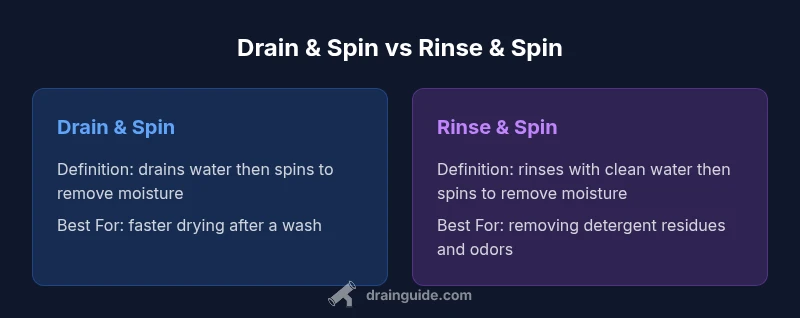
| Definition | Drains water then spins to remove moisture | Rinses with clean water then spins to remove moisture |
| Typical cycle placement | End-stage or final spin after wash | Part of the rinse sequence following wash |
| Water usage impact | Lower water usage overall (depends on model) as no extra rinse | Includes fresh water for rinsing, then spin to remove moisture |
| Fabric care impact | May vary with spin speed; shorter moisture exposure | Removes detergent residues; spin can cause creasing if aggressive |
| Best for | Quick moisture removal; faster drying | Detoxing fabrics by rinsing; odor removal |
| Model variability | Less common as standalone; may be brand-dependent | Common in presets; widely available across brands |
Positives
- Can shorten drying time by extracting more water
- Offers control over moisture removal after heavy loads
- Useful for quick refreshes when clothes are not heavily soiled
- Can be customized to reduce detergent residue with proper rinses
Cons
- May require extra cycles or time to complete laundry
- Labeling can be confusing across brands
- Extra spins can increase energy use if overused
- Not all machines provide a distinct drain-only option
Drain & Spin is preferred for speedier moisture removal; Rinse & Spin is preferred for thorough detergent removal and fabric freshness.
Choose Drain & Spin when you want faster drying of heavy loads. Choose Rinse & Spin when you need a clean rinse to remove detergent residues before the final spin.
Got Questions?
Is drain & spin the same as rinse & spin?
No. Drain & Spin primarily removes water after washing, while Rinse & Spin adds a water rinse before spinning to remove detergent and soils. The two serve different cleanup and moisture-management roles.
No—drain and spin focuses on removing water, while rinse and spin adds a rinse then spins to remove detergent and moisture.
Can I run drain & spin after a rinse if clothes are still wet?
Yes, many machines allow a separate final spin after rinsing. If your clothes stay damp, check the spin speed and cycle settings to avoid over-wrinkle or fabric stress.
Yes, you can run a final spin if your clothes stay damp, just check your machine’s options.
What should I do if my clothes come out damp after a drain cycle?
Damp results after drain usually mean either a low spin speed or a problem with the drain mechanism. Inspect the pump and ensure the drum is spinning properly.
If clothes stay damp after drain, check spin speed and pump function to confirm proper drainage.
Do all washers have a separate drain cycle?
Not all machines offer a pure drain-only cycle. Many models require running a separate spin or a final spin after a drain phase, or they include drain as part of a preset program.
Some machines don’t have a separate drain cycle; check your manual for options.
How can I minimize detergent residue when using rinse cycles?
Use the appropriate amount of detergent, select an extra rinse if needed, and ensure the rinse cycle is included in your program to flush residues.
Use the right detergent amount and add an extra rinse if you notice residue.
Should I always let the machine complete a full rinse before spinning?
Not always. Some cycles integrate rinse and spin, and some fabrics may tolerate or benefit from combined steps. Check labels and manual for guidance.
Usually follow the cycle as labeled; if you’re unsure, use a dedicated rinse before final spin for fabrics that need extra cleansing.
The Essentials
- Know your cycle labels before washing
- Drain = water removal; Rinse = add clean water; Spin = moisture extraction
- Check your manual for brand-specific definitions
- Tailor cycles to load type and soil level for best results