Is Drain Cleaner Worth It? A Homeowner's Review
An in-depth, analytical look at whether drain cleaners deliver real value for homeowners, weighing effectiveness, safety, costs, and practical alternatives with Drain Guide analysis of common clogs.


Is drain cleaner worth it? For common kitchen and bathroom clogs, chemically active cleaners can offer quick relief, but they’re not a universal fix. Drain Guide analysis shows that outcomes depend on clog type, pipe material, and timing. Safer, slower options often rival chemical cleaners for frequent maintenance, especially in homes with older plumbing. The key is to match the product to the problem, understand safety risks, and weigh short‑term relief against long‑term durability.
Is drain cleaner worth it? A practical framing
According to Drain Guide, the question 'is drain cleaner worth it' isn't a simple yes or no. Homeowners face a crowded shelf of products and a maze of claims about speed, safety, and savings. The verdict depends on the clog type, the plumbing material, the age of the system, and how promptly you respond. In this section we set the frame: what counts as value, what counts as risk, and how to measure outcomes in your home. We'll explain how to interpret product labels, why timing matters, and how to balance convenience against potential damage to pipes or seals. By the end, you'll know when a cleaner is a smart first step and when it is more prudent to seek alternatives or professional assessment.
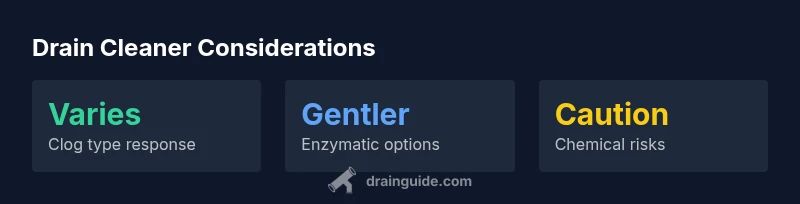
We’ll also tease apart the three broad categories you’ll encounter on the shelf: chemical cleaners that rely on caustic or oxidizing agents, enzymatic cleaners that feed on organic matter, and mechanical approaches that avoid chemicals altogether. The reality is that results vary widely: a light hair clog in modern PVC can respond quickly to an enzymatic option, while mineral buildup in older metal pipes often resists chemical treatments. This nuance matters if you’re aiming for cost efficiency and plumbing longevity.
Beyond the product labels, consider your household context: the age of your pipes, whether you have a septic system, and how many fixtures share the same drain. A clog that blocks a single sink is not the same as a main sewer backup. Your decision should hinge on the type of blockage, the probable cause, and the plumbing environment you’re protecting.
How drain cleaners work: chemistry, enzymes, and mechanics
Drain cleaners come in three broad families—chemical, enzymatic, and mechanical. Chemical cleaners use caustic or oxidizing agents to dissolve organic matter, hair, and soap scum. Enzymatic cleaners rely on bacteria or enzymes that slowly digest organic buildup, typically with gentler handling and longer wait times. Mechanical approaches involve non-chemical methods such as plungers, drain snakes, or hydro-jetting that physically remove the blockage. The right choice depends on the clog. Hair clogs often respond to enzymatic or mechanical methods; mineral scale or grease may resist chemical action. Understanding the underlying mechanism helps you set realistic expectations for what happens next and how quickly you’ll see relief. When you read labels, look for warnings about pipe material compatibility and septic system impact, and always follow product directions to minimize safety risks. This understanding is essential to avoid accidental damage and to maximize the likelihood of a favorable outcome.
When cleaners help vs. when to skip
Cleaners can be worth it for light, non-recurring clogs—especially when you want a quick DIY solution without immediate professional service. Enzymatic cleaners are appealing for maintenance since they’re gentler on pipes and buffers against harsh chemicals. However, for stubborn clogs or when you notice signs of complex issues (gurgling pipes, multiple fixtures affected, sewage odors), DIY chemical cleaners risk pushing you into a worse situation or damaging seals. If you’re dealing with a main drain or you have older metal pipes, the cost of failure is high and the benefit of a quick fix may be small. Evaluate the clog’s severity, document recent changes (hair, soap buildup, grease), and set a limit on the number of treatment attempts. In many cases, a professional assessment yields more reliable results than repeated DIY treatments. Drain Guide’s guidance emphasizes matching expectations to the problem and not forcing a solution where it isn’t appropriate.
Safety, risks, and pipe material considerations
Safety matters when using drain cleaners. Many chemical formulas rely on strong caustics or acids that can irritate skin and eyes and may interact with septic systems or PVC joints. If your home uses older pipes (galvanized metal or brittle PVC), or you’re unsure about the sewer line health, proceed with caution. Always ventilate the space, wear gloves, and keep children and pets away during treatment. If you have a septic system, enzymatic products are generally safer, as harsh chemicals can kill beneficial bacteria and disrupt the septic process. In addition, never mix cleaners with other household chemicals, as dangerous gases can form. Lastly, if you’re already hearing unusual sounds or seeing water backing up into other fixtures, stop and call a professional—delay can compound damage and cost.
Cost and value: evaluating the numbers
Price ranges for drain cleaners vary widely, from economy store-brand liquids to premium enzymatic blends. The value proposition should consider not just the purchase price, but also potential pipe damage, replacement costs, and your time. In many situations, a single well-chosen cleaner provides faster relief than a home remedy, but the longer-term maintenance costs can mount if the product is misapplied or if clogs recur. When evaluating value, compare the per-use cost to the expected lifetime benefit of avoiding service calls, while accounting for any potential risk to pipes or septic systems. Drain Guide emphasizes a cautious approach: treat cleaners as one tool in a broader toolbox, not a guaranteed solution for every clog.
It’s helpful to plan for a multi-step approach: first attempt a mechanical method, then consider a targeted cleaner if the clog remains, and reserve aggressive chemical treatments for clearly indicated situations. Afterward, reassess the drain’s performance and prepare for preventive maintenance to extend the interval before the next issue arises.
How to choose the right product for your situation
When choosing a cleaner, start by identifying the likely cause of the clog. For hair and soap scum, enzymatic cleaners are often effective and less harsh on pipes. For organic buildup or a combination of materials, you may opt for a chemical cleaner—but only if the product explicitly states compatibility with your pipe material and septic system. Always read the label for concentration, wait times, and whether it’s safe for septic systems. If you’re unsure, start with a enzymatic product and a mechanical method—this minimizes risk while still delivering potential relief. If the clog persists after one treatment, do not repeat the same product in quick succession. Some clogs require a different approach or professional intervention. Finally, consider a maintenance plan: routine cleaning, strainers, and periodic flushes can dramatically reduce future clogs.
Step-by-step usage guide for a typical household clog
- Identify the clog type and confirm it’s isolated to one fixture or shared by multiple fixtures. 2) Clear the immediate area and evacuate if odors are strong. 3) If using a plunger first, ensure a proper seal and a few strong, deliberate pumps. 4) Choose a cleaner that matches your pipe material and clog type, and follow the label’s instructions precisely. 5) Allow the recommended dwell time, then flush with hot or cold water as directed. 6) If the drain remains blocked, repeat once or switch to a non-chemical method. 7) After relief, run water for several minutes to ensure the clog is fully cleared and to check for lingering issues. This methodical approach minimizes risk and improves the odds of a successful outcome.
Alternatives that often beat cleaners on value and risk
For many homeowners, mechanical methods offer better long-term value. A plunger or a drain snake can clear most light to moderate clogs without introducing harsh chemicals into your plumbing system. Regular maintenance, such as using mesh strainers, flushing with boiling or hot water (where appropriate for your pipes), and a periodic baking soda-vinegar treatment as a non-chemical approach, can reduce the likelihood of recurring clogs. In cases where a clog recurs or is located in a shared main line, professional intervention (video inspection, hydro-jetting, or pipe relining) provides more durable results. Finally, built-in preventative strategies—such as avoiding grease going down the drain and promoting proper disposal of waste—are the most cost-effective ways to extend the life of your plumbing.
Long-term maintenance and expectations
Even if a cleaner fixes a current clog, ongoing maintenance matters. The Drain Guide perspective emphasizes a proactive approach: address root causes (hair accumulation, soap scum, mineral buildup) and institute routine checks. Regular cleaning with safe products, proper disposal habits, and occasional mechanical cleanouts can significantly reduce the chance of future clogs. Building a small maintenance routine into your schedule—like monthly drain checks and gasket/llexible seal inspections—helps avoid the cycle of repeated treatments and escalating costs. With thoughtful usage and preventive care, drain cleaners become one small part of a larger plumbing strategy rather than a standalone solution.
Positives
- Quick relief for light, isolated clogs
- Enzymatic options are gentler on pipes
- Wide availability and easy to use
Cons
- Variable effectiveness by clog type
- Risk of pipe or septic system damage with misuse
- Can mask underlying plumbing issues
Best for light, isolated clogs; not a universal fix for all plumbing problems
For many households, cleaners offer fast relief for minor blockages, but they’re not a one-size-fits-all solution. The Drain Guide team recommends pairing chemical cleaners with mechanical methods and preventive maintenance, and seeking professional advice for recurring or complex clogs.
Got Questions?
Is drain cleaner worth it for every clog?
No. Cleaners work best for light, isolated clogs and when used correctly. For stubborn or recurring clogs, or if you notice multiple fixtures affected, professional assessment is wiser.
Not for every clog—use them for light blockages and seek professional help for persistent issues.
Are chemical drain cleaners safe for pipes?
Chemical cleaners can be corrosive and may damage weakened pipes or PVC joints. Always check pipe material compatibility and septic system impact on the label, and avoid mixing products.
They can be risky for some pipes; read the label and avoid mixing with other cleaners.
What’s the difference between enzymatic and chemical cleaners?
Enzymatic cleaners digest organic buildup slowly and are gentler on pipes but take longer. Chemical cleaners act quickly but can be harsher and riskier for certain plumbing.
Enzymatic cleaners are gentler and slower; chemical cleaners are faster but harsher.
How long should I wait after using a cleaner before flushing?
Follow the product label: typical dwell times range from 15 minutes to several hours before flushing with water.
Check the label for the exact wait time and flush as directed.
Are there safer non-chemical methods?
Yes. Mechanical methods like plungers or drain snakes, plus routine maintenance and hot water flushing, can clear many clogs without chemicals.
Plunger or snake plus regular maintenance can often solve the issue safely.
When should I call a professional?
If a clog recurs, affects multiple fixtures, or you hear gurgling or sewage odors, professional assessment is advised to prevent further damage.
If it keeps coming back or you hear weird noises, call a pro.
The Essentials
- Assess clog type before choosing a cleaner
- Prefer enzymatic cleaners for routine maintenance
- Avoid using chemicals on old pipes or septic systems
- Combine cleaners with mechanical methods for stubborn clogs
- Call a professional for recurring or severe issues