Patio Channel Drain: Clean, Inspect, and Maintain
Discover how to inspect, clean, and maintain a patio channel drain to prevent pooling, erosion, and slippery surfaces. This comprehensive guide covers tools, step-by-step actions, safety tips, and a practical maintenance routine for durable drainage.


Goal: Diagnose and resolve clogs in a patio channel drain, restoring proper drainage and preventing water damage. You’ll learn how to locate the grate, remove surface debris, safely open the channel, clear blockages, and flush the system. The guide also covers essential tools, safety tips, and a simple maintenance routine to keep your patio draining well year-round.
What is a patio channel drain?
According to Drain Guide, a patio channel drain is a shallow, grated trough installed along the edge or surface of a patio to collect surface water and transport it away from the living area. The system typically sits in a small trench and slopes slightly toward an outlet or French drain, so gravity does the work. The channel sections are often made of PVC or polymer concrete, with a metal or plastic grate on top to allow water in while keeping debris out. Properly installed, it prevents water from pooling on concrete slabs, which can cause cracks, slippery surfaces, and damage to foundations. A patio channel drain is different from a traditional drain in that it is embedded at surface level, designed for surface runoff, and wide enough to capture debris but narrow enough to be hidden within the patio profile. Regular maintenance helps maintain the slope and prevents blockages from leaves, silt, or soil that intrudes into the channel.
Why patio channel drains fail and why it matters
Patio channel drains can fail for several reasons, most stemming from the debris and weather that accompany outdoor spaces. Leaves, soil, and mulch can accumulate in the grate and trench, gradually reducing flow. Roots from nearby plants may intrude into the channel, causing cracks or partitions that slow water movement. Improper slope or misalignment during installation can redirect water to other areas, leading to pooling and erosion. Damaged grates or cracked channel bodies allow grit to enter the system, accelerating blockages. When a channel drain fails, you’ll notice water pooling on the surface after rain, increased dirt around the grate, and sometimes a musty odor indicating stagnation. Regular maintenance helps prevent these problems and protects your patio’s structural integrity. Drain Guide emphasizes consistent inspection and safe cleaning practices to extend the life of the system.
Key components of a patio channel drain system
A patio channel drain system consists of several essential parts and connections. The grate covers the opening to prevent large debris from entering, while the channel body carries water along a designed slope toward an outlet. An outlet pipe or connection links to the storm sewer or groundwater, and an end cap seals unused sections. A cleanout plug provides access for blocking removal without dismantling the entire run. Seals or gaskets keep joints water-tight, and bedding material beneath the channel maintains proper slope. Proper installation ensures a continuous, unobstructed path for surface runoff. Understanding these components helps you diagnose issues accurately during maintenance and avoid unnecessary replacements. Drain Guide recommends inspecting joints, grates, and outlet connections during routine checks to catch wear before it becomes a problem.
When to clean vs replace: signs to watch
Deciding between cleaning and replacement depends on the severity and nature of the issue. Regular cleaning removes leaf litter, silt, and minor blockages that reduce efficiency. If the grate is cracked, the channel shows obvious structural damage, or the outlet connection leaks consistently, replacement sections or the entire run may be necessary. Persistent pooling despite cleaning can indicate deeper problems such as misalignment of the slope, failed seals, or a blocked upstream line. If you notice a foul odor, persistent dampness around the trench, or water backing up into the channel, these are strong signals that professional assessment may be required. Regularly inspecting the channel and its components makes it easier to decide whether to clean, repair, or replace.
Tools, safety, and preparation
Before starting any work, gather the right tools and observe safety precautions. Wear non-slip, closed-toe footwear and gloves to protect hands from sharp grate edges and debris. Eye protection is essential when dislodging grime or spraying water. Have a sturdy ladder or stable access if you need to work near edges. Ensure your power tools are unplugged if you’re near electrical outlets or sump pumps. Prepare a bucket for debris, a garden hose for flushing, a drain snake or flexible auger for blockages, and a brush or trowel to loosen grit. Checking the weather forecast helps; avoid working in heavy rain that can re-clog or create slippery conditions. With a clear plan and the right PPE, you reduce safety risks and make the process smoother. Drain Guide recommends taking photos before dismantling components to aid reassembly later.
Step-by-step: cleaning a clogged patio channel drain
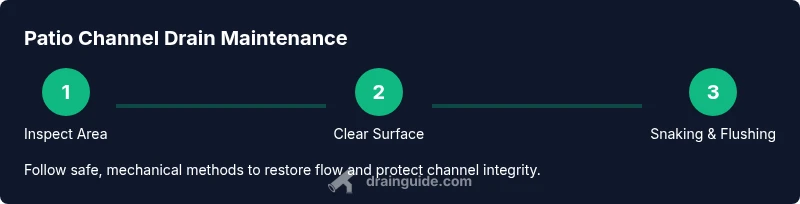
In this section you’ll find actionable steps aligned with our formal Step-by-Step block. Use the steps as a practical checklist during a cleanup session. Remember to work slowly and test water flow after each major action to confirm improvements and avoid creating new clogs. If you encounter persistent resistance, pause and reassess rather than forcing components apart. The aim is to restore flow without damaging the channel or surrounding materials. Drain Guide emphasizes documenting each stage so you can reproduce effective maintenance in the future.
Seasonal maintenance and preventative tips
Seasonal maintenance helps keep patio channel drains functioning well year-round. In the spring, remove winter debris and check for frost damage. In the fall, clean leaves from the grate and ensure that storm runoff remains directed toward the outlet. After heavy storms, inspect for silt buildup and reseal any joints showing gaps. Consider installing a leaf guard or hood to reduce debris entry, and periodically verify that the slope remains correct after soil settling or ground movement. A simple habit, like a 15-minute quarterly inspection, can dramatically reduce clog risk and prolong the life of your drainage system. Drain Guide recommends pairing inspections with a light cleaning schedule to minimize disruptions and protect outdoor living spaces.
Common mistakes to avoid
Common mistakes include using harsh chemical cleaners that can corrode seals and pipes, over-tightening fasteners that crack grates, and attempting to pull the channel apart without proper support. Another error is neglecting the slope and allowing water to pool due to poor drainage design. Failing to remove surrounding vegetation or to reseal joints after damage can invite recurring clogs. Finally, using improvised tools that scratch or gouge the channel during cleaning weakens the structure and creates a longer-term maintenance burden. Learn to work methodically, follow manufacturer or local guidelines, and respect the integrity of the system.
Troubleshooting: what to do if water pools after cleaning
If water pools after cleaning, check the full drainage path for upstream blockages, including grates, downstream pipes, and the outlet. Inspect the slope angle to ensure gravity takes water toward the exit rather than pooling mid-run. Examine the channel for cracks or deformation that may divert flow and seal gaps with appropriate materials. In some cases, the problem lies further upstream or in the connection to the storm sewer; in these situations, professional assessment is recommended. Regular prevention—cleaning the grate, removing soil from the trench, and verifying proper outlet function—helps avoid recurring problems and keeps patio areas safe and comfortable. Drain Guide’s approach emphasizes a methodical, tool-assisted inspection rather than guesswork.
Tools & Materials
- Gloves (nitrile or rubber)(Protect hands from sharp edges and debris)
- Safety glasses(Eye protection against splashes and debris)
- Drain snake or flexible auger(For breaking up clogs inside the channel)
- Grate screwdriver or cordless drill with bit(To remove grate screws if needed)
- Garden trowel or sturdy scoop(For scooping debris from the grate area)
- Bucket(Contain debris and water during cleaning)
- Garden hose with adjustable nozzle(Flush debris and test flow; keep water under control)
- Wet/dry shop vacuum(Optionally remove pooling water quickly)
- Silicone sealant or masonry epoxy(Seal joints if needed after cleaning or repair)
- Grate replacement or channel seal kit(On-hand spare parts for damaged components)
Steps
Estimated time: 60-120 minutes
- 1
Inspect area and gather tools
Put on PPE and gather all tools before starting. Survey the patio for loose slabs, shifting ground, or exposed electrical outlets. Note the grate type and grate screws so you know what to remove. This upfront check saves surprises mid-cleaning.
Tip: Wear eye protection and keep a second set of gloves handy in case you handle sharp debris. - 2
Clear surface debris around the grate
Sweep leaves, dirt, and mulch from the grate and surrounding surface. Use a broom or gloved hands to avoid injuring yourself on sharp grit. Place the debris in a bucket for proper disposal and to prevent re-entry into the channel.
Tip: Work from the grate outward to prevent pushing debris back into the channel. - 3
Remove the grate to access the channel
If the grate is held by screws, use a screwdriver or drill to remove them carefully. Lift the grate straight up and set it aside in a safe place. Inspect the opening for any visible blockages or damage to the channel mouth.
Tip: Support the grate as you lift to avoid dropping it into the drain. - 4
Clear blockages with a snake or rod
Gently feed the snake into the channel, turning as you advance to break up debris. Pull back any loosened material in small sections to avoid compressing it further into the pipe. If you encounter roots or a heavy clog, pause and reassess to avoid damaging the channel.
Tip: Do not force the snake; back out and try a different angle if resistance is strong. - 5
Flush the system and test water flow
Reconnect water flow with a garden hose and observe the water movement through the channel. If water remains slow, repeat snaking or use a different tool such as a flexible rod. Confirm that water exits freely at the outlet before reinstalling the grate.
Tip: Test from multiple points along the channel to ensure even flow. - 6
Reinstall grate and perform final test
Place the grate back, secure it, and wipe away any residual water. Run a final rainfall test or simulate runoff to ensure the system drains efficiently. Document the maintenance for future reference and establish a maintenance cadence.
Tip: Set calendar reminders for periodic inspections to maintain performance.
Got Questions?
What is a patio channel drain and how does it work?
A patio channel drain is a shallow, grated trough that collects surface water from a patio and channels it away to a outlet or drainage system. It relies on gravity and a properly sloped trench to keep surfaces dry and prevent pooling. Routine maintenance helps keep the channel clear and functioning.
A patio channel drain is a shallow trough with a grate that collects water and carries it away through gravity. Regular cleaning keeps it flowing smoothly.
How often should I clean a patio channel drain?
Clean it as part of your seasonal maintenance—ideally in spring and after major storms. If you notice pooling or slow drainage, inspect and clean sooner. Regular checks prevent bigger problems and maintain safety.
Do maintenance twice a year, or after heavy rain if you see pooling.
What tools do I need for maintenance?
Basic tools include gloves, safety glasses, a drain snake or flexible rod, a garden hose, a bucket, and a trowel. Optional items are a wet/dry vac and silicone sealant for joint resealing.
You’ll need gloves, a hose, a snake or rod, and a bucket to start.
Can I use chemical cleaners to clear clogs?
Avoid caustic chemicals near outdoor channels; they can damage seals and pipes and harm the environment. Mechanical clearing with a snake or rod is safer and often more effective for patio drains.
No—use mechanical methods like a drain snake rather than harsh chemicals.
What if water still pools after cleaning?
Check upstream and downstream paths for blockages, ensure proper slope, and inspect joints for leaks. If the problem persists, the pipe or outlet may be damaged or misaligned, and a professional assessment is recommended.
If pooling continues, inspect the entire drainage path and consider professional help.
Is it worth replacing a damaged channel drain?
If the channel or grate is cracked or misaligned beyond simple sealing, replacement parts or the entire run may be necessary for reliable drainage. Weigh cost against the benefits of improved drainage and safety.
Damaged channels often need replacement to restore full function.
Watch Video
The Essentials
- Inspect and plan before starting work
- Clear surface debris to protect the channel
- Use mechanical methods to clear blockages—not forceful pulling
- Test flow after each step to verify improvements
- Schedule routine maintenance to prevent clogs