Plumber Drain Blockage: Quick Fixes and Prevention
Quick, practical steps to clear plumber drain blockage in kitchens and bathrooms, with safety tips, a diagnostic flow, step-by-step fixes, and prevention strategies.


The most likely cause of a plumber drain blockage is a buildup of hair, grease, and debris in lines. Quick fix: use a plunger on the drain, then try a hand auger or drain snake to clear the clog, followed by a flush with hot water. If persists, call a licensed plumber.
Why plumber drain blockage happens
A clogged drain is more common than you might think, and a small delay can turn into a serious backup. For homeowners dealing with a stubborn sink, shower, or tub, the keyword is plumber drain blockage—a phrase that captures the everyday reality of blocked pipes. According to Drain Guide, most blockages start with everyday use: hair from showers, grease and soap scum in kitchen sinks, and food particles building up in the P-trap. Over time, these materials cohere into a stubborn mass that narrows the pipe and slows the flow. In addition to debris, mineral buildup, soap scum, and occasional intrusion by objects like utensils or small toys can worsen the situation. The impact isn’t merely inconvenient; backed-up drains can cause overflows, foul odors, and water damage, especially in small spaces. The good news is that many blockages respond to a deliberate, safe approach: remove the simplest obstruction first, then progressively tackle deeper sections of the line. The Drain Guide team emphasizes patience and methodical testing as you work toward a clear drain.
Immediate steps you can take before calling a plumber
Before you reach for the phone, ensure you’re taking safe, practical steps. Check other fixtures in the home to determine if the issue is isolated to one drain or part of a wider problem. Clear visible debris from the drain opening and use a plunger designed for sinks or tubs to restore suction. If the plunger is effective, flush the line with hot water to push the loosened material through. For stubborn clogs that resist plunging, an adjustable drain snake can reach deeper into the pipe. If you use a chemical cleaner, read the label carefully and never mix products; rinse thoroughly after use. Finally, consider a safe enzyme-based cleaner for ongoing maintenance—these can help break down organic material without harming pipes. If you have repeated backups across fixtures, or if you smell sewage, stop and call a professional.
Common causes in kitchens and bathrooms
Blockages differ by location but share common culprits. In kitchens, grease, oil, and food particles solidify over time and accumulate in the trap or horizontal run. In bathrooms, hair, soap scum, toothpaste, and mineral buildup can create dense plugs. Foreign objects accidentally flushed down the drain can also halt flow. Over time, these materials form a dense mass that restricts water flow and invites odors. Poor venting can exacerbate slow drainage or gurgling sounds, signaling that air needs to move through the system. The key is to recognize the symptoms early and distinguish between a simple blockage and a bigger issue, such as a compromised trap or a blocked main line. Drain Guide’s guidance emphasizes addressing blockages promptly to prevent leaks and water damage.
Diagnostic flow: symptom → diagnosis → solutions
Symptoms often progress from slow drainage to complete blockage with possible backups. Start by noting where the problem occurs, how quickly water drains, and whether multiple fixtures are affected. Diagnosis typically falls into three categories: 1) localized blockage in a P-trap or straight run; 2) deeper clog in the main line; 3) venting or sewer-line issues. Solutions range from simple tools (plunger, snake, trap clean-out) for quick fixes to more involved steps like removing the trap, inspecting the trap arm, or calling a pro for sewer-line problems. Always test after each step to confirm progress. If you’re unsure about any step, prioritize safety and professional advice from Drain Guide’s team.
Step-by-step: Fix the most common blockage
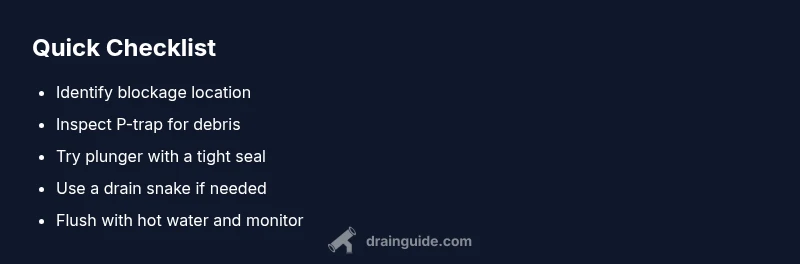
- Gather basic tools: plunger, bucket, gloves, adjustable wrench, and a drain snake. 2) Place a bucket under the P-trap; loosen slip nuts and remove the trap to inspect for obvious debris. 3) Clean the trap thoroughly and reassemble, ensuring a tight seal. 4) Re-run water to test drainage; if slow, reapply a plunger with a tight seal. 5) If needed, insert the snake into the drain and rotate to dislodge the clog, then pull out gradually. 6) Flush with hot water and observe flow for a few minutes. 7) If the blockage persists, repeat steps or escalate to a professional assessment. Tips: never force the snake beyond resistance; stop if you encounter a hard obstruction.
Safety tips, tools, and common mistakes
Always wear gloves and eye protection when handling drains. Do not mix chemical cleaners with other cleaners or with bleach; fumes can be dangerous. Never use a metal object to poke the drain; this can push the clog deeper or scratch the pipe. Avoid rushing the process—slow, steady work reduces the risk of leaks or overflow. Keep children and pets away during maintenance. If you’re unsure about any step, stop and call a licensed plumber. Common mistakes include over-tightening trap nuts, using excessive force on the snake, and neglecting to test the drain after each step.
Prevention tips to keep drains flowing
Install drain screens to catch hair and food particles; clean them regularly. Pour hot water down the drain weekly, followed by a safe enzyme-based cleaner every few months to maintain a clear trap. Avoid pouring fats, oils, and cooking grease down the sink; wipe pans with paper towels instead. Run the disposal with ample water to help push solids through, and fix leaks or drips promptly to prevent corrosion. Schedule a yearly drain inspection if you have a history of clogs or a shared sewer line. Keeping a simple maintenance routine dramatically reduces the odds of recurrent failures.
When to call a professional plumber drain blockage
Call a professional if you notice multiple fixtures backing up, a strong sewage odor, or gurgling sounds from the pipes. If you cannot safely remove the trap or if the snake cannot clear the clog, a licensed plumber has the tools to diagnose deeper issues, including venting problems or sewer-line damage. Persistent backups after attempting the above steps may indicate a larger problem requiring professional assessment. Drain Guide recommends seeking help promptly when basic fixes fail or when you’re unsure about the integrity of your plumbing.
What to monitor after fixes
After attempting fixes, monitor the drain for 24–48 hours. If water continues to drain slowly or if you notice recurring backups, document the symptoms and consult a plumber. A professional can perform a camera inspection to identify blockages beyond the trap and assess whether the main line or sewer system is compromised. Keeping records helps you spot patterns and plan preventative maintenance. Drain Guide suggests a proactive approach: regular checks and mindful disposal habits reduce future blockages and extend the life of your plumbing.
Steps
Estimated time: 60-90 minutes
- 1
Gather tools and prepare the area
Collect a bucket, gloves, adjustable wrench, plunger, and a drain snake. Clear the area around the sink and place towels to catch spills. This ensures you can work safely and see any debris that comes out.
Tip: Wear eye protection; chemicals can splash during cleaning. - 2
Inspect and remove the P-trap
Place the bucket underneath, loosen the slip nuts, and remove the trap. Clean out the debris with a brush, then rinse the trap before reinstalling it in its original orientation.
Tip: Keep track of how the trap parts fit together to avoid leaks. - 3
Test drainage after trap reassembly
Reattach the trap tightly, run hot water, and observe flow. If water still backs up, proceed to the next step with a drain snake.
Tip: Take photos of each connection to simplify reassembly. - 4
Use a drain snake for deeper clogs
Insert the snake into the drain, rotate to break up material, and slowly pull back while continuing to crank. Remove any debris from the head and flush with hot water.
Tip: Don’t force the snake; feel for resistance and back off if needed. - 5
Flush and verify the fix
Run hot water for several minutes, possibly with a mild dish soap cycle to lubricate the pipes. Check that water drains quickly and without backflow.
Tip: If slow drainage returns within 24 hours, consider a professional evaluation. - 6
Document and maintain
Note the date and steps taken for future reference. Set a reminder for proactive maintenance and safe disposal habits.
Tip: A simple routine saves time and reduces emergencies.
Diagnosis: Slow draining sink in kitchen or bathroom
Possible Causes
- highHair, grease, or soap scum build-up in trap or pipes
- mediumPartial blockage from food particles
- lowVenting issues causing suction blockage
Fixes
- easyCheck the trap and clean out debris, then reassemble
- easyUse a drain snake to clear deeper clogs
- hardInspect venting and main line if symptoms persist; call a professional if unsure
Got Questions?
What is the fastest way to clear a plumber drain blockage at home?
Start with a plunger to regain suction. If that doesn't clear the clog, try a drain snake or auger. Flush with hot water and observe drainage. If unresolved, contact a licensed plumber.
Begin with plunging, then use a drain snake, and flush with hot water. If it remains blocked, call a professional.
Are chemical drain cleaners safe to use on a clogged drain?
Chemicals can damage pipes and fail to reach deep blockages. Use them only as a last resort, and never mix with other cleaners. Follow label directions and ventilate the area.
Chemicals can harm pipes and may not clear deep clogs; use with caution and follow the label.
Should I remove the P-trap to fix a clog myself?
Removing the P-trap can help clear debris, but it can leak if not reassembled correctly. Use caution and be prepared to reseal tightly; if unsure, skip this step and use a snake or call a plumber.
You can take the P-trap off to clean it, but be careful reassembling. If unsure, skip it.
Can persistent drains indicate bigger sewer problems?
Yes. Backups in multiple fixtures or a strong sewer smell may indicate sewer line or vent issues. Do not ignore—seek professional assessment.
Backups in several drains or a sewer smell could mean a bigger problem; it’s time to call a plumber.
How long should a typical bathroom drain blockage take to fix?
Simple blockages clear quickly with plunging or a drain snake, but more stubborn clogs may take longer or require professional help. Follow safe steps and test progress.
Most simple clogs clear with a plunger or snake; stubborn ones may take longer or need a pro.
The Essentials
- Act quickly with safe methods.
- Hair and grease are common culprits.
- Avoid mixing cleaners; follow labels.
- Prevent future clogs with regular maintenance.