Pop Up Drain vs Regular Drain: An Objective Guide
A thorough, objective comparison of pop up drains and regular drains, covering mechanism, installation, maintenance, costs, aesthetics, and scene-specific guidance for bathrooms, kitchens, and showers.


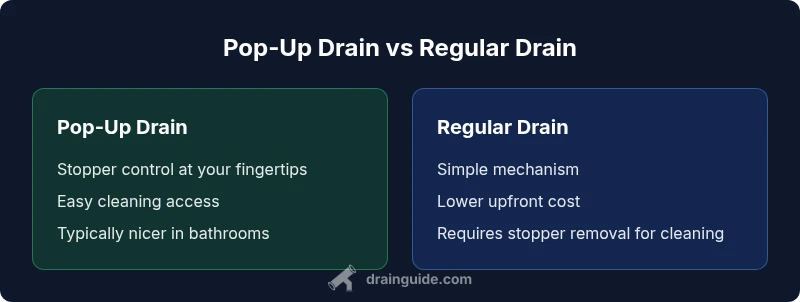
Pop up drain vs regular drain: the pop-up version uses a hinged stopper that lifts to seal or release water, offering quick access for cleaning, while a traditional fixed strainer relies on a simple plug or no stopper. For most bathroom sinks, pop-up drains reduce mess and simplify maintenance, but regular drains may be cheaper and easier to install.
Overview: Pop up drain vs regular drain in everyday plumbing
When homeowners ask about the differences between a pop up drain vs regular drain, they’re really weighing control, maintenance, and aesthetics. The pop-up drain design includes an integrated stopper that you lift with a lever or turn via a tailpiece, enabling quick sealing and easy access for hair and debris removal. In contrast, a regular drain typically uses a fixed strainer and a separate plug or a threaded stopper that requires removal to clear clogs. Drain configurations differ by room—bathroom sinks often favor pop-up assemblies for instant stopper control, while kitchen sinks may lean toward simpler regular drains for reliability and simplicity. According to Drain Guide, the choice often hinges on how frequently you need to adjust the water seal, how important visual uniformity is, and how easy you want access to the drain during cleaning. Drain Guide Analysis, 2026 suggests that households upgrading to pop-up models report easier maintenance in bathrooms, though kitchens sometimes favor the lower upfront cost of standard drains. The decision should consider user preferences, cleaning habits, and the sink’s mounting style, which influence both performance and long-term satisfaction.
Comparison
| Feature | Pop-up drain | Regular drain |
|---|---|---|
| Installation complexity | Moderate to advanced DIY or professional install | Low to moderate DIY installation; often quick replacement |
| Maintenance ease | Very easy access to stopper; hair removal is straightforward | Requires removing the stopper or strainer to access the trap |
| Leak risk | Low risk when correctly installed; stationary components reduce wear | Potential for wear at the plug/washer over time if not maintained |
| Price range (parts/labor) | Mid-range for parts; labor varies by mounting | Typically lower upfront part cost; labor varies by region |
| Best for | Bathrooms seeking easy stopper control and cleanup | Kitchens seeking simple reliability and lower upfront cost |
| Aesthetics | Can be highly visible; finishes match fixtures | Usually less conspicuous; mainstream finishes |
Positives
- Easier cleaning and maintenance due to lift-style stopper
- Enhanced sealing and adjustable water control in bathroom setups
- Flexible finishes and compatibility with modern fixtures
Cons
- More moving parts can require periodic maintenance
- Slightly higher upfront cost compared to basic drains
- Replacement or repair can be trickier in tight cabinet spaces in some installations
Pop-up drains are generally the better all-around choice for bathrooms, thanks to easier maintenance and stopper control; regular drains often win on upfront simplicity and cost in kitchens.
For bathrooms, prioritize pop-up drains for easier cleaning and sealing. For kitchens or simple-upGRADE projects, regular drains may offer lower initial cost and straightforward replacement; choose based on room function and your maintenance tolerance.
Got Questions?
Which sink types typically use pop-up drains?
Pop-up drains are most common in bathroom sinks and some vanity setups where immediate stopper control is desirable. They’re less common in certain laundry or utility sinks where a simpler drain is preferred. Always verify compatibility with your sink’s overflow and mounting hardware.
Pop-up drains are typical for bathroom sinks where you want easy stopper control and cleaning access.
Can I convert a regular drain to a pop-up drain?
Yes, in many cases you can convert a regular drain to a pop-up drain by replacing the strainer and tailpiece and adding the lift rod mechanism. The process varies by sink type and cabinet clearance, so check the existing plumbing and mounting hardware.
Yes, but you may need to adjust underneath the sink and replace components.
Are pop-up drains more prone to leaks?
Both types can leak if improperly installed or worn components are used. Pop-up drains introduce additional seals and moving parts, so proper installation and periodic inspection are important to prevent leaks.
Leaks can happen with either type if not installed correctly.
Do pop-up drains require overflow compatibility?
Many bathroom sinks have an overflow channel; pop-up drains are designed to work with overflow fittings, but you must verify compatibility before purchasing. In some setups, you may need additional adapters or mounting hardware.
Check for overflow compatibility before buying.
Is maintenance heavier for pop-up drains?
Maintenance can be slightly higher for pop-up drains due to the stopper mechanism and linkage. Regular inspection of the pivot rod, seal washers, and the seal between the stopper and drain is recommended.
There’s a bit more moving parts to check, but it’s manageable with routine care.
What should I consider for kitchen vs bathroom use?
In kitchens, durability and ease of cleaning are key; regular drains can be simpler and cheaper. In bathrooms, the stopper control and maintenance access of pop-up drains are often worth the extra cost.
Bathrooms tend to benefit from pop-up drains more than kitchens.
The Essentials
- Choose pop-up drains for bathrooms to simplify stopper control and cleaning
- Regular drains tend to be cheaper upfront and simpler to install
- Maintenance access is the primary differentiator between the two options
- Ensure compatibility with your sink’s overflow and tailpiece when upgrading
- Expect modest price ranges for parts and varying labor costs by region