Portable AC Drain Hose Guide: Setup, Drainage, and Maintenance
Master setup, drainage options, safety, and maintenance for portable air conditioners with a drain hose. This step-by-step guide helps homeowners choose the best drainage method, route condensate safely, and maintain efficient cooling.


With a portable AC, you’ll learn how to route the condensate drain hose to an appropriate outlet, select between gravity drainage, condensate pumping, or a direct bucket disposal, and verify proper airflow. This quick guide covers placement, drainage setup, electrical safety, and routine maintenance to keep your unit operating reliably all season long.
What is a portable air conditioner with a drain hose?
A portable air conditioner (AC) is a self-contained cooling unit designed to sit in one room. Unlike window units, it uses a built-in condensate drainage system to remove moisture collected during operation. The drain hose is the critical conduit that vents this condensate to a drain, bucket, or pump. Proper drainage is essential to prevent water pooling around the unit, reduce humidity, and maintain cooling efficiency. In many models, the hose is integrated into the back panel and can be directed toward a sink, tub, window kit, or dedicated condensate pump. Understanding how your drain hose works will save you headaches and energy costs, especially during hot or humid weather.
In short, a portable AC with a drain hose is designed to expel condensate water as part of its normal operation. The hose route and method you choose depend on your living space, installation constraints, and local plumbing rules. Drainage is not optional—it's a core part of keeping the compressor and evaporator functioning properly and avoiding unwanted moisture buildup in your home.
Assessing drainage needs for your space
Before you start, map out where the condensate will go. If you have a nearby floor drain, sink, or a window with a vent sleeve, you can often run the drain hose directly to that outlet. In apartments or rooms without easy drainage, you may need a condensate pump to move water to a toilet, sink, or outdoor drain. Consider the hose length, slope, and potential kinks that could impede flow. A clear, straight path with minimal turns prevents clogs and reduces the risk of backflow. If you rent, check with building management about approved drainage routes to avoid damage or violations.
Other considerations include the unit’s location relative to a power outlet and the need for a stable surface. Place the AC on a flat, level surface to reduce vibration that could loosen hose connections. Ensure your drainage path stays dry and away from electrical outlets. By planning drainage first, you’ll maximize efficiency and comfort while protecting your space from excess moisture.
Safety and space planning for portable AC installation
Electrical safety is paramount when operating any cooling appliance. Keep the unit dry, away from standing water, and ensure the power cord and plug are intact. Do not use damaged hoses or fittings. Sufficient clearance around the unit prevents overheating and improves airflow. Position the AC so warm exhaust air and condensate don’t flow back into the room, and ensure the drain hose has a downward slope to prevent backflow.
In addition to safety, consider room layout. If the window kit isn’t feasible due to window size or wall obstructions, you may need alternative drainage methods, such as a condensate pump or an outdoor drain. Proper placement minimizes heat exchange with outdoor air and helps the unit reach the set temperature more reliably.
Common drainage problems and practical fixes
Drainage problems often stem from hose kinks, insufficient slope, or blockages inside the hose. Regularly inspect the hose for bends and kinks, especially at connection points. If you notice standing water around the unit, double-check the hose orientation and outlet height. A blocked condensate line can lead to reduced efficiency and overflow in some models. For persistent issues, consider a small pump or alternate drainage route. Always ensure any pump or adapter is compatible with your unit’s hose diameter and fittings.
Root causes can also include debris or mineral buildup inside the hose, or a misfit window kit allowing air leakage. Addressing these issues promptly keeps humidity levels under control and protects floor surfaces from moisture damage.
Maintenance and long-term care for optimal drainage
Maintenance is the quiet workhorse of reliable drainage. Clean or replace the air filter monthly during heavy use to maintain airflow and reduce moisture saturation in the unit. Check the drain hose connection points for tightness and wear, and replace damaged hoses promptly. If you use a condensate pump, test the pump regularly to ensure it activates when condensate reaches the sensor.
Seasonal care includes storing hoses neatly to prevent cracks and avoiding freezing temperatures that could damage the hose material. A simple inspection routine—visual check, hose cleaning, and connection tests—helps extend the life of your portable AC and keeps drainage predictable.
Choosing drainage methods: gravity, pump, or bucket disposal
Gravity drainage is the simplest method when a downward outlet is available at or below the unit’s level. A condensate pump is ideal for rooms without a suitable gravity drain, moving water to a sink, tub, or outdoor drain. Bucket disposal is a temporary solution for short-term use or during setup and testing, but it requires regular emptying to prevent overflow. Evaluate the noise, maintenance, and power requirements of pumps versus the convenience of gravity drainage. Always route the hose with a gentle downward slope and avoid long runs that increase the risk of air leaks and condensation buildup.
Tools & Materials
- Portable AC unit(Ensure it includes a drain hose and window kit (if needed).)
- Drain hose(Use the hose that came with the unit; replacement hoses should match diameter.)
- Window vent kit or alternative outlet(Needed for proper exhaust and drainage routing.)
- Bucket or shallow tray(Use for temporary disposal if no drain is available.)
- Condensate pump (optional)(Required for non-gravity drainage setups.)
- Adjustable wrench or pliers(Helpful for securing hose clamps and fittings.)
- Tape measure(Plan hose route with proper length and slope.)
- Utility knife or scissors(Trim insulation or window kit if needed.)
- Silicone sealant or foam tape(Seal gaps around window kit to prevent air leaks.)
Steps
Estimated time: 60-90 minutes
- 1
Unpack and inspect
Remove the portable AC from the box and check all components, including the drain hose and window kit. Look for any shipping damage and confirm all connections are present. If something is missing, contact the retailer before proceeding.
Tip: Take photos of any damaged parts for warranty claims. - 2
Choose a drainage route
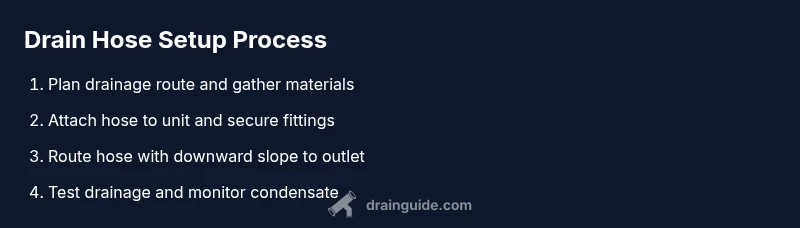
Decide whether you’ll use gravity drainage to a nearby drain, a condensate pump, or a temporary bucket. Confirm the chosen route offers a downward slope for easy flow and reduces risk of backflow.
Tip: Prefer gravity drainage whenever possible to minimize maintenance. - 3
Attach the drain hose
Securely connect the drain hose to the unit’s drain outlet, ensuring a tight fit with clamps if provided. Avoid overtightening to prevent cracking. Check that the hose orientation is away from the unit’s exhaust path.
Tip: Test-fit the hose before finalizing to avoid surprises later. - 4
Route toward drainage
Lay out the hose path, keeping bends smooth and shallow. Avoid loops that trap water and produce backpressure. If running through a window, install the window kit to seal gaps around the hose.
Tip: Use foam tape to seal any gaps around the hose or window opening. - 5
Install window vent or outlet
Mount the window vent kit securely, or prepare an alternative outlet for the condensate. Ensure the exhaust path is clear of obstructions and the hose won’t kink.
Tip: Check for air leaks around the vent and seal promptly. - 6
Create proper slope
Ensure the drain hose runs with a consistent downward slope toward the drain point. A slope of a few degrees is enough to promote gravity flow and prevent standing water.
Tip: Use clamps or stable guides to maintain slope over long runs. - 7
Power up and test drainage
Plug in the unit and run a short cooling cycle. Observe condensate flow through the hose and listen for unusual noises indicating a kink or blockage. Stop if water pools near the unit.
Tip: Have a bucket handy for any initial overflow during testing. - 8
Check and clean the filter
Open the unit’s access panel and inspect the air filter. A clogged filter reduces airflow and can increase humidity, affecting drainage efficiency. Clean or replace as needed.
Tip: Clean filters monthly during high-use periods. - 9
Plan ongoing maintenance
Set a routine to inspect hoses, seals, and the window kit. If you use a pump, test it monthly and ensure the reservoir is not overflowing.
Tip: Keep spare hose clamps and a small bottle of silicone sealant on hand for quick fixes.
Got Questions?
Do portable AC units always require a drain hose?
Most portable AC units produce condensate that must drain away. Depending on the model, you may have gravity drainage, a condensate pump, or a temporary bucket method. Always consult the user manual for your unit’s drainage requirements.
Yes. Most portable ACs need a drainage path for condensate, using gravity, a pump, or a bucket depending on the model.
Can I drain condensate into a sink or toilet?
Condensate is typically just water and minerals; draining into a sink or outdoor drain is common. Check local codes and the unit’s manual to ensure compatibility and avoid backflow.
Condensate can usually be drained into a sink or outside drain, but check local rules and your unit’s instructions.
What’s the best drainage method if I have no window or outlet nearby?
A condensate pump is often the best solution when gravity drainage isn’t feasible. It moves condensate to a nearby drain or outdoor area. Ensure the pump is compatible with your hose diameter.
If you lack a nearby drain, use a condensate pump to move water to an appropriate outlet.
How often should I inspect the drain hose?
Check the hose for kinks, tightening, and leaks at least monthly during heavy use. Clean any buildup inside the hose to prevent blockages and maintain airflow.
Inspect the hose monthly and clean it to prevent clogs.
Is it safe to leave a drained portable AC on overnight?
Yes, as long as the drainage path is secure, the unit is on a stable surface, and safety clearances are met. Monitor for leaks or unusual noises and perform regular maintenance.
Yes, with a secure drainage path and proper maintenance, overnight use is fine.
Watch Video
The Essentials
- Plan drainage before setup and choose gravity, pump, or bucket method.
- Ensure hose slope and avoid kinks to prevent backflow.
- Prioritize safety: keep electrical components dry and clear of water.
- Regularly maintain filters and hoses to maximize efficiency.
- Test drainage during initial setup and after any relocation.