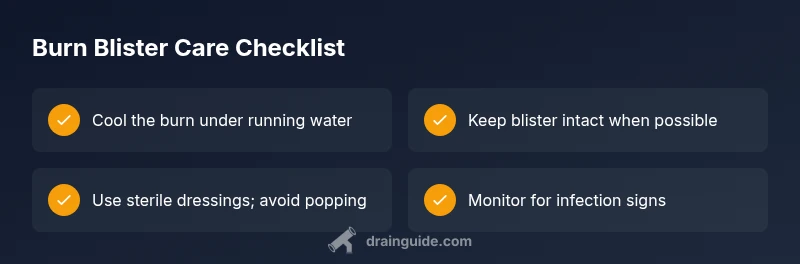
Should Drain Burn Blister: Safe Care for Minor Burns
Urgent, practical guidance for homeowners on whether to drain a burn blister, with step-by-step care, safety tips, and signs you need medical help.


In most cases you should not drain a burn blister. Keep it intact to protect underlying tissue and reduce infection risk. If the blister bursts on its own, clean gently, apply antiseptic, and cover with a sterile dressing; seek medical advice for large or painful blisters, signs of infection, or burns near joints or the face.
The Core Principle: Should drain burn blister
When you first notice a burn blister, your instinct might be to drain it for relief. However, the safest and most common approach is to leave the blister intact. The blister acts as a natural barrier, keeping underlying tissue protected from bacteria and helping the skin heal with less scarring. Draining a blister can introduce infection and delay healing if done improperly. According to Drain Guide, the majority of minor burns heal best when blisters are left alone unless a clinician advises drainage. This principle guides at-home care and reduces the risk of complications while you monitor the area for changes.
Immediate Steps After a Burn
Time is critical in the first minutes after a burn. Quickly reduce heat and swelling by holding the injured area under cool running water for 10–20 minutes (do not use ice, which can worsen tissue damage). Gently remove any rings or tight jewelry around the burned area before swelling begins. Lightly pat dry with a clean towel. Do not apply butter, oils, toothpaste, or other home remedies; these can trap heat, introduce bacteria, and worsen the injury. If the skin is intact, cover with a sterile, nonstick dressing to protect the area and prevent friction.
When Draining Is Considered (Medical Guidance)
There are rare circumstances where a clinician might drain a burn blister, but this is not a DIY task. Large blisters near joints, on the hands or feet, or blisters showing signs of infection require professional evaluation. Medical draining, performed under sterile conditions, minimizes infection risk and can relieve pressure when healing is compromised. If you’re unsure whether drainage is needed, prioritize a medical consultation. Drain Guide emphasizes seeking professional help when in doubt, especially for burns that cover a significant area or involve sensitive regions.
Step-by-Step Care for Minor Burns with Blisters
This practical sequence supports healing while avoiding self-drainage: (1) Cool the burn under running water for 10–20 minutes. (2) Gently clean the area with mild soap and water; avoid scrubbing. (3) Do not pop or drain the blister; if it breaks on its own, clean and apply antiseptic. (4) Apply a thin layer of antibiotic ointment only if advised by a professional, then cover with a sterile nonstick dressing. (5) Change the dressing daily or when it becomes wet or dirty. (6) Take an over-the-counter pain reliever if appropriate and tolerated. (7) Monitor for signs of infection or increased pain and seek care if present.
Common Mistakes and Safety Precautions
Common mistakes include popping blisters, applying kitchen remedies, using strong antiseptics directly on the skin, and leaving dressings in place too long. Safety practices focus on keeping the wound clean, dry, and protected. Wash hands before touching the area, avoid rubbing, and keep the burn away from pets and curious children. If you notice spreading redness, warmth, pus, fever, or red streaks, contact a clinician promptly.
Healing Timeline, Re-Check Points, and Prevention
Minor burn blisters typically improve over several days to a couple of weeks, depending on burn depth and care quality. Reassess daily for new pain, redness, or swelling. Keeping the area clean and protected reduces scarring and speeds healing. Prevention starts with kitchen and bath safety: use pot lids when handling hot liquids, install anti-slip mats, and keep hot items out of reach of children. Drain Guide recommends rechecking your first aid kit to ensure you have sterile dressings, clean scissors, and appropriate protective gear for future incidents.
Steps
Estimated time: 30-45 minutes
- 1
Cool the burn
Hold the affected area under cool (not cold) running water for 10-20 minutes to remove heat and reduce swelling. Gently pat dry with a clean cloth. Do not use ice directly on the skin.
Tip: Cooling early limits tissue damage and pain. - 2
Inspect the blister
Look for intact skin versus a ruptured blister. If intact, preserve the barrier; if ruptured, clean carefully and apply antiseptic.
Tip: Do not peel skin; it protects healing tissue. - 3
Decide on drainage
Avoid self-draining unless advised by a healthcare professional. Draining without sterility raises infection risk.
Tip: Professional drainage is done in a sterile setting. - 4
Dress the wound
Apply a thin layer of antibiotic ointment only if advised, then cover with a sterile nonstick dressing. Change daily or if wet.
Tip: Keep dressing clean to prevent infection. - 5
Manage pain and swelling
Use non-prescription pain relievers as directed; elevate the limb if possible to reduce swelling.
Tip: Check for allergies or contraindications before taking meds. - 6
Monitor and escalate care
Watch for increasing redness, warmth, swelling, or fever. Seek medical care if symptoms worsen or do not improve in 2-3 days.
Tip: Early medical advice can prevent complications.
Diagnosis: Burn blister on skin after a minor burn
Possible Causes
- highThermal burn with epidermal separation forming a blister
- mediumProlonged exposure or friction causing blister expansion
- lowInfection risk or contaminated wound increasing redness or pain
Fixes
- easyCool the area with running water for 10-20 minutes; avoid ice
- easyKeep the blister intact; if it breaks, clean and apply antiseptic and a sterile bandage
- easyCover with sterile nonstick dressing and change daily; avoid popping
- mediumSeek medical care for large, deep, persistent blisters, or signs of infection
Got Questions?
Should I pop a burn blister to relieve pressure?
No. Popping can introduce bacteria and slow healing. If a blister is small and painless, leave it intact; seek medical advice for large or painful blisters.
Avoid popping burn blisters. Leave intact and seek medical advice for large or painful ones.
When should I seek medical help for a burn blister?
Seek help if the blister is large, deep, or near joints or the face; if you notice increasing redness, warmth, fever, or pus, or if you have underlying health conditions.
Get medical help for large or deep blisters or signs of infection.
Can I use home remedies like butter on a burn blister?
Avoid applying butter, oils, toothpaste, or other home remedies. They can trap heat, introduce bacteria, and worsen healing.
Don't apply butter or toothpaste; use sterile dressings and proper cleaning instead.
How long does a minor burn blister take to heal?
Healing varies, typically days to a couple of weeks for minor burns; deeper injuries may take longer and require medical care.
Most minor blisters heal in days to a couple of weeks with proper care.
What signs indicate infection in a burn blister?
Increasing redness, warmth, swelling, pus, fever, or red streaks spreading from the area require prompt medical evaluation.
Watch for fever or pus and seek care if infection signs appear.
Watch Video
The Essentials
- Do not drain most burn blisters.
- Cool, clean, and protect the blister with sterile dressings.
- Seek medical care for large or infected blisters.
- Avoid home remedies that irritate skin or trap heat.
- Monitor for signs of infection and escalate care when needed.