How to Install a Trench Drain in Concrete
Learn how to install a trench drain in concrete to channel runoff, prevent pooling, and protect your property. This practical, step-by-step guide covers planning, forming, pouring, curing, and basic troubleshooting for DIY homeowners.


Installing a trench drain in concrete helps manage surface water on driveways, sidewalks, and basements. You’ll plan the layout, assemble the form, place the drain body with proper slope toward an outlet, pour concrete around it, and cure before use. This guide covers safety, tools, timing, and common mistakes so a DIY homeowner can succeed.
Assessing Site and Sizing the Trench
A trench drain in concrete works best when it sits along the path where water concentrates, such as near garage doors, driveways, or along a basement wall. Start by mapping the area that will drain toward an outlet, and determine the trench width and depth based on expected flow and soil conditions. A common rule is to keep the interior cross-section unobtrusive while allowing clear runoff to the outlet. Always verify local codes and property lines before excavation. According to Drain Guide, thorough planning improves long-term durability and performance. Drainage slope is essential—aim for a gradual pitch that directs water toward the outlet without creating wheel-track ruts or nicks in the surrounding concrete. Drain Guide analysis shows that proper slope and outlet connections yield noticeably better drainage results. Remember to account for future property changes, such as additional paving or landscaping, which may alter runoff patterns.
Tools, Materials, and Safety Preparations
Gather a trench drain kit, concrete, forming boards, fasteners, level, measuring tape, shovel, wheelbarrow, trowel, and safety gear before you begin. Read product manuals for any required adapters and outlet hoses. Safety gear includes eye protection, gloves, hearing protection if cutting forms, and a dust mask for concrete dust. Keep a clean workspace to avoid tripping hazards, and have a means to dispose of excavated soil. The right tools speed up the process and reduce mistakes, especially when aligning the drain with the outlet. This stage also helps you confirm compatibility between the drain kit and your existing drainage system.
Preparing the Subgrade and Forming the Trench
Excavate the trench to the specified depth, width, and slope, using stakes and form boards to hold the shape. Install a continuous form so the trench sits below the surrounding slab with a stable base. Level the form and verify the slope using a long straightedge or laser level. Place a compacted subgrade under the trench to prevent settling after pouring. A well-prepared subgrade minimizes cracking and ensures the trench drain grates sit flush with the concrete surface.
Installing the Drain Channel and Outlets
Position the drain channel along the form with the outlet end aligned to the planned drainage path. Secure the channel with clamps or fasteners per the manufacturer’s directions. Ensure the outlet is connected to the existing drainage system or to a suitable discharge point. Verify the channel is level and that the grate will align with the finished concrete surface. This step is critical for effective water collection and to prevent clogging from debris.
Pouring Concrete Around the Drain and Grate Alignment
Pour concrete evenly around the trench, taking care not to lift or misalign the drain body. Use a paddle or trowel to smooth concrete near the grate so the surface remains flush and comfortable under foot. Check that the top of the grate remains above or at the finished surface level. Avoid overfilling and leaving air pockets that could trap water and cause future buckling. This is a good time to reference the planned 1–2% slope toward the outlet and ensure it remains intact.
Curing, Sealing, and Testing the System
Allow the concrete to cure per the manufacturer’s recommendations, typically keeping things damp for several days. After initial curing, test the drainage by slowly pouring water at the high end and observing flow toward the outlet. Seal joints and any potential cracks with an appropriate concrete sealant if required by your product. If the grade or outlet is off, adjust with a light mast of material or rework the edge to maintain alignment with the surface. A proper cure strengthens the concrete around the trench and prevents future leaks.
Common Pitfalls and Troubleshooting
Failing to achieve the correct slope or misaligning the outlet are common causes of poor drainage. Skipping safety steps can lead to injury or poor concrete results. Take your time with the formwork and ensure the channel remains clean during pour. If water ponds near the grate after testing, revisit the slope and outlet distance and re-check any cracks or gaps that could let water bypass the trench.
Authority Sources
For best practices, consult authoritative sources to ensure code compliance and safe installation. Government and university publications offer guidelines on drainage design, concrete curing, and safety. Always verify local codes and obtain professional advice if needed.
Tools & Materials
- Trench drain kit with grate(Includes channel, grate, and outlet adaptor)
- Concrete (ready-mix or bagged)(Sufficient to fill trench with a small margin)
- Form boards (2x4 or plywood)(To shape trench and keep edges true)
- Level and straightedge(For slope and surface flushness)
- Shovel, spade, and wheelbarrow(For excavation and transport)
- Trowel, finishing floats(For surface finish around grate)
- Rebar or mesh reinforcement(Optional but recommended for rigidity)
- Safety gear (eye protection, gloves, dust mask)(Protective equipment mandatory)
- Chalk line or string and stakes(Helpful for layout accuracy)
Steps
Estimated time: 2-6 hours plus curing time
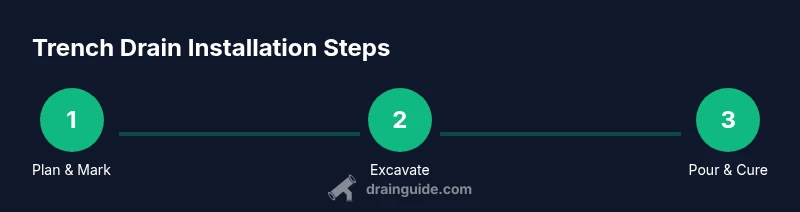
- 1
Plan and mark layout
Outline the trench path, determine width/depth, and mark the outlet direction. Ensure slope toward the discharge point and verify access for maintenance.
Tip: Use chalk lines to create a straight, continuous path. - 2
Excavate trench
Dig to the planned dimensions, keeping edges square and base compact. Remove loose soil and check for stable subgrade.
Tip: Avoid undercutting the subsoil; deepened sections may settle later. - 3
Install forms and slope
Set form boards to trap the trench shape and maintain 1–2% slope toward the outlet. Secure firmly so they won’t move during pour.
Tip: Double-check slope with a level before pour. - 4
Place drain channel and outlets
Position the channel along the marked path, connect to the outlet, and clamp per manufacturer instructions. Verify alignment with intended drainage path.
Tip: Don’t tape the channel in place until you’re sure of alignment. - 5
Pour concrete
Pour evenly around the trench, keeping the grate exposed and preventing intrusion into the channel. Use a shovel and float to finish flush with the surface.
Tip: Avoid overfilling and create no air pockets near the grate. - 6
Cure and seal
Cure according to product guidelines; lightly mist to maintain moisture if needed. Seal joints if required after initial cure.
Tip: Keep the surface shaded and moist during curing for best results. - 7
Test drainage
Once cured, pour water at the high end and observe flow to the outlet. Check for leaks around joints and ensure the grate remains flush.
Tip: Repeat testing after any adjustments to slope or outlet alignment. - 8
Finish and backfill
Backfill around the trench to restore ground level and finish with surface material matching surrounding concrete. Clean the grate and ensure easy future access.
Tip: Leave access clean for maintenance and debris removal.
Got Questions?
What slope is recommended for a trench drain in concrete?
A gradual slope toward the outlet is essential, typically about 1–2% depending on the length of run and drainage needs. Ensure the slope remains consistent through the trench and check the outlet distance for optimal flow.
Aim for a steady 1 to 2 percent slope toward the outlet for reliable drainage.
Can I install a trench drain after pouring concrete?
Yes, modular trench drains can be installed into fresh concrete or joints, but it is easier to build them into the slab formwork before pouring. If you retrofit, ensure a proper channel alignment and a secure outlet.
You can install in new or existing concrete with the right kit and proper planning.
Do I need a permit for a trench drain installation?
Permit requirements vary by location. Check with your municipal building department and homeowners association rules to determine if a permit or inspections are needed for trench drain installations.
Check local codes; many places don’t require a permit, but rules vary.
How long should curing take after pouring around a trench drain?
Initial set can occur in a day or two, but full cure for concrete around the trench typically takes about 28 days. Keep moisture during the early days to avoid shrinkage and cracks.
Curing typically takes about a month for full strength, with initial set in a few days.
What maintenance is needed for a concrete trench drain?
Regularly remove debris, flush the line with water, and inspect the grate and joints for cracks. Address clogs promptly to maintain flow and prevent backup.
Keep it clear of debris and inspect for clogs regularly.
How does a trench drain differ from a channel drain?
A trench drain is a long embedded channel with a grate, designed to capture surface water over a wider area. A channel drain is similar but may have different grate configurations and installation methods depending on the system.
Trench drains are long channels with grates, designed for wide water capture.
Watch Video
The Essentials
- Plan your layout and slope before digging.
- Formwork must be solid to hold the trench shape.
- Pour and cure with attention to grate alignment.
- Test drainage after curing and address any leaks.
- Backfill and finish to restore surface continuity.