Tub Drain Snake: Step-by-Step Guide to Clear a Bathtub Drain
Step-by-step tub drain snake instructions for homeowners. Learn to choose, insert, rotate, and extract with confidence—safely clearing tub clogs, preventing spills, and reducing future blockages.


You will learn to clear a bathtub clog with a tub drain snake, choosing the right length, inserting it safely, rotating to break the blockage, and cleaning up afterward. This quick guide covers prep, technique, and post-cleanup to restore fast drainage.
Why a tub drain snake is a practical tool for DIY homeowners
According to Drain Guide, a tub drain snake is a flexible, hand-operated tool designed to reach clogs that are beyond the reach of a plunger or basic chemical cleaners. For homeowners, it provides a controlled means to break apart hair, soap scum, and mineral deposits that accumulate in curved bath drains. The tub drain snake is particularly effective in bathrooms where long arms or tight bends make standard plungers less effective. When used properly, it reduces the need for costly professional visits and minimizes the risk of pipe damage that can come with harsh chemical products. In practice, choosing the right length and type—manual auger versus flexible coil—depends on your tub layout and the expected clog pattern. A well-chosen tub drain snake becomes a reliable tool in your DIY toolbox, enabling you to address clogs quickly and restore normal drainage. This is especially true for tub drain snakes designed for curved drains, where the coil can navigate bends without kinking or snagging. Drain Guide emphasizes selecting a snake around the typical bathtub diameter and trap configuration to maximize success without damage.
Types of tub drain snakes and when to use them
Tub drain snakes come in a few common varieties: manual augers with a rigid or semi-rigid shaft and flexible coils that sind into curved pipes. For most standard bathtubs, a 3-6 foot snake provides enough reach to navigate the trap and P-trap regions, while longer models are helpful for deeper or unusually shaped drains. A flexible coil is gentler on delicate metal pipes but may require more careful handling in stubborn blockages. Manual augers give you tactile feedback as you rotate and push, making them easier to control for beginners. Consider the clog pattern you typically encounter: hair-heavy blockages often respond well to a careful combination of rotation and gentle forward pressure, while mineral deposits may require longer reach or multiple passes. Always avoid forcing the tool if you encounter strong resistance, which can indicate a kink, a solid blockage, or a vulnerable pipe. Drain Guide notes that a well-chosen snake reduces reliance on caustic cleaners and protects pipe integrity.
Safety considerations and prep work
Before you start, put safety first. Wear rubber gloves to protect your hands from debris and sharp edges, and keep a towel or mat on the floor to prevent slips. Clear the bathroom area and place a bucket under the drain to catch water that backs up. If your tub has a trap cover or access panel, you may remove it to improve visibility, but handle any screws and fittings gently to avoid leaks. Ensure the water supply to the tub is off to minimize splashing. If you have synthetic or older pipes, proceed with extra care and avoid twisting the snake too aggressively; forcing materials through can loosen joints or crack fittings. A well-lit work area helps you see what you’re doing and reduces the risk of injury. Drain Guide recommends never mixing tools with means of cleaning agents while the snake is inside the drain, to prevent chemical reactions that could cause fumes or splashes.
Tools and materials you’ll need and why they matter
In practice, the right tub drain snake, gloves, and a bucket are enough for most clogs. A flashlight helps you spot where the drain's entry point begins, especially in hard-to-see bathroom layouts. If a trap is accessible, you may need pliers to loosen the trap’s nut, but proceed slowly to avoid leaks. Towels protect the tub and floor from spray and debris. Having a water-absorbent mat around the drain area keeps the space safe if water backs up. A small brush or rag can help you clean out visible hair from the trap, while a protective eye wear helps shield eyes from splashes. Drain Guide suggests keeping a separate disposable bag for the removed debris to prevent spreading hair and gunk through the bathroom.
Step-by-step approach to inserting and advancing the tub drain snake
Start by inserting the snake tip into the tub drain slowly, turning the handle clockwise to engage the coil with the clog. As you push forward, keep your wrist loose to allow the snake to bend along bends in the pipe. When you encounter resistance, slow your motion and rotate—this helps the coil grab the hair and debris rather than push them further in. If you reach a bend and cannot advance, pull back slightly and reorient the snake to approach the bend from a different angle. For stubborn clogs, you may need to push a bit further while rotating, then pull back and retrieve the coil to inspect for debris. Avoid hammering the coil or applying excessive force; the goal is to gradually work the blockage free while protecting the pipe.
What to do after you feel debris break free
When you sense a breakthrough, slowly retract the snake while continuing to rotate to pull out any loosened material. Place the extracted debris into the bucket so you can inspect it and determine if the clog is mainly hair or mineral buildup. Once you withdraw the snake, run hot water through the drain to flush loosened material and verify drainage improvement. If water remains slow, repeat a shorter, lighter pass focusing on remaining buildup. After clearing, clean the snake thoroughly with a brush and rinse with water to prevent residual hair tangles that could cause a future clog. Drain Guide recommends a light routine maintenance every few months to keep tub drains flowing smoothly.
Post-cleanup maintenance and prevention tips
To minimize future clogs, consider a monthly or quarterly maintenance routine that includes hair-catching strainers, regular flushing with hot water, and occasional gentle agitation with a snake for preventive checks. Clean the P-trap or trap area if accessible; removing debris occasionally prevents hair buildup from becoming a stubborn blockage. If you notice recurring slow drainage, inspect the trap’s configuration and ensure seals are intact to prevent leaks. Finally, avoid pouring cooking grease or large quantities of oils down the tub drain, which can contribute to stubborn congealment. Drain Guide recommends a simple, proactive approach: a quick check every 2–3 months keeps tub drains flowing.
Troubleshooting: common issues and quick fixes
If the tub drain snake doesn’t reach the clog, reorient the snake and try a different track path; sometimes the clog sits beyond the reach of a short coil. If you encounter a stubborn blockage that resists all passes, pause and assess whether the trap needs removal by a professional, especially if you notice persistent backflow or unusual odors. For minor leaks around the trap, reseat the trap and tighten connections carefully. If hair keeps tangling the coil during use, consider washing the coil with water and removing hair from the wound area before reinsertion.
Final cautions and disposal guidance
Dispose of extracted debris and used towels in a sealed bag to prevent spreading hair or bacteria. When finished, rinse your tub drain snake with clean water and store it in a dry area to avoid corrosion. If you have ongoing drainage problems, don’t hesitate to consult a licensed plumber; repeated blockages may indicate deeper issues like pipe misalignment or tree roots. Treat each clog as a signal to review your bathroom hygiene and pipe maintenance routine, and adjust as needed to keep tub drains flowing smoothly for years.
Tools & Materials
- Tub drain snake (manual auger)(3-6 ft for most bathtubs; longer if pipes curve back and forth)
- Pair of rubber gloves(Protect hands from debris and moisture)
- Bucket(Catch water and grime; place under the drain)
- Old towels or rags(Protect floor and absorb spills)
- Safety goggles(Shield eyes from splashes)
- Flashlight(Improve visibility into the drain opening)
- Adjustable pliers or needle-nose pliers(Assist with trap access if needed)
Steps
Estimated time: 30-45 minutes
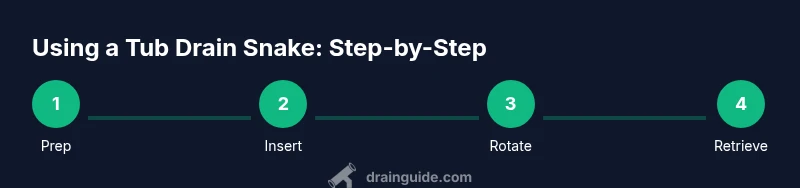
- 1
Prep the area and safety gear
Clear the bathroom, place towels, and lay a bucket beneath the drain. Put on gloves and safety goggles. If your tub has a trap access panel, remove it carefully to avoid splashing; this step reduces the risk of surprises when the snake enters the drain.
Tip: Cover the tub with towels to catch water and debris. - 2
Insert the snake into the drain
Begin with the snake tip inserted into the drain and rotate the handle clockwise to engage the coil. Feed the coil slowly, keeping steady pressure while guiding the snake toward the clog. Stop if you meet resistance and do not force it; rather reposition at a different angle.
Tip: Keep the coil nearly vertical to minimize kinks as you advance. - 3
Advance and orient through bends
As you push, gradually rotate and advance the snake. When you reach a bend, gently twist to navigate the curve and avoid snapping or bending the coil. If you cannot progress, retract a few inches, realign, and try again.
Tip: Patience beats force; too much pressure can damage the pipe. - 4
Engage and pull the clog loose
When resistance eases or you can feel debris grab, give a firm but controlled pull while continuing to rotate. Retrieve hair and gunk in short, careful passes rather than yanking. Drop the retrieved material into the bucket.
Tip: Pull out debris in sections to prevent re-clogging the drain. - 5
Withdraw and inspect the snake
Slowly retract the snake while continuing to rotate to remove any tangles. Inspect the coil for hair or debris that may travel back into the drain as you pull out. If it’s clean, slowly pull the snake free without twisting sharply.
Tip: Wipe the coil with a rag to remove trapped hair as you withdraw. - 6
Flush and test the drain
Run hot water through the drain for 1–2 minutes to flush out loosened material. Observe drainage; if flow remains slow, repeat a lighter pass to target residual buildup. Avoid using harsh chemical cleaners immediately after mechanical clearing.
Tip: A steady run of hot water helps dissolve minor deposits that loosen during the process. - 7
Clean up and store
Rinse the snake with clean water, dry it, and store in a dry location. Wipe down the surrounding area and dispose of waste debris properly. Document the clog pattern if it repeats, as this may indicate underlying plumbing issues.
Tip: Keep a dedicated toolbox for drain-clearing gear to prevent cross-contamination.
Got Questions?
What is a tub drain snake and what does it do?
A tub drain snake is a flexible hand tool designed to reach and dislodge clogs in bathtub drains. It works by breaking up hair and debris that a plunger can't reach.
A tub drain snake is a flexible tool you use by hand to reach and clear bathtub clogs that plungers miss.
Can I use a tub drain snake for other drains?
Yes, but lengths and coil designs vary. Check the drain configuration and choose a snake suitable for the pipe layout to avoid damage.
Yes, you can use it on other drains, but pick the right length and design for the pipe layout.
What should I do if the clog won’t budge after several passes?
Stop to reassess; the clog may be beyond reach or require trap removal. If backflow or odors persist, call a plumber.
If it won't budge after a few passes, step back and consider the trap or a professional assessment.
Is it safe to mix chemical cleaners with a snake in the drain?
Avoid mixing cleaners with the snake. Mechanical clearing plus water flush is safer and more effective than chemical reactions near metal pipes.
No, don’t mix cleaners with the snake; stick to mechanical clearing and water flush.
How often should I maintain tub drains to prevent clogs?
Inspect and clean strainers monthly; perform a light snake check every season to catch hair buildup early.
Check the drain strainers monthly and do a light check with the snake at least once every few months.
Watch Video
The Essentials
- Choose the right length tub drain snake first
- Keep movements steady and controlled
- Remove debris from the trap area if accessible
- Flush with hot water after snaking to verify flow
- Maintain a regular preventive routine