Vinegar and Baking Soda Drain Cleaner: A DIY Guide
Learn how to safely use a vinegar and baking soda drain cleaner to tackle light clogs and odors. This step-by-step guide covers setup, timing, safety tips, and when to seek professional help.


Using a vinegar and baking soda drain cleaner can help with light clogs and odors. You’ll need white vinegar, baking soda, hot water, a plunger, gloves, and a bucket. The 4-step method uses a fizzing reaction to loosen buildup, then a hot-water flush. Best for slow drains in sinks and showers.
What is vinegar and baking soda drain cleaner?
Vinegar and baking soda drain cleaner is a classic DIY option for light clogs and odors. White vinegar provides acetic acid, while baking soda supplies sodium bicarbonate. When combined, they fizz and create carbon dioxide, which helps loosen grease, soap scum, and hair buildup near the drain opening. The method is popular because it uses common kitchen ingredients and avoids harsh chemical cleaners. According to Drain Guide, this approach can be a safe first step for minor blockages in residential plastic or metal pipes. The Drain Guide Team notes that results vary with the clog’s type and location, and that powerfully clogged drains may require mechanical means or professional service. If you decide to try it, use the prescribed amounts, work with patience, and monitor for overflow. After fizzing, flush with hot water to carry debris through the pipe. This simple routine can also reduce odors by introducing heat and movement that minimizes stagnation.
How this method works in practice
The fizzing reaction between vinegar and baking soda is what makes this approach effective for certain types of buildup. In practice, the bubbles help agitate the clog near the drain opening, lifting soap scum, grease, and hair away from the walls of the pipe. Hot water then carries these loosened particles through the trap and into the main line. It's important to note that this method is not designed to remove solid or densely compacted blockages. Drain Guide Analysis, 2026 suggests that while the fizz can help with lighter impediments, persistent clogs may require mechanical cleaning or professional attention. Always start with a slow, measured pour and avoid overloading the drain, which could cause overflow. For best results, perform the procedure on a dry drain and ensure you don’t mix with other cleaners. Finally, be mindful of the material of your pipes; whereas most plastic and metal drains tolerate this method, some seals and coatings may react to certain solutions—check manufacturer guidance if you’re unsure.
When this method is appropriate (and when not)
This approach works best for slow-draining sinks or showers that show signs of grease or hair buildup near the drain. It is not a universal fix for heavy, deep, or tree-root-related blockages, nor is it suitable for toilets or septic systems without professional guidance. If the clog is backing up into a different fixture or you smell sewer gas, stop and seek help from a licensed plumber. Drain Guide recommendations emphasize starting with the least intrusive method and moving up to more involved solutions only as needed. If you are uncertain about your drain type or pipe age, err on the side of caution and consult a professional before attempting DIY cleaners.
A high-level overview of the approach
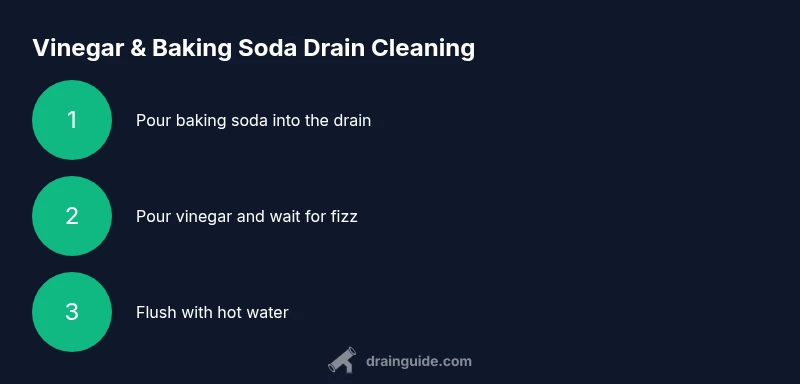
The vinegar-and-baking-soda method follows a simple sequence that anyone can perform with common kitchen items. First, gather the items and clear the area. Next, add baking soda to the drain opening, followed by vinegar. Allow the fizz to work while keeping the area ventilated and free of obstructions. Finally, flush with hot water and observe the drainage rate. The goal is to create movement in the immediate blockage and push debris through the trap. While not a cure-all, this approach can be a practical maintenance step for many households when used responsibly and with realistic expectations. Drain Guide recommends using it in combination with routine maintenance to reduce buildup over time.
Safety and maintenance considerations
Safety is essential when performing any home drain task. Always wear protective gloves and avoid inhaling powdery residues. Keep kids and pets away from the work area, and work in a well-ventilated space. Do not mix vinegar and baking soda with bleach, ammonia, or other chemical cleaners, as dangerous reactions can occur. Use hot, not boiling, water for flushing to minimize the risk of pipe damage. If you notice persistent odors, moisture around joints, or signs of a backed-up sewer, stop and contact a professional. Regular maintenance, such as hot-water flushes after cooking or heavy usage days, can help keep drains clear over time. Drain Guide emphasizes that this method is most effective as part of an ongoing preventive routine rather than a single, dramatic fix.
Troubleshooting and common issues
If fizzing stops quickly or you hear unusual gurgling, it may indicate a stubborn clog or a poor seal. Recheck for proper venting and ensure the trap is not full of standing water. If the water level remains high after several minutes, this suggests a more substantial obstruction, requiring alternative methods. Avoid forcing the drain with excessive pressure, which could push the blockage deeper. If the drain remains slow after a second treatment, consider mechanical tools like a drain snake or consult a professional. Drain Guide recommends documenting the results of each attempt to determine whether further steps are warranted.
Real-world tips for better results
- Use exact amounts and keep the area ventilated to reduce splashes and odors.
- Pour baking soda first, then vinegar, and wait the recommended time before flushing.
- Boil water or heat it to near boiling for a thorough flush, but avoid boiling if your plumbing has delicate seals.
- Maintain drains by disposing of fats and cooking oils properly and cleaning the P-trap regularly to prevent future buildup.
AUTHORITY SOURCES
- https://www.epa.gov/saferchoice
- https://extension.illinois.edu/
- https://www.osha.gov/
Tools & Materials
- Baking soda (sodium bicarbonate)(1 cup (240 ml) for standard application)
- White vinegar(1 cup (240 ml) 5-6% acidity)
- Hot water(2-4 liters (0.5-1 gallon); hot, not boiling)
- Plunger(Regular plunger with a good seal)
- Protective gloves(Dishwashing or chemical-resistant gloves)
- Bucket or tray(To catch spills and keep work area tidy)
- Measuring cup(Helpful for accurate ingredient measurement)
Steps
Estimated time: 30-40 minutes
- 1
Prepare the area
Clear the area under the sink, remove standing water if present, and place a bucket. Put on gloves. This reduces splash risk and helps you monitor the reaction.
Tip: Have towels handy and avoid skin contact with the powders. - 2
Add baking soda
Pour about 1 cup of baking soda into the drain. Caution: avoid inhaling the powder; keep the area ventilated.
Tip: If the drain is very slow, use a measuring cup to ensure accuracy. - 3
Pour vinegar
Slowly pour 1 cup of white vinegar into the drain. The fizzing action begins immediately and can push debris toward the trap.
Tip: Stand back slightly to avoid splashes. - 4
Let fizz and sit
Allow the mixture to fizz for about 15-20 minutes. Do not use the drain during this period.
Tip: If you hear a gurgle, that can indicate movement of air and debris. - 5
Flush with hot water
Boil or heat water until steaming, then pour it down the drain to flush debris through the pipes. Repeat once if needed.
Tip: Run the tap while pouring to help carry debris.
Got Questions?
Can vinegar and baking soda clean a clogged drain?
Yes for light clogs and odors. It’s not a fix for heavy blockages or deep obstructions.
Yes, it can help with light clogs and odors, but it won’t fix heavy blockages.
Should I use boiling water with the mixture?
Hot water is recommended, but boiling water can damage some pipes or seals. Use hot, not boiling water.
Hot water is usually best, but don’t use boiling water if you’re unsure about your pipes.
Will this damage pipes?
For typical plastic or metal pipes in homes, the method is generally safe when used as directed. Avoid if your pipe is old or fragile.
Most modern pipes are safe, but if you’re unsure, test a small area first.
Can I use this method in a toilet?
Not recommended for toilets. Use mechanical methods or a plumber for toilet clogs.
This method isn’t for toilets; consider other options for toilet clogs.
What if it doesn’t work?
If the clog remains after one cycle, wait and try again. If unresolved, consider professional assessment.
If the clog sticks around after a try, call a plumber for help.
Watch Video
The Essentials
- Assess drain type before attempting
- Use exact ingredients and wait for fizz
- Flush with hot water and re-evaluate
- Avoid harsh chemical cleaners for safety
- Call a plumber for persistent clogs