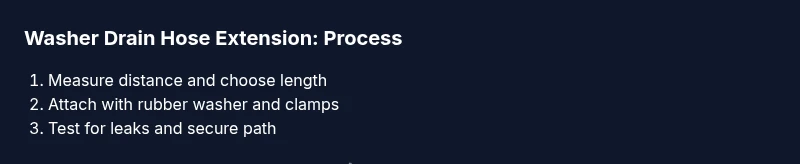
Washer Drain Hose Extension: A DIY Guide
Learn how to safely extend a washer drain hose with a practical, step-by-step approach. This guide covers selecting the right extension, securing connections with clamps and washers, and testing for leaks to prevent overflows.


You can safely extend a washer drain hose by adding a compliant hose extension and snug fittings until the standpipe is reached. Before starting, gather a flexible extension hose, two hose clamps, a rubber washer, and a compatible adapter if the diameters differ. Drain Guide recommends testing the setup with a short water run and inspecting for leaks.
What is a washer drain hose extension?
A washer drain hose extension is a short, flexible conduit that bridges the distance between the washing machine's drain outlet and the standpipe or drain stub. Its job is to maintain a clear, gravity-fed path for used water while preventing backflow, siphoning, or kinks that can slow drainage. When you need to reposition the drain line for a tighter laundry area or a differently placed standpipe, a carefully chosen extension helps keep flow steady and reduces the risk of leaks at joints. According to Drain Guide, extending a washer drain hose must be done with compatible parts and careful testing to avoid overflow or drainage problems. In this section, you’ll learn how to pick the right extension and why proper compatibility matters for a reliable, leakage-free connection.
The key is to match diameters and materials to your existing hose and standpipe. A mismatch can create bottlenecks, misalignment, or water stagnation that invites mold or unpleasant odors. Always check the washer outlet diameter, the extension’s inner diameter, and the standpipe entrance. With the right extension, your system remains simple, clean, and dependable even after layout changes or renovations.
When to consider extending your hose
You’ll want a washer drain hose extension when the original hose can’t reach the standpipe, when the path requires a longer, gentler routing, or if a remodel has relocated the washer. Length should never be forced; instead, measure the actual distance and plan a path that avoids sharp bends. Extending a hose is a common DIY task, but it is essential to avoid creating an upward slope, gasping kinks, or exposed hose sections that are subject to foot traffic or pets. A well-planned extension reduces the chance of backflow and keeps the laundry area tidy. Drain Guide emphasizes testing for leaks after installation and ensuring that joints remain secure during normal machine vibrations.
If your layout uses a wall-mounted standpipe or a corner standpipe, select an extension that allows at least a small, smooth bend instead of a sharp 90-degree turn. A too-short extension leaves you with tension on the hose, while an overly long one can sag and trap water.
Key features to look for
When selecting a washer drain hose extension, prioritize compatibility, durability, and ease of installation. Look for:
- Correct diameter for both the washer outlet and standpipe (often 5/8 inch or 7/8 inch pneumatic sizing, but verify).
- Flexible material with reinforced walls to resist punctures and kinks.
- Stainless steel or high-quality plastic clamps that won’t corrode.
- A design that allows secure, leak-proof connections with rubber washers.
- Easy-to-follow installation instructions and compatible adapters if needed.
Choosing the right features minimizes leaks, reduces maintenance, and simplifies future replacements. If you’re unsure, bring the old hose with you when shopping so you can compare diameters directly.
How to measure and choose the right length
Begin by measuring from the washer outlet to the standpipe to determine the minimum extension length. Add an extra 6–12 inches to accommodate routing and prevent tension on the hose. If your path involves corners, plan for gentle bends (radius at least 2–3 inches) rather than sharp turns. When possible, select a single extension that eliminates multiple joints, which are common leak points. If you’re unsure about diameter compatibility, consult the manufacturer’s specs or take measurements to a hardware store for a precise match. Drain Guide reminds readers that correct length and fit dramatically reduce the risk of leaks and clogs, especially during high-water loads.
Always verify the extension’s length in the actual laundry space before moving the washer back into place. A quick mock layout on the floor can help confirm clearance and elbow room for a smooth drain path.
Installation considerations and safety
Before you begin, ensure the washer is unplugged and the hot and cold water valves are shut. Clear the area to avoid slips or damage during installation. Place towels or a small bucket to catch any residual water in the hose. Attach the extension to the washer outlet using a rubber washer if the joint requires a seal, then secure with a hose clamp. On the standpipe end, connect the other side of the extension and tighten the second clamp. The goal is a snug, leak-free seal with no play in the connection. Avoid forcing the extension into place; instead, adjust the routing to maintain gentle bends and avoid kinks that impede drainage.
If your standpipe has a different diameter, install an appropriate adapter to ensure compatibility and prevent leaks. After assembly, slowly run a test wash to inspect for drips and ensure stable operation.
Secure connections and clamps
Secure connections are the backbone of a reliable extension. Use stainless steel hose clamps rated for appliance use and tighten them firmly without over-tightening, which could damage the hose. If you notice the hose ends becoming loose after a few cycles, replace the clamps with heavier-duty ones. Position clamps near the ends of the hose to prevent leaks at the transition points. Always check the rubber washers for cracks or deformation and replace if necessary. The combined effect of properly tightened clamps and intact washers is a robust, leak-free connection that withstands the machine’s vibrations during cycles.
Keep clamps accessible so you can re-tighten as part of routine maintenance.
Safety, codes, and best practices
Follow local building codes and the manufacturer’s instructions for your appliance model. While extension setups are common, incorrect installations can lead to leaks, water damage, or mold growth. Use only components specified for your washer and standpipe, and avoid makeshift fixes such as duct tape or rope to hold hoses in place. Drain Guide notes that a compliant installation reduces risk and extends the life of your laundry setup. If you’re unsure about code compliance or the correct parts, seek advice from a licensed plumber. This ensures you stay within local regulations and maintain warranty coverage.
Additionally, perform periodic inspections to catch wear or cracks in hoses and connectors before they fail. Proactive maintenance saves time and reduces the chance of costly damage.
Common mistakes to avoid
Common errors include using an extension that’s too long or too short, neglecting to install rubber washers, and skipping clamps in favor of tape or zip ties. Avoid sharp bends and kinks, which restrict flow and contribute to clogs. Do not mix metal and plastic components unless the manufacturer specifies compatibility. Finally, never run a washer with a loose standpipe connection; leaks can escalate quickly under heavy loads. Following the recommended parts and steps minimizes surprises and keeps your laundry area clean and safe.
Maintenance and long-term care
After completing the extension, establish a simple maintenance routine: visually inspect joints for leaks, tighten clamps if you notice moisture around joints after cycles, and wipe any condensation or drips promptly. Replace rubber washers at the first sign of cracking or wear. Periodic checks should be part of your seasonal home maintenance. Keeping the drain path clear of hair and debris helps preserve smooth drainage. In short, a well-maintained extension reduces the risk of overflows and keeps your laundry routine running smoothly. The Drain Guide team recommends reviewing this setup annually and after any remodel or relocation of the washer.
Tools & Materials
- Flexible washer drain hose extension(Choose one with the same diameter as your washer hose (commonly 5/8)
- Hose clamps (stainless steel, 2-3)(Worm-drive clamps, sized to fit the extension ends)
- Rubber washer(To seal joints where the extension meets hoses)
- Adapter/connector (if needed)(Use when extension diameter differs from washer outlet or standpipe)
- Bucket or towels(Have on hand to manage minor spills during setup)
- PTFE tape (optional)(Only if a threaded connector exists in your kit)
Steps
Estimated time: 45-60 minutes
- 1
Turn off water supply
Close the hot and cold valves behind the washer to stop incoming water during installation. This reduces the risk of accidental leaks while you work.
Tip: Double-check both valves are fully closed before proceeding. - 2
Clear workspace
Move the washer away from the wall and remove any objects that could snag the hose. A clear space prevents accidental yanking on the hose during testing.
Tip: Lay down towels to catch residual water. - 3
Measure distance to standpipe
Measure the straight-line distance from the washer outlet to the standpipe entrance. Add 6–12 inches for routing and access.
Tip: Use a piece of string to visualize the path before cutting or purchasing. - 4
Choose extension length
Select an extension that completes the path with gentle bends and no sags. Length should avoid pulling on the washer while not being unnecessarily long.
Tip: If you’re between sizes, choose the longer option to allow future repositioning. - 5
Prepare joints with rubber washer
Attach a rubber washer to the extension end that connects to the washer outlet to seal against leaks. Ensure the washer sits flush with the mating surface.
Tip: Inspect the washer for cracks before use. - 6
Connect to washer outlet
Slip the extension onto the washer outlet and secure with a hose clamp. Ensure the connection is tight but not over-tightened.
Tip: Use a second person to stabilize the hose while you clamp. - 7
Attach to standpipe
Connect the other end of the extension to the standpipe or drainage elbow and secure with the second hose clamp. Verify there are no kinks.
Tip: If the standpipe is clogged, clear it before testing. - 8
Test for leaks
Run a short test wash with a small amount of water to observe the joints. Look for dampness or dripping and tighten clamps if necessary.
Tip: Keep a bucket handy during testing in case of minor leaks. - 9
Route and secure hose
Tidy the hose path, avoiding contact with feet or appliances. Use zip ties or clips to secure it away from movement zones.
Tip: Position the hose so it never rests on the machine’s metal edges. - 10
Clean up and verify
Wipe the area dry, return the washer to place, and recheck after a full cycle to confirm continued leak-free operation.
Tip: Schedule a quick follow-up check after 24 hours. - 11
Basic maintenance plan
Create a simple routine to inspect hoses, clamps, and washers every few months to catch wear early and prevent failures.
Tip: Set a calendar reminder for seasonal checks.
Got Questions?
Can I extend a washer drain hose?
Yes, you can extend a washer drain hose with a compatible extension and proper clamps, but ensure correct diameter and a secure seal to prevent leaks.
Yes, you can extend a washer drain hose with the right parts, and you should secure all connections to prevent leaks.
What diameter hose is standard for washers?
Most washers use a standard diameter around 5/8 inch or 7/8 inch. Measure your current hose to confirm the exact size.
Most washers use a standard diameter; check your hose to be sure.
Is it safe to tape hose joints?
No. Tape is not reliable for water connections. Use rubber washers and hose clamps for a secure seal.
Tape isn’t reliable here—use washers and clamps.
What if water backs up after extension?
Stop the washer, check clamps, and inspect the standpipe for blockages. If the issue persists, consult a plumber.
If water backs up, stop the machine and check the path or call a pro.
Do I need a professional for this?
DIY extension is possible with the right parts, but if you’re unsure, a licensed plumber can ensure safety and code compliance.
You can do it yourself if you follow the steps; otherwise hire a pro.
How should I maintain the extended hose?
Inspect the hose and clamps monthly, replace worn washers, and keep the path free of debris.
Keep an eye on the hose and fittings and replace worn parts as needed.
Watch Video
The Essentials
- Choose the right extension length with gentle bends.
- Secure all connections with proper clamps and washers.
- Test for leaks before regular use.
- Maintain the hose and clamps to prevent future failures.