What Drain Cleaner Is Safe for Pipes: A Homeowner's Guide
Discover which drain cleaners are safe for different pipe materials, how to read labels, and practical alternatives to protect plumbing and septic systems. Drain Guide explains safe choices for PVC, metal, and older pipes.


What drain cleaner is safe for pipes depends on your pipe material and clog type. Generally, non-caustic options like enzymatic cleaners and plain physical methods are safer for most pipes, while harsh chemical drain cleaners can damage PVC, metal, or older clay pipes. Always read labels, avoid mixing with other cleaners, and test in a small area. According to Drain Guide, safety also means choosing cleaners that suit your substrate and maintenance goals.
What makes a drain cleaner safe for pipes?
Identifying what drain cleaner is safe for pipes starts with knowing your plumbing materials and condition. Most homes today use PVC or CPVC for drain lines, but older homes may still have metal pipes (copper, brass, galvanized steel) or even clay lines in the main stack. Each material reacts differently to chemicals. Harsh acids and caustic bases can wear away plastic gaskets, corrode metal joints, or degrade seals. In contrast, enzymatic cleaners use bacteria and enzymes to digest organic buildup and are generally gentler on pipe surfaces. They are often more compatible with septic systems, though they may require longer treatment times for stubborn clogs. Drain Guide emphasizes safety by matching cleaner type to pipe material, considering the clog’s nature, and avoiding mixing products. If you’re ever unsure, start with non-caustic options and consult professional guidance before proceeding.
Types of drain cleaners and their pipe compatibility
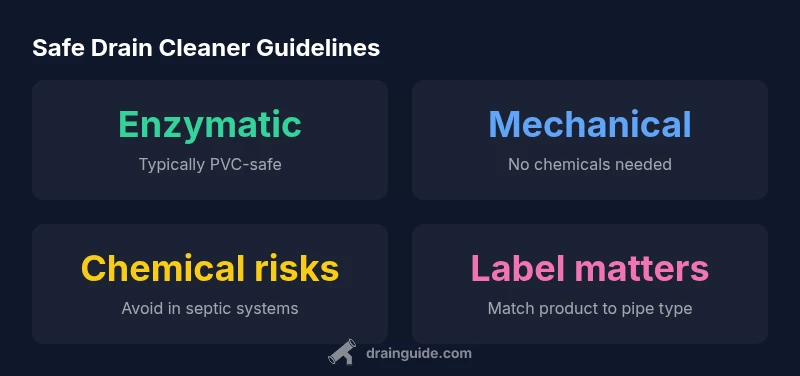
Drain cleaners fall into several broad categories, each with its own pipe compatibility profile. Enzymatic or biological cleaners rely on enzymes to break down organic material and are typically gentler on PVC and metal pipes, with minimal risk of immediate damage when used as directed. Mechanical methods (plungers, drain snakes) are pipe-safe and often effective for minor clogs without introducing chemicals. Caustic cleaners (lye-based) and acid-based cleaners can degrade rubber seals, gaskets, and certain plastics, and may corrode metal pipes over time. Neutral, non-corrosive options exist but vary in effectiveness depending on clog type. For septic systems, enzymatic cleaners are usually preferred since they complement bacterial activity rather than disrupt it. Always verify product labels for pipe compatibility and avoid mixing cleaners with other chemicals, which can create dangerous fumes or reactions.
Enzymatic and biological cleaners: how they work and when to use them
Enzymatic cleaners introduce specific enzymes that digest grease, hair, and organic matter in slow drains. They’re particularly suitable for routine maintenance and septic systems because they work with, not against, natural bacteria. Time to effectiveness can be longer than chemical options, so patience is essential. These cleaners are typically safe for PVC, CPVC, and many metals when used as directed, but they may not clear solid blockages created by non-degradable materials. If you’re dealing with a deep, stubborn clog, you may need a mechanical method or professional intervention after attempting enzymatic treatment. Drain Guide highlights using enzymatic products as part of a long-term maintenance strategy rather than a one-off fix.
Chemical cleaners: risks and best practices
Chemical cleaners include caustic and acidic formulas that can rapidly break down clogs but carry higher risks to plumbing. They can soften rubber parts, corrode metal joints, and damage seals if misused. Always wear gloves and ensure good ventilation when handling these products. Never mix chemical cleaners with bleach, ammonia, or other cleaners, as dangerous gas production can occur. For PVC and CPVC, excess acidity or alkalinity can cause stress cracking over time. If your home uses metal piping, chemical cleaners can accelerate corrosion. For septic systems, aggressive chemicals can disrupt the beneficial bacteria balance. Drain Guide recommends using these products sparingly, strictly according to label directions, and as a last resort when safer methods have failed.
Reading labels and choosing the right product
The label is your most reliable guide to safety. Look for explicit statements like “safe for PVC” or “for use with septic systems.” Check the active ingredients to gauge potential pipe compatibility: brushes with sulfuric or hydrochloric acids tend to be harsher, whereas hydrogen peroxide-based and enzymatic formulations are usually milder. Confirm the product’s pH range and whether it mentions compatibility with copper, cast iron, or clay pipes. If you cannot determine compatibility, test a small area of the drain and observe for any signs of distress over 24–48 hours. Drain Guide advises keeping a maintenance log to track which cleaners you’ve used and the results, helping you avoid repeat mistakes.
Alternatives and preventative approaches
Prevention is the best defense against clogs. Regularly flushing drains with hot water can reduce buildup, especially in kitchen lines. Mechanical methods like a plunger or a drain snake can be effective for initial clearing without chemicals. Baking soda and hot water paired with a mild vinegar rinse can help maintain a neutral environment; however, this is not a guaranteed unclogging method. For stubborn blockages, consider a professional snaking or hydro-jetting service. If you rely on a septic system, enzymatic cleaners that support bacterial activity are preferred over harsh chemical products. Drain Guide recommends combining preventive maintenance with targeted enzyme-based cleaners to extend the life of your pipes.
DIY pitfalls and when to call a professional
Common mistakes include using multiple cleaners in succession, which can create dangerous reactions, and assuming all clogs respond to chemical treatments. If the clog persists after attempting safer methods, or if you notice gurgling, slow drainage across fixtures, or sewage odors, it’s time to seek professional help. Don’t ignore signs of potential sewer problems or compromised pipe joints. A licensed plumber can determine whether the issue is a simple blockage, a misaligned pipe, or a deeper problem requiring structural repair. Drain Guide’s guidance is to escalate to a professional when the chosen safe methods fail or when pipe material remains uncertain.
Putting it together: a practical decision tree
- Identify pipe material and system type (PVC, metal, septic). 2) Start with enzymatic cleaners labeled safe for your substrate. 3) If no improvement, try a mechanical method (plunger or snake) before resorting to chemicals. 4) Read and follow label directions meticulously; never mix products. 5) If persistent clog or symptoms arise, contact a plumber. 6) Maintain pipes with periodic maintenance to minimize future clogs. This decision tree helps homeowners choose the safest path when considering what drain cleaner is safe for pipes.
Safe cleaner recommendations by pipe type
| Pipe Type | Recommended Cleaner Type | Risks | Notes |
|---|---|---|---|
| PVC | Enzymatic or mechanical methods | Low risk; potential slow results | Good for regular maintenance |
| Copper/Brass | Enzymatic cleaners or mechanical methods | Possible corrosion with strong chemicals | Avoid highly acidic solutions |
| Cast Iron/Galvanized Steel | Enzymatic cleaners; mechanical methods | Chemical cleaners may accelerate corrosion | Consider professional guidance if repeated blockages |
Got Questions?
What drain cleaners are safe for PVC pipes?
Enzymatic cleaners are usually safe for PVC pipes when used as directed. Avoid sulfuric acid or highly caustic products that can degrade gaskets and joints. Always confirm on the label that the product is safe for PVC and compatible with septic systems if applicable.
Enzymatic cleaners are typically safe for PVC pipes, but always check the label and avoid harsh acids.
Are there safe alternatives to chemical cleaners?
Yes. Mechanical methods like plungers or drain snakes, hot water flushes, and enzymatic cleaners offer safer options for many clogs. Combine these approaches with regular maintenance to reduce the need for chemicals.
Try plungers or a drain snake first, plus enzymatic cleaners for maintenance.
Can I use baking soda and vinegar as a safe drain cleaner?
Baking soda and vinegar can help with minor buildup but are not reliable for major clogs. They’re non-toxic and can be part of routine maintenance, but do not rely on them for stubborn blockages.
Baking soda and vinegar may help small buildups but aren’t a fix for big clogs.
Should I use commercial cleaners in septic systems?
Enzymatic cleaners are generally safer for septic systems because they support natural bacteria. Harsh chemical cleaners can disrupt the septic balance and cause longer-term issues.
Enzyme-based cleaners are usually better for septic systems.
When should I call a plumber instead of trying cleaners?
If a clog persists after using safer methods, you smell sewage, or you notice slow draining across fixtures, consult a licensed plumber. Ongoing issues may indicate a deeper problem with the plumbing.
If it won’t clear, or you smell sewage, call a plumber.
“A cautious, material-aware approach to cleaning drains protects both your plumbing and your home's plumbing system.”
The Essentials
- Choose enzymatic cleaners for most pipes.
- Avoid caustic/acidic cleaners on PVC and metal pipes.
- Read labels and verify compatibility with septic systems.
- Use mechanical methods first for simple clogs.
- Call a professional if the clog persists.