What is wrong with dishwasher that won t drain: A Homeowner's Troubleshooting Guide
Learn practical, safety-focused steps to diagnose and fix a dishwasher that won t drain. From filters to pumps, Drain Guide provides a clear, DIY-friendly plan for 2026.


Your dishwasher not draining is usually caused by a clogged filter or a blocked pump. Start by cleaning the filter and removing debris from the sump, then check the drain hose for kinks or clogs. If it still won’t drain, follow the diagnostic flow for safe, step-by-step fixes. These quick checks cover most residential cases and can be done without tools. According to Drain Guide, getting these basics right is the fastest path to a remedy.
What is wrong with dishwasher that won t drain
If your dishwasher won't drain, you're not alone. What is wrong with dishwasher that won t drain is frequently caused by stubborn debris in the filter or sump, a clogged drain hose, or a failing pump. According to Drain Guide, these issues are the most common culprits homeowners encounter. Understanding the problem helps you prioritize steps and avoid expensive mistakes.
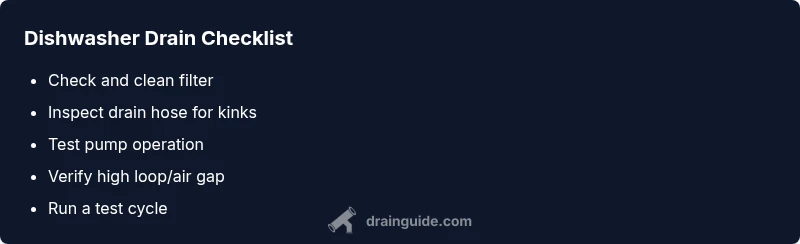
In most homes, you can perform these checks without special tools, but always unplug the unit before starting. Start with the simplest checks: clear the filter, remove visible debris, and inspect the drain hose for kinks or clogs. If water remains in the tub after a cycle, you’ll want to move through a systematic diagnostic flow that targets the likely culprits first.
This approach aligns with Drain Guide’s practical philosophy: address the easy wins first, then move deeper only if needed.
Common Causes of a Dishwasher Not Draining
There are several reasons a dishwasher will not drain, and they vary by model and installation. The most frequent culprits include a clogged or dirty filter and sump, a blocked drain hose or a kinked hose, and a failing drain pump or impeller. Less common but possible are issues with the float switch, the lid switch, or the air gap/high-loop configuration. If the disposal connects to your dishwasher, a disposal backup can also block drainage. Drainage issues often show up as standing water at the bottom or water that drains slowly as the cycle ends. Drain Guide analysis shows that the two most common drainage failures are a clogged filter/sump and a blocked drain hose.
When diagnosing, note whether water drains at the end of the cycle or not at all, and whether the pump sounds normal or is silent. Small model differences exist, so refer to your user manual for routing of hoses and filter access.
Safety First: What Not to Do
Do not use chemical drain openers in a dishwasher; they can damage seals and void warranties. Avoid banging or forcing parts, which can crack the sump or pump. Never run the dishwasher while inspecting the pump area or while hoses are disconnected. Use a bucket, towels, and protective gloves to manage leaks, and unplug the unit before handling electrical components. If you smell burning or see melted connectors, stop and call a professional. Drain Guide emphasizes safety at every step, especially around water and electricity. Keep children and pets away from a working unit.
Diagnostic Flow: Symptom → diagnosis → solutions workflow
- Symptom: Standing water in the bottom after a cycle or poor draining.
- Diagnosis path: Check the filter and sump first; if clear, test the drain hose for clogs; if hose is clean, test the pump by running a drain test.
- Solutions: Clean the filter, clear the sump, straighten or replace the drain hose, and verify the pump operation. If the pump won’t run or makes grinding noises, it’s a sign of a failing pump and may require replacement. This flow helps avoid wasted effort and aligns with Drain Guide’s evidence-based approach.
Step-by-Step Fix for the Most Likely Cause
Here is a structured fix for the most common problem: a clogged filter and sump, plus a blocked drain hose. Follow these steps in order, and stop if something feels risky or you notice damaged wiring or seals. Each step includes a practical tip to help you avoid mistakes.
-
Power down and access the low compartment: Unplug the dishwasher or switch off the circuit, then remove the lower rack to reach the filter area. tip: Work on a dry surface and keep a towel handy for residual water.
-
Remove and clean the filter: Take out the filter basket, rinse under running water, and scrub away debris from the sump and screen. tip: A clean filter improves drainage and reduces odors.
-
Inspect the drain hose: Detach the hose from the disposal or sink connection, inspect for kinks, and clear any blockage using a brush or flexible rod. tip: Reconnect firmly to prevent leaks.
-
Check the pump/impeller: Look for debris in the pump housing and spin the impeller manually to ensure it moves freely. tip: If the impeller sticks, do not force it—consider replacing the pump assembly.
-
Reassemble and test: Reinstall components, run a hot water wash without dishes, and observe drainage. tip: Do a short test cycle first to confirm proper flow.
-
If drainage remains blocked: Reexamine hose connections, ensure the disposal path is clear, and assess for pump or float switch failure. tip: If in doubt, seek professional service. Estimated time: 60-90 minutes.
Preventing Future Drain Issues
- Clean your filter and sump monthly or more often if you notice odor or slow drainage.
- Check the drain hose for kinks and ensure a clean path to the plumbing.
- Ensure the dishwasher drain hose has a proper high loop or air gap as required by code.
- Schedule annual maintenance checks if your model has a complicated pump or electronic float switch.
- Use the dishwasher as recommended by your manufacturer to reduce debris buildup.
When to Call a Professional
If you hear grinding from the pump, smell burning, or the unit still won’t drain after completing the diagnostic flow, it’s time to call a professional. Drain Guide recommends seeking help when the pump, float switch, or electronics show signs of failure, or when drainage is caused by a disposal connection or complex plumbing issues. A licensed plumber or appliance technician can safely replace the pump, inspect electrical connections, and verify proper drainage to prevent further damage. Drain Guide's verdict is to call a pro when pump failure or electrical issues are suspected.
Steps
Estimated time: 60-90 minutes
- 1
Power down and access the filter
Unplug the unit or switch off the circuit, then remove the lower rack to reveal the filter assembly. Access to the filter is essential for initial clearance and to avoid electric shock.
Tip: Label each hose connection before removing them so reassembly is straightforward. - 2
Remove and clean the filter
Take out the filter basket and rinse under running water. Scrub the sump screen and interior surfaces to remove trapped debris and grease. Reinstall the filter securely before testing drainage.
Tip: A clean filter is the single most effective fix for many drain problems. - 3
Inspect the drain hose
Detach the drain hose from the disposal or sink connection and look for kinks, bends, or clogs. Clear with a long brush or flexible rod and ensure the path is unobstructed.
Tip: Ensure hose ends are firmly connected after cleaning to prevent leaks. - 4
Check the pump/impeller
Access the pump housing and attempt to rotate the impeller by hand. Remove any debris that interferes with movement. If the impeller is seized or damaged, the pump may need replacement.
Tip: Do not force the impeller; replace the unit if it shows signs of wear. - 5
Run a test cycle
Reassemble and run a short hot-water wash to observe drainage. Listen for the pump and verify that water leaves the tub promptly.
Tip: Load few dishes during testing to prevent overflow if drainage is still partially blocked. - 6
Evaluate the need for professional help
If water still won’t drain after these steps, re-check connections, check the disposal side, and consider pump or float switch replacement. A professional may be required.
Tip: Document any symptoms (noise, burning smell) to share with the technician.
Diagnosis: Dishwasher won’t drain; water remains in the tub after cycle
Possible Causes
- highClogged filter or sump debris
- highBlocked or kinked drain hose
- mediumFaulty drain pump or impeller
- lowFloat switch malfunction
- lowAir gap/high loop not installed or damaged
Fixes
- easyClean the filter and sump; remove visible debris
- easyUnblock or straighten the drain hose; clear clogs
- mediumInspect and test the drain pump/impeller; replace if needed
- mediumCheck float switch operation and wiring
- easyVerify air gap/high loop installation; reseat hose if needed
Got Questions?
Why won’t my dishwasher drain after a cycle?
Most commonly it’s a clogged filter or blocked drain hose. Debris in the sump or a faulty pump can also cause drainage issues. A systematic check typically resolves the problem.
Most often it’s a clogged filter or drain hose. Clean the filter, check the hose, and run a test cycle to verify.
How do I unclog a dishwasher drain hose?
Disconnect the hose and inspect for kinks or blockages. Use a long brush or flexible rod to clear the path and reattach securely.
Detach the hose, look for blockages or kinks, clear with a brush, and reattach firmly.
Can a faulty float switch cause draining issues?
Yes. If the float switch sticks or fails, the dishwasher may not trigger the drain cycle. Inspect wiring and test continuity; replace if needed.
A bad float switch can stop drainage. Check it and replace if faulty.
Is it safe to unplug the dishwasher first?
Yes. Always unplug or switch off the circuit before any service to prevent electric shock or damage.
Yes—unplug before starting work to stay safe.
When should I replace the drain pump?
If the pump won’t run, makes grinding noises, or shows signs of wear after cleaning, replacement is usually necessary.
If you hear grinding or it won’t run after checks, consider pump replacement.
Watch Video
The Essentials
- Start with simple cleanings of filter and hose
- Test the pump if drainage doesn’t improve
- Ensure proper hose routing and high loop/air gap
- Call a pro for pump or electrical issues