What Problems Can Open Drain Cause? Quick Troubleshooting Guide
Learn what problems open drains can cause, how to diagnose symptoms, and step-by-step fixes homeowners can perform safely. Drain Guide offers urgent, practical guidance to prevent sewer gas, pests, and backups.


An open drain can allow sewer gases, pests, and backups to enter living spaces. The quickest fix is to ensure a trap is present and sealed, clear any obvious blockages, and verify venting. If odors or backups persist after basics, stop using the fixture and contact a professional for a thorough assessment. and schedule a safety check with a licensed plumber.
What problems can open drain cause
An open drain is more than a nuisance; it can trigger a cascade of issues that affect comfort, safety, and property value. When a drain is effectively open—lacking a trap or proper venting—sewer gases can escape into living spaces, causing strong odors and potential health concerns. An open drain also increases the risk of pests drawn by moisture and residue, and it can worsen drainage problems by allowing odors and gases to travel through the plumbing network. In many homes, an open drain may be the root cause of recurring backups, slow drainage, and gurgling sounds in other fixtures. Understanding what problems can open drain cause helps homeowners respond quickly and prevent further damage. Drain Guide's analysis in 2026 highlights that the simplest fixes are often the most effective for open drains, especially when a missing or dried-out trap is involved and venting may be compromised.
Common symptoms and warning signals
Recognizing the signs can stop problems from escalating. If you notice a persistent sewer odor near a floor drain or sink, it's often a sign that the trap is compromised or venting is blocked. Gurgling sounds when water drains, slow draining fixtures, or water backing up into other fixtures are classic indicators of an open drain issue. Visible moisture around the drain, damp patches, or mold growth can suggest leaks and ongoing moisture intrusion. Rodents or insects near floor drains also signal that an open path is inviting pests. By understanding these symptoms, homeowners can prioritize checks and avoid letting a minor issue develop into costly damage. Drain Guide notes that addressing trap integrity and venting early reduces overall repair costs and downtime in 2026.
Health, safety, and property risks from open drains
An open drain poses immediate health and safety risks beyond unpleasant odors. Sewer gases such as methane, hydrogen sulfide, and ammonia can accumulate in enclosed spaces when traps are dry or venting is compromised, creating a hazardous environment. Prolonged exposure can irritate eyes, skin, and the respiratory system, especially for children and pets. The damp environment around an open drain can promote mold growth, wood rot, and structural damage if leaks persist. Open drains also attract pests such as drain flies, cockroaches, and rodents, which can spread bacteria and create additional sanitation concerns. In addition, backups caused by an open drain can flood floors, damage valuables, and necessitate expensive cleanup. The Drain Guide team emphasizes safety first: turn off or minimize usage of the affected area and ventilate before inspecting or attempting fixes.
Immediate checks you can perform safely
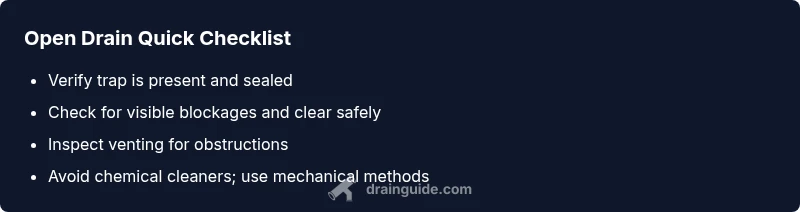
Start with the simplest checks that don't require specialized tools. First, inspect the trap under the affected fixture: if the trap is dry, pour water into it to restore the seal. Look for visible blockages in the drain and remove them with a plunger or a drain snake if you can do so safely. Do not use chemical cleaners in an open drain, as fumes can accumulate in enclosed spaces. Check if the vent stack is clear by inspecting the roof vent or any accessible vent cover for obstruction. Finally, verify that all joints are dry and sealed; loose connections can worsen odors and leaks. If the drain continues to smell, back up, or leak after these checks, proceed to the next steps or call a pro.
Fixes and prevention strategies
For most open-drain problems, restoring the trap and venting system is essential. Install or replace the trap if it is cracked, warped, or blocked, and seal joints with appropriate plumber’s tape or sealant. Clear blockages using a drain snake or enzymatic cleaner designed for household drains; avoid overuse of harsh chemical cleaners. Clean or replace the vent cap if it is obstructed, and ensure the vent path remains clear to prevent siphoning. Practice regular maintenance: pour a small amount of water into floor drains periodically to prevent trap drying, avoid pouring grease or solids down drains, and consider a trap primer for floor drains in damp areas. Chemical cleaners should be used sparingly and never as a cure for gas odors. If the drain remains problematic, a licensed plumber can inspect for cracked piping, improper installation, or venting issues.
When to call a professional
If you smell sewer gas, experience strong backups, or cannot locate the source of the issue after a thorough safety check, professional help is required. A licensed plumber can test for gas leaks, verify venting integrity, inspect trap condition, and determine if pipe damage or improper installation is present. Do not delay if you suspect gas buildup. In many cases, professional attention prevents escalation to costly water damage, mold remediation, or structural repair. Drain Guide recommends scheduling a diagnostic visit when basic steps do not resolve the problem.
Maintenance to prevent future issues
Prevention is easier than repair. Keep traps primed by pouring water or using a trap primer on infrequently used drains. Schedule annual vent checks to ensure there is no blockage. Avoid introducing fats, oils, and solids into kitchen drains; instead use strainers and proper disposal methods. Clean floor drains and traps regularly and replace any worn seals promptly. Finally, note any recurring odors or backups and track when they occur to help your plumber diagnose issues quickly in the future.
Steps
Estimated time: 60-90 minutes
- 1
Assess safety and stop using the open drain
Begin with safety: turn off water supply to the affected fixture and ventilate the area. Put on gloves and eye protection. If you smell gas, leave the area and call for professional help immediately.
Tip: Ventilate well before touching any drain. - 2
Check and restore the trap
Locate the P-trap under the fixture. If it's dry, pour water to restore the seal. Look for corrosion, cracks, or loose connections and reseal or replace as needed.
Tip: A dry trap is a common cause of sewer gas entry. - 3
Clear obvious blockages
Use a plunger or a drain snake to tackle visible clogs. Avoid chemical cleaners; they can create hazardous fumes in enclosed spaces.
Tip: Work slowly and avoid forcing the snake beyond comfortable reach. - 4
Inspect venting
Check for obstruction in the vent stack and clear any debris if safely accessible. If the vent is blocked, install or repair ventilation to prevent siphoning.
Tip: Vent issues often affect multiple fixtures. - 5
Test and reseal
Reassemble all components, pour water to test the seal, and observe for leaks or odors. If needed, apply plumber’s tape or sealant to joints.
Tip: Always test with running water after re-sealing. - 6
Plan for professional follow-up
If odors persist or you suspect pipe damage, schedule a professional inspection. Document symptoms and timing to help the plumber diagnose quickly.
Tip: Keep notes on when odors/backups occur.
Diagnosis: Unpleasant sewer odor, gurgling sounds, or backups from an open drain
Possible Causes
- highMissing/dried-out trap allowing sewer gases to escape
- highDownstream blockage causing backup and pressure
- mediumVenting issues creating siphon and gas entry
- lowCracked trap or improper installation
Fixes
- easyInstall or reseal the trap and check joints for leaks
- easyClear blockages with a drain snake or enzymatic cleaner designed for household drains
- mediumInspect and clear the vent stack; install a vent if missing
- hardReplace cracked/poorly installed trap by a professional
Got Questions?
Can an open drain cause sewer gas to enter my home?
Yes. Without a proper trap or vent, sewer gases can escape through an open drain. If you notice a strong odor, address it promptly and avoid breathing fumes in confined spaces.
Yes, an open drain can allow sewer gas to escape; address it promptly and ventilate the area.
Why does my open drain gurgle when I run water elsewhere?
Gurgling typically indicates venting problems or partial blockages. Check the vent and clear any obstructions; if the issue persists, it may require professional assessment.
Gurgling usually means the vent is blocked or there’s a partial blockage.
Is it safe to use enzyme-based cleaners on an open drain?
Enzyme cleaners can be safer for routine maintenance but aren’t a cure for severe gas odors or significant blockages. Follow label instructions and avoid mixing with other cleaners.
Enzymes can help for maintenance, but they’re not a cure for serious gas odors or big clogs.
How can I tell if the problem is venting vs a blockage?
If multiple fixtures are affected and show signs of slow drainage, the vent is more likely blocked. If only one drain backs up, a downstream blockage is probable.
If several fixtures are affected, vents are often the issue; single-drain backups point to a blockage.
When should I replace a trap?
Replace a cracked, warped, or leaking trap. If the trap seems intact, reseal joints and monitor for leaks after testing.
Replace a damaged trap; reseal and test after.
Watch Video
The Essentials
- Identify open drain risks early and stop using affected fixtures.
- Restore trap and venting to stop sewer gas entry.
- Avoid chemical cleaners; use mechanical methods for clearing blocks.
- Call a licensed plumber if odors persist.