What Stops Drainage: Quick Troubleshooting Guide
Learn what stops drainage and how to diagnose common clogs in kitchens and bathrooms. Practical, step-by-step tips from Drain Guide to restore flow safely and prevent future issues.


What stops drainage most often is a clog in the trap or main line built from hair, food scraps, soap scum, or grease. Start with a 2-minute trap check and cleaning, then flush with hot water. If that doesn’t clear it, proceed to a drain snake or professional help. Also inspect for venting problems in upstairs drains that can cause pressure buildup. Quick fixes buy you time while you arrange a deeper inspection.
What Stops Drainage: Common Causes and Quick Checks
What stops drainage is often simpler than it seems. According to Drain Guide, the most frequent culprits are blockages in the trap or along the pipe caused by hair, soap scum, food scraps, and grease. These materials gradually build up until water struggles to move, creating slow drains or complete stoppages. In some homes, the problem isn't a stubborn clog at all but a venting issue that traps air and disrupts the flow. Start with a quick, methodical check: remove the nearby trap if you can access it, clear visible debris, and run hot water to dissolve minor buildups. If water still backs up, you’re likely facing a deeper blockage or a venting problem that requires different actions. Maintain urgency but stay methodical: safety first, then investigation, then targeted fixes.
The goal is to identify whether the blockage is localized (trap, sink, or shower) or part of a longer run in the pipe network. Begin by assessing the fixture you’re using most often; if several fixtures share the same drain line, a problem further upstream is more likely. As you inspect, avoid forceful plunging that could push debris further into the system. Instead, use controlled, gentle methods first and document any signs of leakage, unusual noises, or slow progression of water. Understanding what stops drainage helps you tailor your approach and minimize risk to you and your home.
Drain-related issues aren’t always visible from the surface. If you notice gurgling in the pipes after flushing, foul odors, or water backing up into another fixture, these are red flags suggesting air pressure or venting problems. In these cases, the fix may involve vent cables, roof vent inspection, or professionally inspecting the stack and main line. The Drain Guide approach emphasizes starting with simple, low-risk steps and escalating only as needed to prevent unnecessary damage or mess.
Steps
Estimated time: 45-75 minutes
- 1
Inspect the trap and clear debris
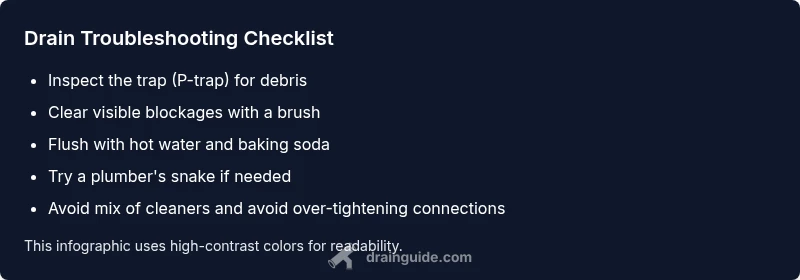
Place a bucket beneath the trap, wear gloves, and loosen the slip nuts to remove the trap sections. Clear out hair, soap scum, and food particles with a stiff brush. Rinse the trap and reassemble, then run hot water to flush residual debris.
Tip: Take photos of the trap’s condition before disassembly in case you need to reference it later. - 2
Clean the P-trap and drain connections
Scrub the interior surfaces of the trap and the elbow joints with a brush. Reinstall and ensure all connections are snug but not overtightened. Run hot water for several minutes to dissolve remaining residue.
Tip: Don’t overtighten plastic nuts; you can strip threads easily. - 3
Flush with hot water and safe cleaners
Pour a kettle of near-boiling water slowly down the drain to help dissolve grease. Follow with a half cup of baking soda, then a cup of white vinegar, letting it fizz for a few minutes before rinsing with hot water.
Tip: Avoid mixing chemical cleaners with one another or with other cleaners. - 4
Use a drain snake if the clog persists
Insert the snake carefully into the drain until you feel resistance, then rotate to break up or retrieve the blockage. Pull the snake out slowly to remove debris and flush with water.
Tip: Push—not pull—on the snake’s handle to maximize contact with the clog. - 5
Check for venting issues
If multiple fixtures share a drain and vent, slow drainage with gurgling may indicate a vent problem. Inspect accessible roof vents for blockages or call a professional for a proper vent assessment.
Tip: Temporary vents can worsen backpressure; avoid DIY fixes that compromise the system. - 6
Know when to call a professional
If you’ve tried basic clearing and snaking without success, or you suspect a mainline or vent problem, a licensed plumber with diagnostic tools is the safest route.
Tip: Professional help can prevent property damage and ensure code-compliant repairs.
Diagnosis: Drain stops flowing or drains slowly in kitchen or bathroom fixtures
Possible Causes
- highClog in trap or long pipe run
- mediumVenting issue causing airlock and slow drainage
- lowGrease buildup in piping or mineral scale
Fixes
- easyDisassemble and clean the P-trap, removing hair and gunk
- easySnaking the drain to break up or pull out the clog
- mediumInspect the vent stack and ensure proper venting; clear obstructions if needed
- hardIf persistent, call a licensed plumber for a camera inspection
Got Questions?
What are the most common signs of a clogged drain?
Common signs include slow drainage, gurgling sounds, standing water, and frequent backups in more than one fixture. If you notice these, start with trap cleaning and a gentle snake approach before moving to more invasive methods.
Look for slow draining and gurgling sounds. If you see standing water, begin with the trap and gentle snaking before calling a pro.
Are chemical drain cleaners safe for my pipes?
Chemical cleaners can damage old pipes and septic systems and may create hazardous fumes. Use mechanical methods first and consult a professional if the clog persists.
Chemicals can harm pipes and septic systems. Try mechanical methods first and get help if it won’t clear.
When should I use a drain snake or auger instead of a plunger?
A plunger works best for surface clogs and toilets, while a drain snake reaches deeper into pipes to break up or pull out stubborn blockages. Use a snake after plunging if the drain remains slow or backed up.
Use a plunger for surface clogs, but switch to a snake if plunging doesn’t clear the drain.
Can venting problems cause slow drainage?
Yes. Poor venting can cause air pressure to trap drainage flow, leading to slow draining or backups. If multiple fixtures are affected, inspect the vent stack or consult a pro.
Vent issues can slow drainage—check the vent stack or call a plumber if several fixtures are affected.
How often should I perform drain maintenance?
Perform light maintenance monthly and a deeper inspection every 6–12 months. Regular flushing with hot water and baking soda can help prevent buildup.
Do a quick monthly check and a deeper clean a couple of times a year to keep things flowing smoothly.
What safety steps should I take before DIY drain work?
Turn off power to nearby appliances if you’re working near electrical outlets, use gloves and eye protection, and avoid using sharp tools that could damage pipes. If you’re unsure, pause and consult a professional.
Wear protection, keep kids away, and don’t force tools into pipes. If uncertain, get a pro involved.
Watch Video
The Essentials
- Start with the trap and visible debris.
- Use a snake or auger for deeper clogs.
- Avoid harsh chemicals—mechanical methods are safer.
- Know when to call a pro to avoid further damage.
- Prevent future clogs with regular maintenance.