Why Do Drain Flies Come? Urgent Troubleshooting Guide
Learn why drain flies come, identify sources, and follow a practical, step-by-step plan to stop an infestation fast and prevent recurrence. A Drain Guide troubleshooting approach.


Drain flies come from moisture-rich drains that harbor a film of organic matter. The most common source is slow or blocked drains where biofilm fuels breeding. Quick fixes include scrubbing the drain, flushing with hot water, and using traps to monitor activity. These insects feed and breed in the slime within pipes, so the problem often appears suddenly in bathrooms and kitchens.
What Are Drain Flies and Why They Matter
Drain flies, also known as sewer gnats, are tiny moth-like insects that thrive in moist, organic matter. If you’re wondering why do drain flies come, the answer is almost always a combination of damp environment and a ready food source inside your drainage system. Adults are only about 1.5–5 mm long and have fuzzy wings that give them a delicate, moth-like flutter when they hover near sinks or shower drains. They do not bite or sting, but their presence signals a thriving larval habitat in the pipes. The real issue isn’t the adults themselves but the larvae feeding on the biofilm—the slick layer of organic debris, bacteria, and other microscopic organisms that forms inside plumbing when water lingers. When conditions stay warm and moist, populations can explode in a short period, turning a nuisance into a frustrating recurring problem. Understanding this connection helps homeowners focus on moisture control and biofilm removal as the foundation of an effective response.
What Are Drain Flies and Why They Matter
They are small, moth-like insects that thrive in damp, organic-rich environments. The standout fact to answer the question why do drain flies come is that moisture + biofilm = ideal breeding ground. Adults are weak fliers, often seen near drains. The real lifecycle is what sustains outbreaks: larvae feed on organic debris inside pipes, maturing into adults that emerge in numbers when conditions are favorable. By addressing the moisture source and cleaning the film, you disrupt the cycle and reduce future arrivals.
What Are Drain Flies and Why They Matter
Steps
Estimated time: 45-60 minutes
- 1
Inventory and prep
Gather gloves, a stiff drain brush, enzymatic cleaner, and a clean bucket. Clear the area around all suspected drains so you can work safely. This prep step helps you stay organized and reduces the chance of cross-contamination. Tip: wear eye protection and ventilation; keep pets away during cleaning.
Tip: Label which drain you treat first to track progress. - 2
Inspect all drains and traps
Check each sink, shower, and floor drain for standing water or biofilm sheens in the trap. A slow drain or a dry P-trap indicates a hidden moisture path. Note any sewer odors that accompany the sightings. Tip: run water for a minute to reveal if a trap dries out over time.
Tip: Don’t skip basement or utility sinks where pests can breed. - 3
Clean the drain interiors
Using the brush, scrub the interior of each drain to break up slime and loose debris. Follow with an enzymatic cleaner to digest the remaining organics. Rinse with hot water to flush loosened material toward the main line. Tip: avoid mixing cleaners; keep to enzymatic products for safety.
Tip: Let the cleaner dwell for the recommended time before flushing. - 4
Flush and verify
Run near-boiling water or use a kettle to pour through each drain in stages, ensuring the water travels freely. If you still see activity, repeat the cleaning and consider a longer dwell time for the enzymatic cleaner. Tip: keep the area dry after flushing to avoid new breeding sites.
Tip: A second successful flush often ends most minor outbreaks. - 5
Seal moisture paths
Repair small leaks, improve ventilation, and ensure that damp areas stay dry. Consider a moisture meter for basements or crawl spaces and install screens on drains to deter future access. Tip: correct any cause of chronic moisture first; this reduces re-infestation risk.
Tip: Install drain covers where pests frequently enter. - 6
Monitor with a trap and plan next checks
Place a light trap or DIY sticky trap near problem drains to monitor ongoing activity. Set a routine to check weekly for the next month. Tip: document dates and activity to measure progress over time.
Tip: If activity returns after 2–3 weeks, escalate to professional help.
Diagnosis: Persistent drain fly sightings despite basic cleaning
Possible Causes
- highBiofilm buildup inside drains supporting larvae
- mediumStagnant water in P-traps due to infrequent use
- lowOther moisture sources (overflow from sinks, leaky pipes)
Fixes
- easyScrub affected drains with a stiff brush and enzymatic cleaner to break down organic film
- easyFlush drains with near-boiling water and allow to drain slowly to pull biofilm away
- mediumAddress moisture sources (fix leaks, improve ventilation, fix leaks)
- easyUse drain screens and traps to prevent access while treating
Got Questions?
What do drain flies look like?
Drain flies are tiny moth-like insects about 1.5-5 mm in length with fuzzy wings. They hover near drains and are usually more noticeable after lighting. The larvae live in organic biofilm inside pipes. They do not pose a direct threat to humans, but their presence signals a breeding site that needs cleaning.
Drain flies are tiny moth-like insects about the size of a pinhead. They hover near drains and indicate a biofilm inside your pipes that needs cleaning.
Are drain flies dangerous to people or pets?
Drain flies are primarily a nuisance. They can carry bacteria on their bodies after contact with waste, but they are not known to bite or transmit diseases to people. Keeping drains clean reduces any incidental contamination risk.
They’re mainly a nuisance and don’t typically threaten people, but keeping drains clean helps reduce any minor contamination risk.
How long does it take to get rid of drain flies?
If you address moisture, clean the affected drains, and install preventive barriers, you may see a reduction in 1–2 weeks. Severe or sewer-line-related cases can take longer and may require professional help.
With thorough cleaning and moisture control, most folks see improvement within one to two weeks.
Can baking soda and vinegar help with drain fly problems?
Baking soda and vinegar can help with minor clogs and odor, but they are not a reliable long-term solution for drain fly infestations. Use them as a supplementary step, not a replacement for thorough cleaning.
They can help a little, but they aren’t a guaranteed fix for drain flies.
When should I call a professional for drain flies?
If outbreaks persist after performing thorough cleaning, or if you suspect sewer-line problems or multiple traps are dry, contact a licensed plumber. Persistent infestations may indicate larger plumbing issues.
If the problem keeps coming back after you’ve cleaned and checked moisture, it’s time to call a pro.
Are there temporary traps that catch drain flies effectively?
Yes, simple sticky traps or light-trap devices placed next to drains can reduce visible adults while you treat the underlying moisture and biofilm. They do not replace cleaning, but they help monitor activity.
Sticky traps near drains can reduce visible flies while you fix the root cause.
Watch Video
The Essentials
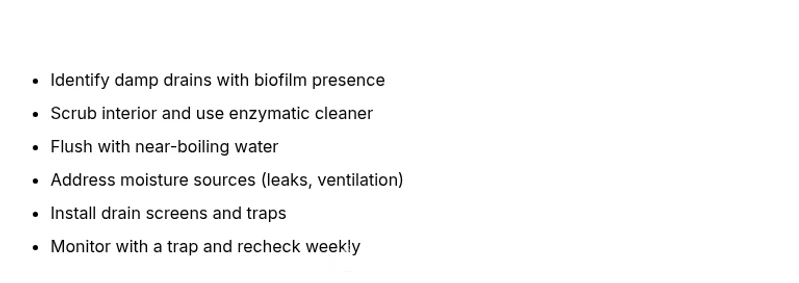
- Identify damp, biofilm-rich drains as the root cause.
- Clean and rinse to disrupt the larval habitat.
- Address moisture sources to prevent reinfestation.
- Monitor drains and maintain preventative barriers.