Why Does My Sink Drain Make Noise? A Practical Troubleshooting Guide
If your sink drain is making noise, this urgent troubleshooting guide helps you diagnose causes, perform safe checks, and fix common problems fast. Learn how venting, clogs, and loose components create sound and what to do today.


Most often, a noisy sink is caused by venting issues or a partial clog. Start by inspecting the P-trap for debris, tighten the sink flange, and run water to observe. If gurgling continues, check the vent stack or dishwasher connection; for persistent noise, call a licensed plumber.
Understanding Why Sink Drains Make Noise
According to Drain Guide, the question 'why does my sink drain make noise' is a signal that something in your drainage system is not behaving as it should. In most homes, the sound comes from air and water interactions within the drain, venting system, or a partially blocked path. The Drain Guide team has found that many homeowners misidentify the cause, mistaking a normal water flow for a problem, or assuming a loud vibration means the whole pipe is failing. With a calm, methodical approach you can pinpoint the likely source and decide whether a quick DIY fix is enough or if a plumber should be called. This article helps you distinguish between gurgling, banging, humming, and whistling sounds, then walks you through practical tests you can perform safely without special tools. By understanding the mechanics and using a simple diagnostic flow, you can prevent minor issues from becoming costly repairs. Remember: early action reduces the chance of leaks, wasted water, and more significant damage to cabinets or floors. Drain Guide's mission is to empower homeowners with practical, step-by-step drain troubleshooting that is clear, measurable, and safe.
Common Noise Types and Their Meanings
Different noises indicate different issues. Gurgling typically means a vent or partial clog in the drain line; banging or hammering often signals water hammer or a misadjusted shutoff; a high-pitched screech can come from loose washer or hardware; whistling may point to a tiny air leak in the vent or pipe. Each sound points to a possible cause, which you can verify with simple checks and a methodical flow. Drain Guide suggests listening closely to determine when the noise occurs—during steady flow, only when you start or stop water, or as a result of dishwasher operation. Documenting when the noise occurs helps you narrow the source. In many cases, fixing the problem involves straightforward maintenance, but persistent sounds can reflect venting problems or deeper pipe issues that require a professional assessment.
Quick Checks You Can Do Right Now (Safe, Easy, Low-Commitment)
Before you dive deeper, perform these safe, simple checks:
- Listen at the drain while water runs to hear the noise clearly and note when it starts.
- Inspect the P-trap for debris and tightness; tighten slip nuts if needed.
- Remove the sink strainer and clean any hair or residue; reassemble.
- Check the dishwasher connection to the disposal or drain; ensure the hose is properly secured and that the air gap (if present) is clear.
- If you have a garbage disposal, run it briefly with water and listen for abnormal sounds—do not run dry.
Diagnostic Flow Overview
This flow helps you map symptoms to likely causes and practical fixes. Start with the simplest checks (loose flange, clogged trap) and progress toward venting and plumbing system issues. If the flow points to venting or structural problems, consider professional assessment. The goal is to identify whether you can complete repairs safely yourself or if licensed expertise is needed to prevent leaks or structural damage.
Step-By-Step Fixes for the Most Common Causes
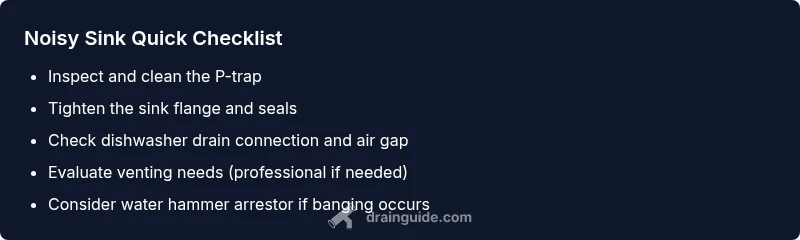
- Tighten or reseal the sink flange: Ensure the drain is snug and the mounting nut is secure. If there is any seepage, reseal with plumber’s putty or a gasket from the underside. 2) Clean the P-trap: Place a bucket under the trap, loosen the slip nuts, remove debris, and reassemble. Run water to confirm smooth flow and absence of noise. 3) Inspect the sink flange and stopper: If the flange wobbles, reseat and check the stopper assembly for proper alignment. 4) Examine dishwasher drain connection: Ensure the hose is secured and that the air gap (if installed) is open and free of blockage. Misrouted or loose hoses can cause gurgling. 5) Assess venting needs: If noises persist after basic fixes, venting issues are likely. This may require a roof vent inspection by a professional. 6) Address water hammer: If your pipes bang when you close a valve, install a water hammer arrestor or use slow-closing valves where appropriate.
Tips & Warnings
- Safety first: shut off water if you’re removing the trap or working near electrical outlets. Use a bucket and towels to catch spills. Do not overtighten fittings; cross-threading can cause leaks. If you’re uncomfortable with any step, stop and call a licensed plumber. Venting or structural work should be handled by a professional to avoid property damage.
Prevention Tips
- Regularly clean the P-trap and stopper screen to prevent hair and gunk buildup. - Be mindful of what goes down the sink; avoid pouring grease or oil down kitchen drains. - Schedule annual checks for venting and drainage systems to catch issues early and maintain quiet, efficient operation.
Steps
Estimated time: 45-90 minutes
- 1
Turn off water and place a bucket
Shut the water supply to the sink and place a bucket under the trap. This prevents spills and keeps the area dry as you disassemble the drain.
Tip: Have towels handy and ensure the area is well-ventilated. - 2
Check and clean the P-trap
Place a container under the trap, loosen the slip nuts, remove the trap, and clean out hair and gunk. Reassemble and test for noise.
Tip: Avoid overtightening; hand-tighten plus a quarter turn with pliers. - 3
Inspect the sink flange
From above the sink, check the flange and mounting nut for tightness. If you hear water or see leaks, reseal with plumber’s putty or a rubber gasket.
Tip: Follow the manufacturer’s torque guidelines. - 4
Examine dishwasher drain connection
If your sink connects to a dishwasher, ensure the hose is secured and the air gap is clear. Misadjusted hoses can cause gurgling.
Tip: Run the dishwasher to observe if noises change. - 5
Assess venting needs
If noises persist after the above steps, venting issues are likely. This may require a roof vent inspection by a professional.
Tip: Do not attempt to service roof vents yourself if you’re uncomfortable.
Diagnosis: Sink noise (gurgling, banging, or whistling) during or after water use
Possible Causes
- highVent issue or blocked vent stack
- mediumPartial clog in drain line or P-trap
- lowLoose drain components or flange
- lowDishwasher drain connection issues
- lowWater hammer from high pressure
Fixes
- easyClear debris from P-trap and tighten joints
- mediumInspect venting and roof vent (call a plumber if needed)
- easyVerify dishwasher connection and air gap function
- mediumInstall or repair water hammer arrestor if needed
- easyReplace faulty washers or flange seals
Got Questions?
Why does my sink gurgle after I run the faucet?
Gurgling often signals a venting problem or partial clog. Cleaning the trap and ensuring vents are clear usually helps. If it continues, a plumber should inspect the vent stack.
Gurgling usually means the vent is blocked or there’s a partial clog. Start with the trap, then check the vent; call a plumber if it keeps happening.
Can a loose drain flange cause noise?
Yes. A loose flange or gasket can cause humming or banging. Tighten the mounting nut from underneath and reseal if needed.
A loose drain can cause noise; tighten the nut and reseal.
Is it safe to use chemical cleaners to fix noises?
Chemical cleaners can damage pipes and trap debris, potentially making noises worse. Use mechanical cleaning methods first and consult a plumber for persistent issues.
Avoid chemical cleaners; they can harm pipes.
When should I call a plumber for a noisy sink?
If noises persist after checking the trap, flange, and dishwasher connections, or you suspect venting problems or hidden leaks, contact a licensed plumber.
If the noise continues after DIY steps, call a plumber.
Could water hammer be the cause?
Yes, rapid shut-off can cause banging sounds. Install a water hammer arrestor or slow-close valve where appropriate.
Water hammer can cause banging; install an arrestor.
Will a vent repair fix all noises?
Not always. If venting is not the source of the noise, other issues like a partial clog or loose components could be involved.
Vent rehab helps if venting is the issue; otherwise other fixes could solve it.
Watch Video
The Essentials
- Identify noise type to guide fixes
- Start with P-trap and flange checks
- Vent issues require professional help
- Avoid harsh chemicals and unsafe DIY steps