Why is My Drain Gurgling? A DIY Troubleshooting Guide
Learn why your drain gurgles and how to fix it fast. This Drain Guide troubleshooting article covers common causes, safe steps, and prevention tips for DIY homeowners.


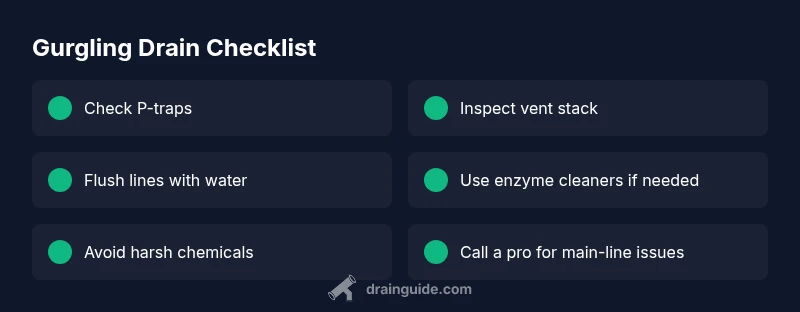
Most often, a gurgling drain means air is fighting its way through the trap because the venting is blocked or a partial clog is forming. Start with the easiest fix: recheck the P-trap and remove any hair or debris, then flush the line with hot water. If the problem persists, inspect the vent stack or call a professional.
Why the symptom matters
If you’re asking, why is my drain gurgling, you’re not imagining a real plumbing issue. In many homes this noise is more than an annoyance—it signals air trying to move through a water-filled trap. The most common culprits are venting problems or a partial clog that slowly reduces the pipe’s capacity. Drain Guide notes that taking action early saves water, prevents sewage backups, and extends the life of your pipes. A gurgling sound usually means the drain is fighting against air that should escape through a vent or be displaced by water flow. Understanding the root cause helps you choose safe, effective steps rather than resorting to guesswork or harsh chemicals. In the next sections, you’ll learn how to identify whether the problem is a dry trap, a blocked vent, or a more serious main-line issue, and you’ll gain a practical plan you can execute with common household tools. According to Drain Guide, a structured approach reduces stress and increases your odds of a lasting fix.
Steps
Estimated time: 60-90 minutes
- 1
Inspect and refill P-trap
Shut off water if needed and remove the trap’s access panel. Clean out hair and debris, then refill with clean water until the trap is full. Run the faucet to confirm the gurgling noise diminishes.
Tip: Keep a bucket handy to catch any spillover and check the trap’s seals for leaks. - 2
Flush the line with hot water
Pour hot water down the drain in steady, small bursts to loosen soap scum and grease buildup. Repeat a few times and listen for changes in sound. This helps if a partial clog is forming behind the trap.
Tip: Do not use boiling water if you have PVC pipes; use hot tap water instead. - 3
Check the vent stack accessibility
From a safe location, inspect the vent opening (up on the roof or attic access) for blockages. Do not dislodge nests or debris with force; use a garden hose from the bottom to push debris out if possible.
Tip: Only perform roof work if you have proper safety gear and fall protection. - 4
Use a drain snake or enzymatic cleaner
If the gurgling persists, carefully insert a drain snake or apply an enzymatic cleaner designed for sewer lines. This addresses partial clogs deeper in the line without harsh chemicals.
Tip: Avoid caustic chemicals that can damage pipes or septic systems. - 5
Assess the main line and shared vents
If several fixtures murmur or back up, the issue may be the main sewer line or shared vent. A camera inspection can reveal blockages or line damage.
Tip: Do not delay if you see sewage or slow drains in multiple rooms. - 6
Know when to call a plumber
If you cannot identify or fix the root cause after these steps, or you notice sewage odors, call a licensed plumber for professional assessment and safe repair.
Tip: Early intervention can prevent costly backups and property damage.
Diagnosis: Drain gurgling
Possible Causes
- highVenting issue or blocked vent stack
- highPartial clog or buildup in the drain line
- mediumDry P-trap or air trapped in a single fixture
- lowMain sewer line or septic issue (less common but serious)
Fixes
- easyInspect and clear accessible vent stacks from the roof or attic where safe
- easyRefill dry or partially full P-trap with water and test by running a faucet
- easySnack or enzymatic cleaner for partial clogs; avoid harsh chemicals
- hardCall a professional for main-line or venting diagnosis with camera inspection
Got Questions?
What causes a drain to gurgle?
Gurgling is typically caused by air moving through a water-filled trap due to venting issues or partial clogs. Inspect traps and vents first, then address downstream blockages if necessary.
Gurgling usually comes from air in the trap tied to venting or a partial clog; start with the trap and vent checks.
Can a dry trap cause gurgling in multiple fixtures?
Yes. A dry trap can trigger gurgling and affect other fixtures that share the same vent or drain line. Refill the trap and check the venting system.
Yes, a dry trap can cause gurgling in more than one fixture if the main line or vent is involved.
Is gurgling a sign of a sewer system problem?
Gurgling can indicate sewer or vent problems, especially if odors or backups accompany the noise. Treat it as a potential issue requiring closer inspection.
Gurgling can signal sewer or vent issues, so consider professional assessment if odors or backups appear.
Can venting issues cause gurgling in a shower?
Yes. A blocked vent can cause gurgling in showers and other sinks that share the same vent. Clearing the vent or installing a proper vent may fix it.
Blocked vents can cause shower gurgling; clearing the vent often helps.
Will plunging or snaking fix a gurgling drain?
For minor clogs, a plunger or snake can help. If the problem remains after basic fixes, avoid overdoing it and call a professional to prevent damage.
A plunger or snake can help with small clogs, but bigger issues require a pro.
Watch Video
The Essentials
- Check traps first; a dry trap is a common culprit
- Inspect vents if traps are clear and noise persists
- Use safe methods (hot water, baking soda, enzymatic cleaners) over harsh chemicals
- Call a pro if multiple fixtures gurgle or you smell sewage