Why Is My Drain Making a Popping Noise? A Fast Troubleshooting Guide
Discover why your drain pops and how to diagnose the issue quickly. Practical, safe DIY steps from Drain Guide to fix air in lines, vent problems, and common clogs.


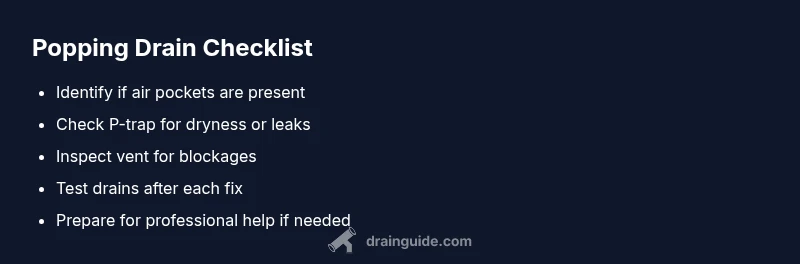
The popping sound is usually caused by trapped air in the drain line or a venting issue that lets air escape as water drains. Start with simple checks: run hot water to clear minor air pockets, inspect the P-trap, and verify the vent isn't blocked. If the noise continues, follow the step-by-step guide below for a thorough diagnosis.
Understanding the popping sound in drains
If you’re wondering why is my drain making a popping noise, you’re not alone. That sound often signals a simple air-related issue, but it can also point to venting problems or mineral buildup that, if ignored, could lead to bigger leaks or odors. In most homes the noise occurs when air is compressed and released as water flows, creating a sharp pop as pockets escape. The key is to stay calm and approach the problem methodically. Drain Guide provides practical, safe steps homeowners can take to identify the source and fix it without costly repairs. We’ll cover common scenarios, how to test for them, and what to do next based on what you find. Following this approach reduces the risk of water damage and keeps drains quiet over time. Remember, a popping drain often starts as a small issue that escalates if left unchecked.
Common causes of popping noises in residential drains
Popping noises aren’t always the same problem, but they share a few reliable culprits. The most frequent is trapped air in the drain line. When water moves, that air gets squeezed and released, producing a pop. A blocked or undersized vent stack is another common source: without proper venting, air pressure shifts cause disruptive noises. A dry or damaged P-trap can also create air pockets or allow sewer gases to hiss briefly before sealing. Mineral buildup inside pipes or in the trap can trap air and change the way water flows, leading to popping sounds. Finally, a loose connection or a cracked pipe may amplify minor vibration into a noticeable pop. Each cause has a distinct telltale sign, so testing is key.
Safety considerations before you start troubleshooting
Before you touch anything, prioritize safety. Turn off water to the affected fixture if you’re about to work near an exposed trap or pipe. If you smell sewage or hear a persistent sewer-like odor, evacuate and call a professional—there could be a bigger venting or sewer issue. Avoid using chemical drain cleaners as a first step; they can damage pipes and trap seals and mask real problems. If you are ever unsure, it’s wiser to pause and consult a licensed plumber. Work with a flashlight, wear gloves, and keep children and pets away from the work area. Drain work involves plumbing fixtures and sometimes electricity, so approach with care.
Quick checks you can perform to identify the cause
Start with safe, low-effort checks that you can do without special tools. Make sure all fixtures drain normally and note which ones pop or gurgle. Check nearby P-traps for dryness—if the trap is empty, refill it by running water from the faucet. Look for visible vent obstructions at the roof vent or any air admittance valves in the crawlspace or attic. If you have a dishwasher or washing machine connected to the same drain, observe whether the pop coincides with their cycles. Finally, listen to the main drain line with the cleanout access (if present) to detect pressure changes as water flows.
How to distinguish between air, vent, and trap problems
Air-related popping often comes from the line itself and tends to happen after long periods of no use. Vent problems show up as gurgling or popping when several fixtures are in use at once, especially upstairs. A dry or cracked P-trap produces a sharp pop as water is drawn away and air pockets form. If the sound stops when you pour water down the vent stack or down the trap, you’re likely dealing with a vent or trap issue. Systematic testing—checking vent blockage, refilling traps, and clearing the line—helps pinpoint the root cause. If this feels overwhelming, don’t hesitate to contact Drain Guide for guidance.
Step-by-step fixes for the most likely causes
If air in the line is the culprit, the fix is often simple—flush the line and ensure traps are filled with water. A blocked vent typically requires clearing the obstruction or clearing the vent path. A dry trap needs to be refilled, and a damaged trap or joint should be replaced. For mineral buildup, a gentle cleaning with a drain-safe method can restore flow. In cases where you suspect a larger venting issue or a hidden crack, professional inspection is recommended. The key is to test, not guess, and to seal any fix properly to prevent future pops.
Steps
Estimated time: Total time: 45-90 minutes
- 1
Shut off water and ensure safety
Turn off the main water supply if you’re investigating multiple fixtures or accessing the trap. Use a flashlight to inspect the area and unplug any nearby electrical devices before touching plumbing. This keeps you safe if you need to disassemble parts.
Tip: Always test for water flow after any step to avoid a bigger spill. - 2
Inspect and refill P-trap
Locate the P-trap under the sink or fixture. If it’s dry, fill it with water to reseal the trap and prevent sewer gas entry. Check for cracks or loose fittings and replace them if needed.
Tip: Keep a small bucket handy for any residual water during disassembly. - 3
Check for vent blockages
Inspect visible vent openings for debris (birds’ nests, leaves, or kitchen grease). If you can access the vent, clear any obstruction with a flexible brush. Do not force materials down the vent if you’re unsure of the result.
Tip: If the vent is on the roof, consider professional help to avoid falls. - 4
Flush the line and test drainage
Run hot water through the drain for several minutes to push air pockets out and observe whether the popping persists. If you hear fewer pops, the issue is improving; if not, proceed to deeper checks.
Tip: Avoid boiling water repeatedly as it can stress some pipe materials. - 5
Assess for mineral buildup or debris
If the drain is slow or clogged, use a plunger or a drain snake to clear buildup gently. For mineral scale, a mild, approved cleaner can help, but never mix chemicals. Rinse thoroughly after cleaning.
Tip: Never mix chemical cleaners as dangerous vapors can form. - 6
Re-test and plan maintenance
After cleaning or replacing parts, run water through all affected fixtures and listen for changes. Schedule routine checks of traps, vents, and cleanouts to prevent future pops.
Tip: Document the steps you took; it helps if you need a pro later.
Diagnosis: Drain makes popping or banging noise when water is running or drains.
Possible Causes
- highAir trapped in the drain line or plumbing vent
- mediumDry P-trap or leaking trap
- mediumVent blockage causing air to escape
- lowBackpressure from sediment buildup in the trap
Fixes
- easyFlush the line with hot water to re-pressurize and clear air pockets
- easyInspect and refill or clean the P-trap if dry or corroded
- mediumInspect and clear vent (if accessible) or call a professional for vent repair
- mediumReplace clogged trap or clean out the drain with recommended tools
Got Questions?
Is a popping drain noise dangerous?
Popping sounds are usually not dangerous by themselves, but they can indicate venting issues or trapped air that, if ignored, may lead to more serious problems like sewer gas entry or clogs. Monitor for odors and water backing up, and seek professional help if you notice persistent symptoms.
Popping noises aren’t inherently dangerous, but they can signal vent or air problems. If you smell sewer gas or the noise persists, contact a plumber.
Can I fix this myself without special tools?
Many common causes, like a dry trap or minor air pockets, can be addressed with basic tools and steps described in this guide. If you’re unsure about vent access or the risk of sewage exposure, hire a professional.
Yes, you can tackle simple checks and trap refills, but call a pro for vents or suspected sewer issues.
Should I use chemical drain cleaners to solve a popping noise?
Chemical cleaners are not recommended as a first fix for popping sounds. They can damage seals and pipes and may mask underlying vent or trap problems. Use mechanical methods first and reserve cleaners for minor clogs only.
Avoid chemical cleaners first; they can damage pipes and hide bigger issues.
How do I check for vent blockages safely?
Access the vent stack only if you’re comfortable and safe. Remove debris by hand or with a long flexible brush. If the vent is on the roof, consider professional assistance to avoid falls and ensure proper clearance.
Carefully clear visible vent blockages; roof access may require a pro.
When should I call a professional?
If you smell sewage, notice multiple drains popping, or can’t locate the cause after basic checks, it’s time to call a licensed plumber. Venting problems, sewer line issues, and trapped air in complex systems often require professional diagnosis.
Call a plumber if sewer smells persist or problems remain after basic checks.
Can a noisy drain indicate a bigger hidden problem?
Yes, sometimes a popping noise reveals a vent or trap issue that could escalate. It’s wise to address it early with methodical testing and by maintaining traps and vents.
A popping noise can hide vent or trap issues; don’t ignore it.
Watch Video
The Essentials
- Identify whether air, vent, or trap is the culprit.
- Start with simple checks before disassembling pipes.
- Vent blockages often cause multiple fixtures to pop.
- Refill dry traps to reseal and stop gas entry.
- Call a professional if you detect sewer smells or large leaks.