Drain Issue Troubleshooting: Quick Fixes and Safe Steps
Learn how to troubleshoot a drain issue with a clear, step-by-step approach. From quick checks to DIY fixes and safety tips, Drain Guide explains how to diagnose and prevent clogs.


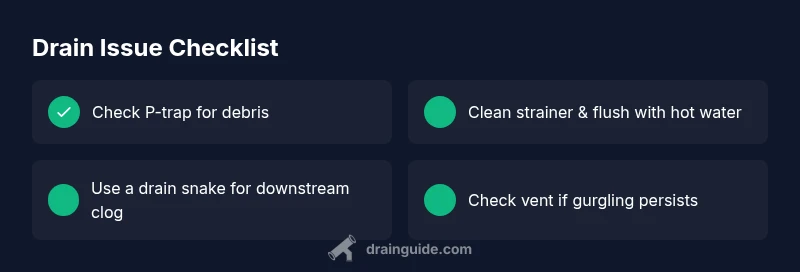
For a common drain issue, the most likely cause is a clogged trap or pipe joint, leading to slow drainage or backups. Start with the simplest fix: remove and clean the trap, clear the strainer, and flush with hot water. If the issue persists, move to the diagnostic flow and more thorough fixes.
Symptoms and signs of a drain issue
A drain issue often shows up as slow draining, gurgling sounds, standing water, or backups in one or more fixtures. In kitchens and bathrooms, water may back up into the sink, tub, or shower. Unusual odors, especially a sewage-like smell, are a red flag and should be investigated immediately. If you notice water slowly disappearing from a sink while the dishwasher runs, or if a second fixture drains slowly, you may be dealing with a shared pipe or vent problem. For homeowners, the most common starting point is the trap, the U-shaped pipe under sinks, where hair, grease, and debris can accumulate. Drain issue symptoms vary by configuration, but the goal is to isolate whether the problem is localized to one fixture or part of the main line. Always document the symptoms and time of day they occur to spot patterns. Remember: avoid chemical drain cleaners as a first move; they can damage seals, pipes, and septic systems and complicate diagnostics.
Common causes of drain issue in home plumbing
Most drain issues begin with simple blockages in or near the trap. Hair, soap scum, and food particles can form clogs that restrict flow. Grease and fat can cling to the inside of pipes, particularly in kitchen drains, creating sticky buildup over time. A blocked vent can cause gurgling and slow drainage, especially in fixtures on higher floors, where air must replace the moving water. Tree roots, shifted pipe joints, and collapsed lines are less common but serious causes of recurrent drain issues. In some cases, a sewer-line backup will manifest as drainage problems across multiple fixtures with unpleasant odors. For a DIY homeowner, the most actionable causes to check first are the trap and nearby drains. Drain issue diagnosis benefits from a structured approach rather than a spray of quick fixes. Drain Guide recommends starting with mechanical cleaning before resorting to chemical cleaners, to protect pipes and septic systems.
Quick checks you can safely perform now
Before pulling apart pipes, perform quick, low-risk checks. Inspect the visible portion of the drain for an obvious blockage in the strainer or hair catcher. Remove and clean the strainer, then flush with hot water or a mild, non-abrasive cleaner. Check if the trap underneath the sink is full of water; if it is dry, it may indicate an evaporation issue or a broken seal. Use a plunger designed for sinks (not a toilet plunger) to try dislodging a clog near the drain entry. If you have a shower or tub, clear the drain cover and examine the weep hole; a clogged weep hole can slow drainage. For kitchen sinks, put a bucket under the trap and gently loosen the fittings with a wrench to inspect the P-trap for hair and debris. If you see standing water in the trap, remove the U-shaped section and clean it thoroughly. Avoid chemical drain cleaners; they can cause damage and are not ideal for septic systems.
Diagnostic flow overview
This section outlines a practical flow for identifying the cause of your drain issue. Start with symptom recognition: slow drain vs. backup vs. odors. Next, diagnose by fixture: is it isolated to one fixture or affecting multiple locations? If isolated, the trap or local drain path is likely the culprit. If multiple fixtures are involved, inspect the main line, vent, and sewer connections. Finally, apply solutions in order of simplicity: mechanical cleaning of trap, use of a drain snake for downstream clog, vent check, and, if needed, professional assessment for main line or sewer issues. Documentation helps track which steps resolved the issue or did not. Drain Guide emphasizes safety and patience; rushing with powerful cleaners can injure you and damage pipes. If you are ever unsure about sewer gas odors or the integrity of supply lines, call a licensed plumber.
Quick overview of safe step-by-step approach (overview of the Step-by-Step below)
The following step-by-step guide focuses on the most common drain issue: a clogged P-trap. It walks you through disassembly, debris removal, reassembly, and testing. If you are uncomfortable with any step or your fixture is connected to a septic system or main sewer line, skip to professional help. We'll cover also downstream clogs and vent-related symptoms in later sections.
Safety tips and warnings
Safety first when working on drains. Wear gloves, eye protection, and old clothing. Turn off nearby appliances if needed and be mindful of slippery surfaces. Do not mix chemical cleaners with other products; multiple chemicals can release toxic fumes or cause pipe damage. Use a bucket and towels to manage spills, and never force a tool that resists; applying excessive force can damage fittings or pipes. If you have a septic system, avoid harsh chemical cleaners that can disrupt beneficial bacteria. When in doubt, pause and call a professional.
Prevention and maintenance to minimize future drain issues
Implement a simple maintenance routine to reduce the chances of a drain issue recurring. Use sink strainers to catch hair and food particles; clean them weekly. Periodically flush drains with hot water and a small amount of baking soda followed by vinegar to reduce buildup—never rely on chemical cleaners as the sole method. Monitor for slow drainage after heavy use (e.g., cooking oil down the kitchen sink). For homes with multiple fixtures, consider annual checks by a plumber to inspect pipes and vents. Finally, ensure your venting is clear by checking roof vents or hiring a pro if you hear persistent gurgling.
When to call a professional
If you have wastewater backing up into multiple fixtures, persistent wastewater odors, or if you encounter sewer gas, stop work and call a licensed plumber immediately. Also seek professional help if you have a damaged trap, cracked pipe, or a main sewer-line issue. Even if you can perform basic steps safely, complex drain issues—especially in older homes with clay pipes or irregular slopes—benefit from professional diagnosis. Drain Guide suggests using professional help when the risk of structural damage or health hazards is present; a pro can recommend a camera inspection, vent assessment, and targeted solutions.
Steps
Estimated time: 60-90 minutes
- 1
Shut off water & prepare area
Turn off the cold water supply valves under the affected sink and place a bucket and towels to catch any water. This keeps your workspace safe and prevents spills as you begin the fix.
Tip: Have a wrench handy and arrange rags so you don’t slip on water. - 2
Loosen and remove the P-trap
Place a bucket under the P-trap, use adjustable pliers to loosen the slip nuts, and carefully remove the trap. Inspect the inside for visible debris and hair.
Tip: Do not overtighten the nuts when reassembling to avoid leaks. - 3
Clean the trap & inspect the arm
Thoroughly rinse the trap with hot water, remove all buildup, and check the trap arm for any residue. If you see gunk inside, scrub with a small brush and recheck the joints.
Tip: Keep a record of what you find for future maintenance. - 4
Reassemble & test the drain
Reinstall the P-trap, ensure washers seat properly, and snug the slip nuts by hand then gently tighten. Run water to test for leaks and full drainage.
Tip: If leaks appear, snug slightly more but avoid over-tightening. - 5
Address downstream clog if needed
If drainage remains slow, use a hand drain snake to clear the trap arm and a few inches beyond. Repeat with cautious, steady motion to avoid pipe damage.
Tip: Go slowly and stop if you feel significant resistance. - 6
Evaluate venting & plan next steps
If gurgling persists after cleaning, it may be a venting issue; inspect accessible vent paths or schedule a professional inspection for the vent system and main line.
Tip: Document symptoms and tests to share with a pro.
Diagnosis: Drain slow, gurgling, or backup
Possible Causes
- highClogged trap or local blockage
- mediumHair, grease, or soap scum buildup downstream
- lowVent blockage or improper venting
- lowMain sewer line issue or collapsed pipe
Fixes
- easyDisassemble and clean the P-trap; remove trapped debris
- mediumUse a drain snake to clear downstream clog and flush
- hardCheck and clear venting if accessible (roof vent)
- hardCall a licensed plumber for main line or structural problems
Got Questions?
What is the quickest fix for a drain issue?
The fastest fix is to clean the P-trap and strainer, then flush with hot water. If drainage remains slow, move through the diagnostic flow for a thorough check.
Clean the trap and strainer first; if that doesn’t help, follow the diagnostic flow for a full check.
Can chemical drain cleaners solve the problem?
Chemical cleaners are not recommended as the first move. They can damage pipes and septic systems and may mask deeper issues. Mechanical cleaning and inspection are preferred.
Chemicals aren’t the best first move; mechanical cleaning is safer and more effective for most drain issues.
When should I call a plumber?
Call a plumber if water backs up in multiple fixtures, you detect sewer gas, or you suspect a damaged main line or venting problem. A pro can perform camera inspections and deeper diagnostics.
Call a plumber if multiple fixtures backup or you smell sewer gas.
Is it safe to use a plunger on a clogged drain?
Yes, for sinks and tubs use the right type of plunger. Avoid using a toilet plunger on non-toilet drains. Plunging is best as a first-line mechanical method.
A proper sink plunger is fine to try first, but don’t use a toilet plunger on a sink.
How can I prevent drain issues in the future?
Use strainers, avoid pouring grease down the drain, and flush with hot water regularly. Periodic maintenance reduces buildup and extends pipe life.
Install strainers and flush with hot water to prevent buildup.
Will vent problems cause slow drainage?
Yes. A blocked or improperly vented drain can slow water flow and cause gurgling. If venting appears suspect, a professional inspection is advised.
Vent problems can slow drainage; consider professional vent inspection if symptoms persist.
Watch Video
The Essentials
- Identify whether the issue is localized or systemic
- Start with trap cleaning before other methods
- Prefer mechanical cleaning over chemical cleaners
- Know when to call a plumber for main-line concerns