Why JP Drain Isn’t Holding Suction — Complete Troubleshooting Guide
A practical, safety-focused guide to diagnose and fix JP drain suction loss. Step-by-step fixes, common causes, and prevention tips for homeowners.


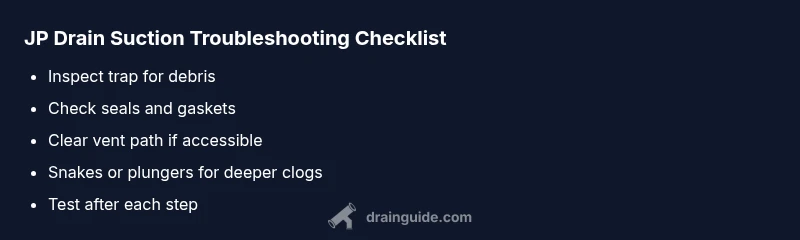
JP drain suction is usually lost due to a partial clog, a loose or cracked seal on the trap, or venting problems. Begin by inspecting the trap for debris, resealing any loose fittings, and clearing blockages. If suction remains weak, check the vent and, if needed, contact a professional to avoid damage.
Understanding why is jp drain not holding suction: what's happening
When a JP drain loses suction, it means the system is no longer drawing water and debris through the trap effectively. If you're wondering why is jp drain not holding suction, the answer typically points to a partial clog, a compromised trap seal, or venting issues. The fix starts with a simple inspection: look for obvious debris in the trap, test seals for tightness, and confirm that the vent path isn't blocked. Most homes experience this after regular use or infrequent cleaning. The Drain Guide team has found that starting with the trap and seals yields the fastest resolution in most DIY scenarios. By understanding where suction is lost, you can plan targeted actions and avoid unnecessary replacements or expensive service calls.
Common Causes of Loss of Suction in JP Drains
- Partial clog in the trap or drain line (high likelihood): Debris like hair, soap scum, or food particles can restrict flow and reduce suction.
- Loose, damaged, or missing trap seal or gasket (high likelihood): A weak seal lets air bypass the trap, eroding suction.
- Venting problems or blocked vent stack (medium likelihood): Poor venting creates a vacuum effect that stifles suction.
- Cracked or loose drain cover, basket screen, or improper seal on the access plug (low likelihood): Leaks decrease suction efficiency.
- Incorrect trap placement or siphoning due to slope issues (low likelihood): Poor drainage geometry can cause intermittent suction loss.
Safety & Preparation Before Troubleshooting
Safety first: wear gloves and eye protection, and keep a bucket and towels handy. Gather tools: adjustable wrench, pliers, screwdriver, bucket, rags, a drain snake or auger, and plumber’s tape. Disconnect power or water supply if your JP drain is part of a larger appliance or system, and never rush when handling stacked components. A calm, organized approach minimizes accidents and reduces the chance of causing new leaks. Drain cleaning chemicals should be avoided in this stage, as they can corrode seals or trap components.
Understanding the risks and having the right tools makes DIY fixes faster and safer, a principle Drain Guide emphasizes in every homeowner troubleshooting scenario.
Diagnostic Flow: How to Narrow Down the Cause (quick path to the answer)
- Observe symptoms: Is the water draining slowly, gurgling, or failing to hold water in the trap?
- Check for visible leaks around the trap and seals.
- Inspect the trap for debris and remove any blockages.
- Test the seal by running water and checking for air leaks.
- Examine the vent path if accessible (outdoor vent or plumbing chase).
- If the problem persists, move to deeper inspection or professional help.
By following this flow, you can distinguish between a simple seal issue and a deeper clog or vent problem. Drain Guide recommends documenting findings with photos to help when you consult a professional later.
Step-by-Step Fix: Re-seal and Clear Debris from the Trap
- Shut off water supply and place a bucket under the trap. Remove the trap carefully and inspect the U-bend for buildup.
- Clear debris with a brush or cloth, rinse with warm water, and wipe the surfaces clean. Reinstall the trap with new plumber’s tape on threaded joints and ensure the seal is snug.
- Reconnect all parts tightly, then run water to test suction. Check for leaks around joints and reseal if needed.
- If suction improves, reinstall the drain cover or basket, and verify there are no leaks.
- If suction remains weak, proceed to vent testing or deeper clog removal.
- Document any parts replaced and the date of service for future reference.
Tip: Take a quick photo of the trap orientation before disassembly to ensure correct reassembly.
Step-by-Step Fix: Clearing a Deeper Clog with a Drain Snake
- Reopen the access and feed the drain snake slowly into the pipe, turning the handle clockwise to break through the clog.
- Pull back gently to remove debris, repeating as needed until water flows freely. Do not force the snake, which can damage pipes.
- Rinse the trap and pipe with warm water to flush remaining material and verify flow.
- Recheck seals and joints for leaks, and reseal as necessary.
- Run several cycles of water to ensure suction remains stable over time.
Pro tip: Use a channel-type snake for tighter bends and access; avoid metal fatigue by not forcing through sharp turns.
Prevention Tips: How to Keep Suction Strong Long-Term
- Clean the trap and strainer regularly to prevent buildup.
- Check seals and gaskets every 6–12 months; replace cracked or worn parts.
- Ensure the drain line has the correct slope to avoid pooling that encourages clogs.
- Use a drain guard to reduce hair and debris entering the trap.
- Avoid chemical drain cleaners; they can corrode seals and damage components over time.
When to Call a Professional and What They Do
If suction remains inconsistent after following these steps, professional evaluation may be required. A licensed plumber can assess venting, check for deeper blockages, and inspect the overall drainage system for structural issues. They may perform camera inspections to locate hidden clogs, replace damaged traps, or correct venting problems. The sooner you seek help when DIY fixes fail, the less risk there is of water damage or sewer gas exposure.
Steps
Estimated time: 45-75 minutes
- 1
Shut off water and prepare tools
Turn off the water supply to the JP drain and place a bucket beneath the trap. Gather a bucket, towels, adjustable wrench, pliers, a flashlight, a drain snake, and replacement gaskets. Safety first: gloves and eye protection are advised.
Tip: Take a photo of the current setup before disassembly to help with reassembly. - 2
Disassemble the trap
Carefully loosen the slip nuts and remove the trap from beneath the sink. Inspect the U-bend for debris and inspect seals for cracks or wear. If a gasket is damaged, replace it with a new one that matches your model.
Tip: Keep the old parts in a labeled bag for reference if you replace components later. - 3
Clean and reseal
Clean all surfaces of the trap and fittings. Reassemble with new plumber’s tape on threaded joints and ensure the gasket seats evenly. Hand-tighten, then give a final snug with a wrench without overtightening.
Tip: Ensure the trap sits level and that the gasket is correctly oriented. - 4
Test suction and look for leaks
Run water and observe the trap for leaks and suction strength. If water drains slowly or siphons, this indicates additional issues to address in the next steps.
Tip: Use a dry towel to quickly catch any drips during testing. - 5
Inspect venting
If suction remains weak, inspect any accessible vent paths for blockages. A blocked vent can cause poor suction even after trap work. Clear obstruction or call a professional if you cannot access the vent safely.
Tip: Never seal a vent or cap a vent without a proper replacement path. - 6
Evaluate need for professional help
If suction does not improve after the above steps, a professional evaluation may be required to diagnose deeper blockages or venting issues and to ensure the system is installed correctly.
Tip: Document steps taken and dates to aid the plumber's diagnosis.
Diagnosis: JP drain not holding suction
Possible Causes
- highPartial clog in trap or drain line
- highLoose, cracked, or missing trap seal/gasket
- mediumVentilation issue or blocked vent
- lowSiphoning due to incorrect slope or oversized trap
Fixes
- easyClear trap and drain line of debris; use a plunger or drain snake as needed
- easyReseat or replace trap seal/gasket; apply plumber’s tape on threaded joints
- mediumInspect and clear vent path if accessible; ensure proper venting for drainage
- hardAdjust pipe slope or replace trap to correct drainage geometry
Got Questions?
What is JP drain?
JP drain refers to the drain assembly under a sink or a specific drain brand context. It includes the trap, seals, and access cover. Understanding its parts helps in diagnosing suction issues.
JP drain refers to the drain assembly under a sink, including the trap and seals. Knowing its parts helps diagnose suction problems.
Why is JP drain not holding suction?
Suction loss is usually due to a partial clog, a leaky or worn trap seal, or venting issues. Start with the trap, reseal joints, and clear blockages before assessing the vent.
Suction loss is typically caused by clogs, a bad seal, or venting problems. Start with the trap and seals, then check the vent.
Can vinegar and baking soda fix suction issues?
They can help maintain cleanliness and reduce minor buildup, but they are not a reliable fix for lost suction due to clogs, seals, or vent problems. Use them for maintenance rather than a cure.
Vinegar and baking soda can help with minor buildup, but they aren’t a reliable cure for suction loss from clogs or vent issues.
Is it safe to use a plunger on a JP drain?
Yes, a plunger can be used for a quick test and to dislodge shallow clogs, but avoid excessive force to prevent damage to seals and joints.
A plunger can help with shallow clogs, but don’t use too much force to protect seals and joints.
When should I call a professional?
If the suction issue persists after trying trap reseal and basic flushing, or if you suspect a vent problem or deeper blockage, call a licensed plumber for a thorough diagnosis.
Call a plumber if suction remains poor after DIY fixes or if you suspect vent problems or deeper blockages.
How often should I clean the JP drain trap?
Clean the trap every 6–12 months or whenever you notice slower drainage or gurgling sounds. Regular maintenance prevents recurring suction issues.
Clean the trap every 6 to 12 months or when you notice slow drainage to prevent suction problems.
Watch Video
The Essentials
- Check for clogs first, then reseal traps.
- Inspect venting if suction remains weak.
- Clean the trap regularly to prevent recurring issues.
- Use a snake for deeper clogs, not forcefully.
- Call a professional if DIY fixes fail.