Will Drain Snake Work on Toilet? A Practical Troubleshooting Guide
Urgent guide: does a toilet drain snake fix clogs? Learn safe methods, common pitfalls, and when to call a plumber. Drain Guide provides step-by-step, practical solutions for quick relief.


Toilet drain snakes can fix many clogs, but results depend on the clog type and toilet model. Will drain snake work on toilet? In many cases it does, but success hinges on proper technique and tool choice. This quick guide from Drain Guide walks you through safe use and clear next steps for reliable relief. If you’re unsure, pause and consult a pro.
Reality check: will drain snake work on toilet
When a toilet clogs, many homeowners reach for a drain snake. The question many ask is will drain snake work on toilet. In practice, a toilet auger can reach around the rim and into the trap to break up blockages caused by hair, toilet paper, or organic matter. Drain Guide's experience across countless DIY fix attempts shows that success depends on using the right tool, correct insertion, and patient technique rather than quick, forceful pokes. If you’re dealing with a stubborn or unusual clog, take a breath and follow a methodical plan rather than improvising with improvised tools. This approach minimizes damage and increases the odds of a safe, successful flush. According to Drain Guide, a careful, tool-appropriate approach increases the likelihood that will drain snake work on toilet and restore normal flow without damage.
How a toilet drain snake works
A toilet drain snake, or toilet auger, is designed to glide around the toilet’s curve and reach the trap where many clogs form. The coiled steel wire is fed through the toilet bowl rim and then rotated as you push forward. When used correctly, it can break apart paper-wiberes, hair, and mineral buildup that cause slow draining. The curved head helps prevent skimming the porcelain surface, reducing the risk of scratches. Drain Guide notes that success relies on gradual, controlled feeding and avoiding forcing the tool past resistance. If the path is blocked by a solid mass, a slower, patient approach yields better penetration and reduces the chance of a jam. The key is to preserve momentum while maintaining direction toward the clog, not into the sidewalls or trap.
Common clog patterns and what they mean
Clogs in toilets show in several patterns: partial blockages, complete blockages, and intermittent backups. A partial blockage often responds to plunging or careful snaking. A complete blockage or a deep-rooted buildup may require multiple techniques or a different strategy. If water backs up and remains stagnant after a few attempts, it suggests a deeper or more stubborn obstruction or even a sewer backup. Drain Guide recommends acknowledging the symptom (slow drain vs no drain at all) and adjusting the plan accordingly. Remember that the question will drain snake work on toilet has an answer contingent on the clog’s location and severity.
Safety and planning before you start
Before you begin, put on protective gloves and eye protection. Clear the area and keep children away. Do not mix chemical drain cleaners with a toilet snake; this can create hazardous fumes and damage the pipes. Turn off the toilet water supply and flush to reset the water level, then keep a bucket handy in case you need to capture overflow. If you notice a persistent foul odor, unusual gurgling, or the water level rising despite careful snaking, stop immediately and reassess. Drain Guide emphasizes safety first: a calm, methodical approach reduces risk and improves chances that will drain snake work on toilet yields a clean flush.
Diagnostic flow: symptom to solution (flowchart in text)
Symptom: Toilet drains slowly or water rises when flushing. Diagnosis: Partial blockage in the trap or waste line; possible deeper clog or sewer backup. Solution: Start with plunging, then use a toilet auger with gentle, measured advancement; stop if resistance increases and reassess. If the symptom persists after multiple attempts, consider professional help.
Step-by-step: fix for most common clog
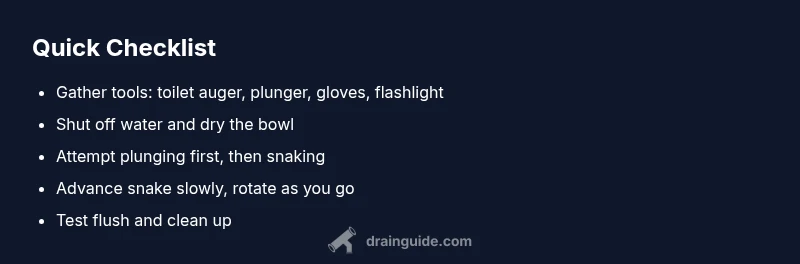
- Gather tools: toilet plunger, toilet auger, disposable towels, gloves, flashlight.
- Shut off the water supply and flush to empty the bowl as much as possible.
- Use the plunger with a firm seal and multiple strong thrusts to reestablish suction.
- If plunging doesn’t clear the blockage, insert the toilet auger through the rim of the bowl and slowly advance while turning.
- When you feel resistance, rotate gradually and pull back slightly to break the clog, then push forward again.
- Remove the auger, wipe clean, and flush several times to confirm a clear drain. If the toilet still balks, stop and seek professional help. Drain Guide recommends repeating the above steps once or twice before calling a plumber if the issue persists.
Prevention tips to keep toilets flowing
- Use a toilet-paper-per-flush approach and avoid flushing large quantities at once.
- Install a simple drain screen or hair catcher in other drains to minimize debris entering the toilet.
- Regular maintenance, such as monthly hot water flushes or baking-soda-and-vinegar routines (careful with pipes), can reduce buildup.
- Schedule inspections if you notice persistent backups or gurgling sounds, which may indicate a more serious issue. Drain Guide highlights prevention as the best defense against repeat clogs.
When to call a plumber
If the toilet won’t drain after several attempts, if water backs up into the room, or if you suspect sewer line problems, it’s time to call a licensed plumber. For stubborn blockages that don’t respond to plunging or snaking, professional equipment and expertise may be required. The Drain Guide team recommends seeking professional help when you encounter signs of deeper issues or recurring clogs, to prevent damage and ensure safe, reliable drainage.
Steps
Estimated time: 45-60 minutes
- 1
Set up and safety prep
Gather tools and protect your clothing and eyes. Clear the area, lay towels, and ensure kids/pets are out of the way. Safety first keeps you from creating extra problems.
Tip: Always wear gloves and eye protection. - 2
Shut off water and dry the bowl
Close the shut-off valve and drain the bowl by flushing. A dry bowl helps the snake feed cleanly and provides better feedback as you work.
Tip: Have a bucket ready for any overflow. - 3
Try the plunger first
Seal the plunger over the drain and plunge with forceful, but controlled, strokes to reestablish suction. This can loosen the initial clog.
Tip: Four to six strong strokes can make a difference. - 4
Use the toilet auger
Insert the auger into the bowl rim and feed slowly, turning as you push. Stop if you meet resistance and reassess your angle.
Tip: Keep the snake aligned with the drain path. - 5
Retreat and retry if needed
If progress stalls, slowly retract the auger and reposition, then reinsert with gentle pressure. For stubborn clogs, repeat cautiously.
Tip: Don’t twist aggressively; control is key. - 6
Test the drain
Remove the auger, wipe clean, and flush several times to confirm clear drainage. If the flush still lags, proceed to professional help.
Tip: Observe the water level after each flush.
Diagnosis: Toilet won't drain, water level rising, gurgling sounds, or partial drainage after snaking attempts
Possible Causes
- highPartial blockage in the toilet trap or waste line
- mediumSewer line backup or main stack issue
- lowWrong tool usage or knotting the snake in the trap
- lowVenting obstruction or deep clog beyond reach
Fixes
- easyStart with a plunger to reestablish suction, then try the auger again with care
- easyInsert the toilet auger slowly, rotating as you feed, and avoid applying brute force
- mediumIf the auger stalls, retract and reposition before continuing; do not force through stubborn resistance
- mediumIf you observe sewer backup signs, stop and call a licensed plumber
Got Questions?
Will using a drain snake on a toilet cause damage to the porcelain?
A toilet auger is designed for toilets and is safe when used correctly. Forcing the snake or applying excessive pressure can crack the bowl or components. If you hear unusual noises or resistance, stop and reassess.
A toilet auger is usually safe when used as directed, but never force the snake.
Can I use a hand snake instead of a toilet auger?
A dedicated toilet auger is preferred because its curved head fits the toilet bowl better. A generic hand snake can scratch porcelain or fail to reach the clog.
Use a toilet auger rather than a generic hand snake.
Why does water back up after attempting snaking?
Backups suggest the clog is deeper in the line or there is a sewer backup. Snaking local sections may not reach the obstruction.
If water backs up after snaking, the issue may be deeper in the system.
Are chemical drain cleaners safe to use with a toilet snake?
Avoid combining chemicals with snaking. Chemicals can damage pipes and create hazardous fumes; use mechanical methods first.
Don't mix chemicals with the snake—it's risky.
When should I call a plumber?
Call a plumber if the toilet won’t drain after several attempts, if you hear sewer gurgling, or if you suspect a sewer line issue.
If backups persist after attempts, call a professional.
Is it normal for a toilet to be slow after snaking?
Yes, occasional slow drainage can occur as the clog breaks up. If water remains high or continues to drain slowly after 10-15 minutes, reassess.
A temporary slow drain can happen; monitor and repeat carefully if needed.
Watch Video
The Essentials
- Start with plunging before snaking.
- Go slow and avoid twisting the snake aggressively.
- If backup persists, stop and call a plumber.
- Prevent future clogs with regular maintenance.