Smelly Drain Sink: Troubleshooting Guide for Homeowners
Learn fast, practical steps to stop a smelly drain sink. Drain Guide walks homeowners through trap checks, cleaning routines, safe cleaners, and prevention to keep kitchen odors at bay.


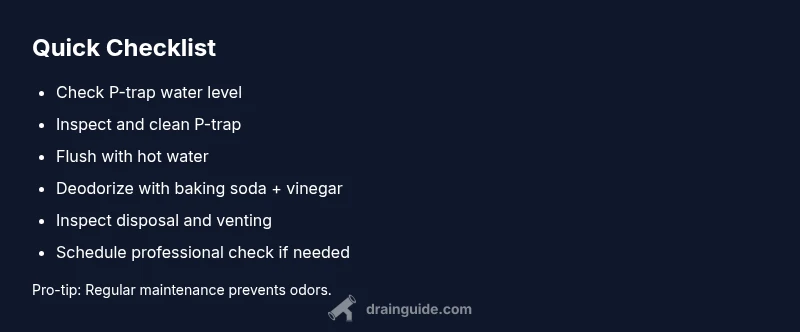
Most smelly sink drains come from a dry or clogged P-trap that allows sewer gases to escape. Start by running hot water to prime the trap, then clean the stopper and visible debris. If odors persist, sprinkle baking soda, pour vinegar, and flush with hot water. As a last resort, use an enzyme cleaner and inspect the garbage disposal for odor sources.
Causes behind a smelly drain sink
A common culprit behind a smelly drain sink is a dry or partially filled P-trap. Sewer gases can back up when the trap loses its water seal, especially after long periods of inactivity. Bacterial growth on organic residues in the pipe can also produce foul odors, even when the trap is functional. Hair, food debris, and fatty buildup can cling to the interior walls of the drain or the P-trap, creating a haven for odor-causing bacteria. Biofilm can form where moisture slows down, particularly in sections of pipe that do not dry out completely. Venting issues, such as a clogged vent stack or improper venting in a kitchen drain, can exacerbate odors that seem to originate from the sink. Finally, garbage disposal residue or leftover food particles can contribute a persistent stink if you regularly dispose of waste without running the disposal. The truth is often a combination of factors, so a systematic check helps identify the true source and prevent repeat smells.
Steps
Estimated time: 60-90 minutes
- 1
Gather tools and prep the area
Collect a bucket, adjustable wrench, pliers, gloves, rags, and a flashlight. Clear the area under the sink and place a towel to catch any spills. This setup saves time and prevents mess when you tackle the P-trap and stopper.
Tip: Have a second person available to hand you parts if needed. - 2
Check trap water level and stopper
Inspect the P-trap to see if it holds water. If the trap is dry, run hot water for 15–20 seconds to prime the seal. Remove and clean the stopper or strainer to remove hair and debris that can harbor odors.
Tip: A dry trap is the most common odor source; fix it first. - 3
Disassemble and clean the P-trap
Place a bucket under the joint, slowly loosen the slip nuts, and take the trap apart. Rinse all parts with hot water and dish soap, scrubbing away mineral deposits, hair, and grease. Check washers for wear and replace if needed, then reassemble ensuring tight joints without over-tightening.
Tip: Replace worn washers to prevent future leaks. - 4
Deodorize the drain with safe treatments
Pour 1/2 cup baking soda into the drain, followed by 1 cup hot water. After a few minutes, add 1 cup white vinegar, cover, and wait 10–15 minutes. Flush with hot water. This cycle helps neutralize odors without harsh chemicals.
Tip: Avoid boiling water on old PVC joints if they’re older. - 5
Inspect disposal and related components
If you have a garbage disposal, unplug the unit or switch off the circuit before inspecting. Remove visible debris, wipe the splash guard, and grind ice with a few citrus peels to scrub the interior. Rinse thoroughly with hot water to eliminate odors that carry into the trap.
Tip: Never put your hands into the disposal—use tools. - 6
Test the system and monitor for odor
Run cold and hot water through the sink to ensure proper flow and no leaks. Observe for new odors over the next 24–48 hours and note any patterns, such as after heavy use or long idle periods. If smells persist, proceed to venting checks or professional help.
Tip: Keep a log of when odors occur to identify patterns. - 7
Enhance prevention with routine maintenance
Create a simple maintenance routine: monthly baking-soda cycles, regular trap checks, and mindful disposal habits (no grease). This reduces buildup, keeps seals intact, and minimizes future odors. For septic systems, prioritize safe enzyme cleaners and avoid caustic chemicals.
Tip: Consistency is key to long-term odor control. - 8
Know when to call a professional
If you still smell sewer gases after cleaning and vent checks, or if you notice recurring leaks, gas smells, or gurgling drains in multiple fixtures, contact a licensed plumber. Persistent odors can indicate venting issues or sewer line problems that require professional tools and expertise.
Tip: Professional help can prevent safety hazards and costly damage.
Diagnosis: Sink drain emits foul odor
Possible Causes
- highDry or partially filled P-trap causing sewer gas ingress
- highAccumulated hair, grease, and food debris creating biofilm in drain lines
- mediumGarbage disposal residue contributing odor, especially when disposal is used frequently
- lowVent stack blockage or inadequate venting
Fixes
- easyPrime trap with hot water and verify trap seal is intact
- easyDisassemble and clean P-trap; replace washers if worn
- easyFlush with baking soda, vinegar, and hot water to deodorize
- mediumDeep-clean disposal or replace disposal if odor persists
- hardInspect venting or call a plumber to evaluate venting/mainline
Got Questions?
What causes a smelly drain sink?
Common factors include a dry or blocked P-trap, buildup of hair and grease, disposal residue, and venting problems. A combination of these issues often creates the odor.
Most odors come from a dry trap or buildup in the pipe; check the trap first and clean it.
How do I fix a dry P-trap?
Refill the trap by running hot water into the sink to re-seal the trap. If the trap remains dry, inspect for leaks or disconnections and replace worn washers as needed.
Pour water into the sink to reseal the trap; check for leaks if it keeps drying out.
Are baking soda and vinegar effective for odors?
Yes, they safely deodorize by dissolving residue and breaking down organic matter. They’re not a cure-all for heavy buildup. Use them as part of a regular maintenance routine.
Baking soda and vinegar can help, but won’t fix severe blockages or venting issues.
When should I call a plumber?
If odors persist after cleaning, if you suspect venting issues, or if you notice leaks or gurgling in multiple drains, a licensed plumber should inspect.
Call a plumber if the smell won’t go away after cleaning or if you suspect vent problems.
Can I use enzymatic cleaners if I have a septic system?
Yes, enzymatic cleaners are generally safe for septic systems and help digest organics without harming beneficial bacteria. Avoid harsh caustic cleaners that can disrupt septic balance.
Enzymatic cleaners are usually safe for septic systems, but avoid harsh chemicals.
Why does the smell come back after cleaning?
Persistent odors often indicate an ongoing source like hidden buildup, a failing trap seal, or venting issues. Rechecking all components is essential.
If it returns, there’s likely an ongoing source you haven’t addressed yet.
Watch Video
The Essentials
- Inspect the P-trap first; most smells originate there.
- Keep the trap sealed with water to block sewer gas.
- Use safe, gradual deodorizing methods before harsh cleaners.
- Vent issues may require a pro; don’t ignore persistent odors.
- Establish a routine to prevent future buildup and odors.