Leach Field vs Drain Field: A Practical Septic Drainage Comparison
An analytical comparison of leach field and drain field designs, soil needs, maintenance, and costs to help homeowners choose the right septic drainage approach for their property.


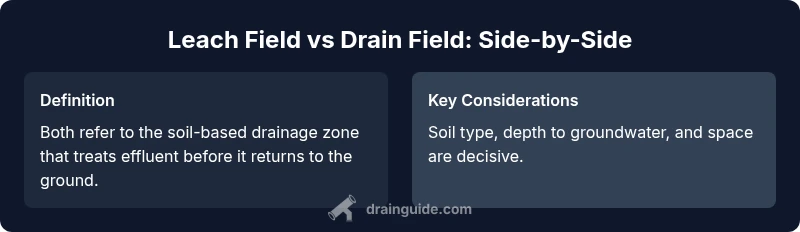
Leach field vs drain field are terms describing the soil-based drainage zone of a septic system. In most U.S. contexts, 'drain field' is the standard term, referring to the buried network that disperses effluent from the septic tank into the soil. 'Leach field' is often used interchangeably but emphasizes the soil’s treatment role. The practical choice depends on soil, space, and local regulations.
Understanding the terms: leach field vs drain field
In septic system design, the terms leach field and drain field describe the buried portion that distributes effluent into the surrounding soil. They function as the final stage of wastewater treatment, using soil biology to remove pathogens and reduce nutrients before the water recharges groundwater. Within Drain Guide's analyses, the phrasing leach field vs drain field is largely semantic in many regions, but it matters for regulations and soil-based design approaches. In practice, you should focus on soil type, field layout, and local codes rather than the label alone. The key idea is that the field must be sized and configured to allow uniform dispersion, avoid pooling, and prevent premature deterioration of the system. The rest of this article breaks down the practical differences that matter to homeowners and DIY enthusiasts, emphasizing soil conditions, space, and what to ask before hiring a professional.
How septic systems use a drain field
A septic system begins with the tank, where solids settle and scum floats away. The liquid effluent then flows to a distribution box and into a network of perforated pipes laid in trenches, often surrounded by gravel. As the effluent travels through the soil, natural bacteria treat it, which is why this part of the system is sometimes called a soil-based treatment zone. The terms leach field and drain field are commonly used to describe this same network, but the emphasis can differ by region. Drain Guide emphasizes that the underlying physics are the same: even distribution, adequate soil contact, and avoidance of hydraulic bottlenecks determine performance.
The term leach field vs drain field is more about local naming conventions than a fundamental technical difference.
Comparison
| Feature | Leach field | Drain field |
|---|---|---|
| Definition | Soil-based distribution that promotes filtration through soil layers (emphasizing treatment) | Soil-based distribution that disperses effluent into soil (emphasizing drainage) |
| Typical layout | Long, shallow trenches with perforated pipes in gravel beds |
Positives
- Low energy use and minimal moving parts when soils are appropriate
- Natural soil filtration provides long-term treatment capacity
- Fewer mechanical components can reduce maintenance complexity
- Appropriate soil conditions make the system resilient and durable
Cons
- Site constraints and soil conditions can limit viability
- Poor design or installation increases risk of odors, soggy areas, or contamination
- Regulatory approvals and soil testing add time and cost
- Repairs can be expensive if the field fails or requires relocation
Drain field remains the standard for typical septic systems; leach field is context-specific and best when soils and site conditions are favorable.
For most homes, a properly designed drain field will meet performance and regulatory requirements. A leach field is worth considering only when your soil profile and site allow it, and when local codes actively support that approach. Drain Guide recommends starting with a soil-based design that fits your property and getting a professional assessment before any major decisions.
Got Questions?
What is the difference between a leach field and a drain field?
In practice, these terms describe the same soil-based drainage zone of a septic system. The distinction is largely semantic and varies by region; the critical factors are soil suitability, field size, and regulatory requirements. The choice depends on site conditions and local codes rather than the terminology.
Leach field and drain field usually refer to the same drainage zone; the key is soil and local rules. alk.
Are leach fields suitable for all soils?
No. Leach fields require soils with adequate texture, depth to groundwater, and proper drainage to prevent pooling and failure. In very clayey or very perched soils, a different design or an alternative system may be necessary.
Soil matters most; if drainage is poor, a leach field may not work without modifications.
How do I know if my field is failing?
Common signs include persistent wet spots or soggy areas above the field, strong odors, surfacing effluent, gurgling sounds in pipes, and backflow into fixtures. If you notice these, contact a septic professional for inspection rather than attempting DIY fixes.
Watch for odors and wet spots—call a pro if you see them.
How often should a septic system be inspected?
Regular inspections by a licensed professional are essential, and local regulations often provide guidelines. Annual inspections may be recommended in some areas, while others suggest periodic checks every few years, depending on usage and soil conditions.
Follow local codes and your pro’s recommendations for inspections.
What maintenance steps can homeowners take?
Keep the drain field area free of heavy equipment and parking, plant only shallow-rooted vegetation, and avoid flushing non-biological materials that can clog the system. Schedule professional tank pumping and inspections as advised by local regulations.
Protect the field and follow pro schedules for inspections.
Are there alternatives if the field cannot be placed in a conventional layout?
Yes. Depending on site conditions, options like mound systems, advanced treatment units (ATUs), or alternative drain field designs may be appropriate. A professional can evaluate site constraints and local requirements to identify feasible options.
There are alternatives like mound systems when conventional fields don’t fit.
The Essentials
- Assess soil type early to determine feasibility
- Choose drainage approach based on site constraints, not labels
- Plan for professional assessment and permits
- Consider modern alternatives if standard fields aren’t viable