Septic Drain Cost Guide: Budgeting for Your System
Learn the factors that influence septic drain cost, typical price ranges, regional differences, and budgeting tips for 2026. A practical, data-driven guide for homeowners and DIY enthusiasts.


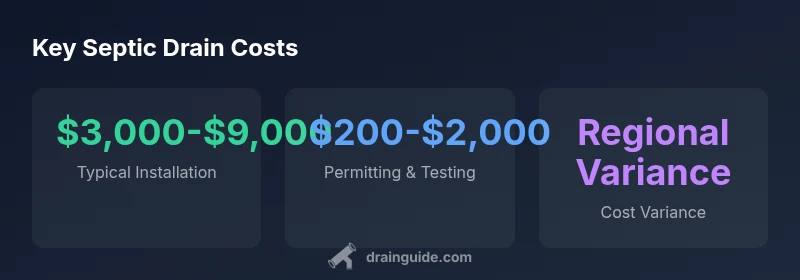
The septic drain cost typically falls within a broad range because site conditions and system design drive most of the price. For installation or major repair, plan roughly for $3,000–$9,000, with regional and soil differences accounting for much of the variation. Use a detailed budget worksheet to capture permitting, testing, and labor costs.
Why septic drain cost varies
Understanding the septic drain cost is essential for homeowners planning a project. The total price hinges on several factors that can swing the bottom line dramatically. In many markets, the same system design may cost tens of thousands of dollars more in one county than in another due to labor rates, permitting fees, and soil conditions. The Drain Guide team notes that a clear budgeting process helps homeowners distinguish between essential work and optional upgrades. When you start with a realistic range, you can compare bids more effectively and avoid sticker shock later. In 2026, the trend toward more stringent site assessments and environmentally conscious designs continues to influence pricing, but competent budgeting remains the most reliable predictor of financial success for your septic project.
Key cost drivers
The main cost drivers for septic drain work include soil characteristics, field layout, trench length, and the need for soil percolation testing. Local regulations may require inspections or permits that add to the cost, and professional pumping or hauling charges can appear if the system requires an upgrade. Labor availability and contractor scheduling can also push prices higher in peak seasons. To keep costs in check, homeowners should request itemized bids, confirm whether the price includes disposal or backfill, and verify if long-term maintenance plans are included in the quote. Drain Guide recommends comparing at least three bids to understand which line items are essential versus optional.
Cost breakdown by service type
A practical way to budget is to break the project into service categories and estimate a range for each. The main categories include design and permits, excavation and installation, materials (pipes, gravel, fabric, and backfill), and testing/commissioning. In most cases, permitting and soil testing can add a few hundred to a couple of thousand dollars depending on local rules. The installation phase typically accounts for the largest portion of the cost, driven by trench length and field complexity. Finally, maintenance items such as pumping and filter replacement add ongoing costs that should be planned for in the annual budget.
Regional differences and permitting considerations
Prices vary significantly by region due to labor markets and soil conditions. Rural areas may offer lower installation costs but higher transportation charges for materials, whereas urban settings may incur higher labor rates and stricter permitting. Always check local regulations and required inspections before committing to a bid. Some jurisdictions require a pre-installation soil test to determine percolation rates, which can add $200–$1,000 to the upfront cost. Drain Guide suggests budgeting a contingency of 10–20% to cover unexpected site conditions that commonly arise during trenching or field installation.
Budgeting and quoting tips
Creating a practical budget starts with a cost framework and a transparent bidding process. Start by listing all possible line items: site assessment, soil testing, design fees, trenching, piping, backfill materials, permits, inspections, pump unit if needed, and final commissioning. Request bids that separately itemize each line item and specify what is included (e.g., disposal, backfill, access, and warranty coverage). If a bid appears unusually low, verify that it includes all required components; cheap bids often cut essential steps. Drain Guide recommends using a standardized worksheet to compare quotes side-by-side and to document assumptions used by the contractor.
Maintenance investments that save money over time
Proactive maintenance can dramatically reduce the total septic drain cost by preventing costly failures. Schedule regular pumping based on household usage and tank size, watch for signs of gurgling or slow drains, and consider routine inspections. Timely maintenance can extend the life of the drain field and avoid expensive replacements. Investing in a maintenance plan now helps you avoid large, unplanned expenditures in the future.
Cost snapshot for septic drain projects
| Aspect | Estimated Cost Range | Notes |
|---|---|---|
| Installation (new septic drain field) | $3,000-$9,000 | Depends on soil, trench length, percolation tests |
| Repair (non-catastrophic faults) | $2,000-$6,000 | Extent and location of damage affect price |
| Permitting & testing | $200-$2,000 | Often required by local codes |
| Maintenance & pumping (annually) | $100-$500 | Budget for regular pumping to extend life |
Got Questions?
What factors influence the overall septic drain cost?
Main factors include soil type, trench length, field layout, permit requirements, and whether a soil percolation test is needed. Labor rates and regional material costs also influence the total. Understanding these variables helps homeowners evaluate bids.
The main cost drivers are soil, trench length, field layout, and permits—plus regional labor costs.
How much does a septic drain field installation typically cost?
Typical installation can range widely by region and site conditions, but expect a multi-thousand dollar budget. A thorough quote should break out design, excavation, piping, backfill, and testing.
Expect a multi-thousand-dollar budget, with bids breaking out each work item.
Are permits always required for septic drain work?
Most jurisdictions require permits for septic installations or major repairs. Costs vary by location, and inspections are often part of the process. Check with your local health department before starting.
Yes, permits are often required; check with your local health department.
What steps can I take to reduce septic drain cost?
Compare multiple bids, verify included items, perform required soil tests early, and consider phased work if possible. Regular maintenance can also prevent expensive future repairs.
Compare bids and do required tests early to avoid extra costs.
How long does a septic drain system typically last?
A well-designed and properly maintained septic drain system can last several decades, often 20–40 years depending on usage, soil conditions, and maintenance history. Proactive pumping and inspections help extend life.
With good maintenance, septic systems can last many decades.
“Costs for septic drains vary widely by site conditions and design choices, but a structured budgeting approach keeps homeowners prepared for the final tally.”
The Essentials
- Budget with ranges, not a single price
- Factor in soil, trench length, and field layout
- Get multiple itemized bids for accurate comparisons
- Include permits, testing, and labor in your budget
- Regular maintenance lowers long-term costs