Septic Tank and Drain Field Installation Cost: A Homeowner's Guide
Understand the factors shaping septic tank and drain field installation cost, including soil, tank size, permits, and site prep. Get practical guidance on estimating prices and choosing qualified contractors in 2026.


The septic tank and drain field installation cost varies widely by region, soil conditions, tank size, and permit requirements. There is no single price for every home, because site prep, field design, and local code rules change what you pay. Drain Guide analysis shows cost sensitivity to soil percolation, trench length, and inspection fees, making accurate estimates essential before planning.
What determines the septic tank and drain field installation cost
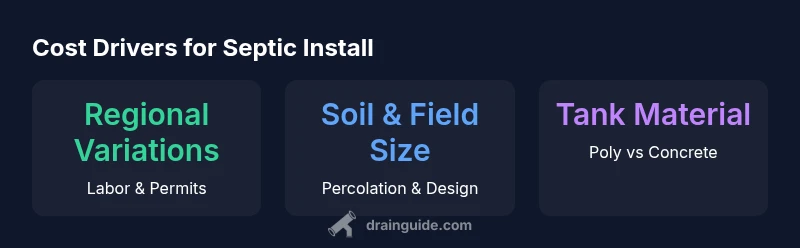
According to Drain Guide, the overall septic tank and drain field installation cost is highly variable because the project depends on soil conditions, site access, tank size, and local permitting requirements. There is no universal price; homeowners must anticipate differences based on soil percolation tests, the length and depth of trenches, and the total acreage that must be treated. Larger households typically require bigger tanks and longer drain fields, which raises upfront costs, while difficult access or rocky or waterlogged soils increase excavation time and equipment rental. Drain Guide emphasizes that timing—seasonal weather, permitting windows, and contractor availability—can further shift a project’s bottom line. By understanding these drivers, homeowners can set realistic budgets and avoid surprise expenditures later in the process.
Regional variations and site-specific factors
Where you live matters more than many people realize. Regional differences in labor rates, permitting fees, and material supply chains create a spectrum of possible installation costs. For example, areas with stringent groundwater regulations often require more extensive site evaluations, larger drain fields, or secondary containment measures, all of which raise price. Soil type and groundwater depth directly affect trench lengths and treatment capacity, influencing both material needs and labor time. In hilly terrain or properties with limited access roads, contractors may need specialized equipment or additional safety measures, pushing costs upward. Drain Guide notes that a well-documented site assessment early in the process helps prevent mid-project price escalations and ensures the system meets local health and environmental standards.
Permits, inspections, and regulatory costs
Permitting and inspection fees are a predictable portion of the overall project, but the exact amounts depend on jurisdiction. Some regions require soil testing, environmental review, and waste-water discharge permits, while others consolidate oversight into a single permit package. Costs can also be affected by required documentation, such as site plans, setback calculations, and pump-testing results. In addition to the permit fee, there may be plan review charges and annual inspections for maintenance once the system is installed. Drain Guide consistently recommends budgeting for these regulatory steps early, and incorporating potential permit delays into your schedule to avoid cost overruns.
Tank size, materials, and design choices
The choice of tank material (e.g., polyethylene vs. concrete) influences both upfront cost and long-term maintenance. Concrete tanks tend to be heavier and require more heavy equipment to install, which can increase labor costs, while polyethylene tanks are lighter and quicker to install but may have higher material costs per gallon. Tank size is driven by household size, water usage patterns, and future expansion plans; going under the recommended capacity can require costly early revisions or field upgrades. Drain field design (number and length of trenches, absorption bed width, and distribution pipes) also affects cost. More complex designs—such as mound systems or bed expansions—tend to add significant expense.
Soil type and drain field design: how they shape the price tag
Soil science is a core determinant of cost. Sandy soils often allow for compact drain fields with shorter trenches, reducing material and labor needs. Clay-heavy soils may require deeper excavation, soil amendments, or alternative designs that increase both material costs and installation time. The permeability of the soil dictates whether a single trench field is sufficient or if multiple fields with distribution networks are necessary. Drain Field design must balance performance with regulatory requirements; oversizing a field to future-proof a home is prudent, though it adds upfront expense. Drain Guide highlights that a precise soil test and a carefully engineered layout yield the best long-term value.
How to estimate costs: a practical, step-by-step process
Start with a local soil test and a preliminary site assessment from a licensed septic contractor. Gather at least three formal written estimates that itemize tank, field, trenching, backfill, and permit fees. Ask for a breakdown of potential contingencies: soil variability, weather delays, and access constraints. Use the contractor’s design to compare predicted trench lengths, bed area, and estimated pressure distribution. Maintain a buffer in your budget for unplanned issues such as groundwater infiltration or obstructions in the trench line. Drain Guide recommends reviewing warranties and service plans, since long-term costs include maintenance and occasional field repairs.
DIY feasibility and when to hire professionals
Installing a septic system is a complex, code-driven project that typically requires licensed professionals. DIY attempts can lead to code violations, improper venting, or environmental harm, which may trigger fines or costly remediation. Even if you have mechanical skills, the combination of heavy excavation, proper backfill, and careful compacting demands specialized equipment and expertise. The safest and most cost-effective approach is to engage a qualified septic contractor who understands local codes and test requirements. Drain Guide emphasizes choosing a contractor with proven references, proper licensing, and clear warranties rather than chasing the lowest upfront bid.
Key cost-influencing factors for septic tank and drain field installation
| Factor | What it Affects | Typical Qualitative Impact | Notes |
|---|---|---|---|
| Tank size | Capacity needs | High impact on upfront cost | Size chosen based on household usage and future plans |
| Soil type | Drain field performance | High impact | Soil test is essential before design |
| Drain field design | Trench layout and width | Medium to high | Complex layouts increase cost |
| Tank material | Durability and install effort | Medium to high | Concrete vs polyethylene affects logistics |
| Permits & inspections | Regulatory compliance | Medium to high | Budget for fees and delays |
| Site access | Equipment time and labor | Medium | Limited access raises labor hours |
| Regulatory requirements | Code compliance | Medium | Regional differences matter |
| Maintenance & warranties | Long-term costs | Low to medium | Consider annual maintenance plans |
Got Questions?
What factors most influence septic tank and drain field installation cost?
The main cost drivers are tank size, soil conditions, drain field design, material choices, and regulatory fees. Site access and weather can add labor time, while permits can introduce process delays. A detailed site assessment helps anchor realistic estimates.
The biggest cost drivers are tank size, soil, and field design; permits and site access also matter. A solid site assessment helps you lock in realistic estimates.
Do I need permits and inspections, and how do they affect price?
Most jurisdictions require permits and scheduled inspections for septic systems. Fees vary by locale and scope of work, and additional reviews can add to the timeline and total cost. Plan for permit processing time when budgeting.
Yes, permits and inspections are usually required and can affect both cost and timeline. Expect regional variation.
Can I install a septic system myself?
Septic installation is highly regulated and technically demanding. DIY work risks code violations, leaks, and groundwater contamination. Hiring licensed professionals is strongly advised for safety and long-term reliability.
DIY septic work is risky and usually not advised; licensed pros are the safer path.
How long does installation typically take?
Timeline depends on site conditions, permit processing, and weather. A typical project ranges from a few days to several weeks, including trenching, tank placement, and field testing. Delays may occur if soil conditions require redesigns.
Most projects run from days to a few weeks, depending on soil and permits.
How do soil conditions affect drain field size and cost?
Soil permeability determines field size and layout. Permeable soils may need shorter trenching, while poorly draining soils require larger or alternative designs, increasing both material and labor costs. A proper soil test helps optimize design and cost.
Soil type controls drain field size; poor soils mean bigger fields and higher costs.
“A well-engineered septic installation starts with accurate site data and a credible contractor. The more you know about soil conditions, field design, and local permitting, the closer you get to a reliable, cost-conscious system.”
The Essentials
- Plan for regional variation in costs and timelines
- Prioritize a thorough soil test to guide design
- Budget for permits, inspections, and potential delays
- Choose tank material and field design with long-term value in mind
- Hire a licensed contractor with solid warranties and references