How Big is a Drain Field? A Homeowner's Sizing Guide
Learn how drain field size is determined, what factors influence it, and practical steps to estimate and plan for your septic system with Drain Guide. Full guidance for homeowners and DIY enthusiasts in 2026.


How big is a drain field? Size is not fixed; it hinges on soil absorption, wastewater load, and local codes. For typical residential setups, the required area varies from hundreds to thousands of square feet, established by soil percolation tests and design calculations. In short, size reflects site performance and compliance, not a universal number.
What size is a drain field and why it varies
When homeowners ask how big is a drain field, the short answer is: it varies a lot. The size is not a fixed dimension; it depends on how much wastewater your household produces, the soil's ability to absorb water, and local regulations. In practice, the field size is determined by a combination of daily flow estimates, septic tank capacity, and soil percolation tests. Drain Guide's analysis confirms that site conditions largely drive the required absorption area, so even two neighboring properties can have noticeably different field footprints. Understanding this helps homeowners avoid over-sizing or under-sizing, both of which lead to costly problems down the road. A properly sized drain field ensures effluent disperses slowly and evenly, reduces the risk of groundwater contamination, and minimizes the chance of surface pooling or gurgling sounds in the yard. For this reason, educated sizing should always rely on site-specific data rather than a one-size-fits-all rule.
Typical size ranges for common home setups
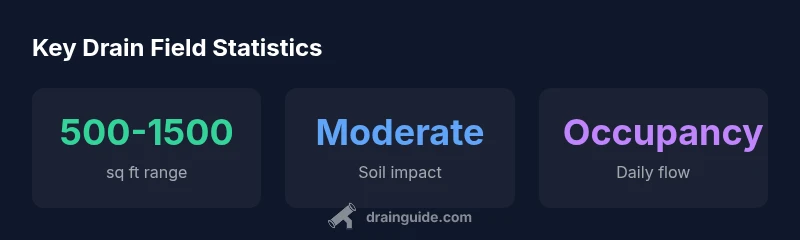
There is no universal standard cookie-cutter size. In practice, residential drain-field areas tend to fall within a broad spectrum. In the context of this guide, you may wonder, how big is a drain field? In many typical single-family homes, the absorption area can span hundreds to a few thousand square feet, with the exact figures driven by soil tests and the anticipated wastewater load. Homes with efficient soils and smaller daily flow can require smaller fields; larger families, clay soils, or poor percolation often push the footprint higher. Local health departments may set minimum requirements that interact with calculated needs, but the core idea remains: size is dictated by site performance, not a fixed chart. A septic designer or contractor translates house size, water usage, and soil test results into a recommended field plan. Some regions rely on several long trenches; others use compact designs to fit on smaller lots. Plan on a field that can absorb wastewater over extended periods to prevent surges.
Soil type and site conditions that change the required area
Soil type has a major influence on drain-field size. Soils with high permeability, like sandy loam, often permit faster infiltration and can reduce the required area compared with dense clay or compacted soils. Wet conditions, high groundwater, or perched water tables can force designers to enlarge the field to prevent surface saturation. Seasonal rainfall variations and nearby drainage issues can shift the recommended area. Slopes and drainage paths matter as true absorption should occur away from surface runoff, foundations, and driveways. Drain Guide's guidance emphasizes testing soil percolation and hydraulic conductivity as the core input for sizing rather than relying on generic estimates. By mapping soil layers and considering seasonal conditions, a professional can estimate a field plan that minimizes risk while achieving long-term reliability.
How professionals estimate the field size (high-level process)
Designing a drain-field footprint starts with a reliable wastewater flow estimate. This includes the number of residents, expected daily wastewater generation, appliance loads, and whether water-saving fixtures are in place. Next, a soil-percolation test assesses how quickly the ground accepts effluent. The results are translated into an infiltration rate and used to calculate the required area. The septic tank capacity and its separation distance from the leach field are also considered to ensure proper hydraulics and gas venting. Local codes may specify minimum setback distances, bed widths, and trench spacing. The final plan may include multiple trenches, beds, or chambers arranged to optimize distribution and reduce clogging risk. It is common practice to verify the design with a site visit, a review of preliminary drawings, and, in some jurisdictions, permit approval before installation begins.
Practical tips to assess and plan for your drain field
Start by locating your existing septic system and reviewing any previous pumping or inspection reports. If records are missing, a professional evaluation can estimate tank size and remaining life. Request a soil-percolation test (or a soil boring) near the proposed field site to determine percolation timing and absorption capacity. Plan for replacement space in a yard area that allows access for maintenance and daily use; avoid placing structures, trees, or heavy traffic directly over the field. Prepare for rain events; excessive rainfall can saturate the soil and hinder absorption. Finally, discuss maintenance strategies with your contractor, such as regular pumping and occasional soil testing to monitor signs of failure. Clear communication with your local health department ensures you meet code requirements and minimizes future surprises.
Myths vs. reality: common misconceptions about field size
One common myth is that bigger is always better. In reality, an oversized field can be more expensive and may invite drainage issues if not properly designed. Another misconception is that field size can be accurately guessed from house size alone; daily water usage and soil conditions are equally important. Some homeowners assume that a field can be retrofitted to perform like new without excavation; in practice, restoration may require redesign or replacement. There are also myths around seasonal testing; percolation rates can change with moisture content and temperature, so testing under multiple conditions is ideal. By separating myths from facts, homeowners approach septic projects with more accurate expectations and avoid costly rework.
Code compliance and getting a proper permit
Sizing a drain field involves more than calculations; it requires adherence to local health and building codes. Before installation, a permit review typically confirms setback distances from wells, property lines, and structures; trench dimensions; and the need for protective cover and effluent distribution methods. A qualified septic designer or contractor will prepare the design package, perform field tests, and coordinate with the health department to achieve approvals. Proper documentation, backfill procedures, and post-install testing are essential to ensuring long-term performance and compliance. If you’re in an area with strict regulations, expect additional steps, such as zoning checks, groundwater monitoring, or leach-field certification. Staying proactive with permits and following professional guidance reduces risk and extends the life of your septic system.
Approximate drain field size ranges by scenario
| Scenario | Soil Type | Typical Size Range (approx) | Notes |
|---|---|---|---|
| Residential single-family (3-4 beds) | sandy loam | 500-1500 sq ft | Based on perc tests and daily flow |
| Residential (2-3 beds) | clay | 800-2000 sq ft | Infiltration rate slower, larger field |
| Larger households or commercial | mixed soils | 1000-4000+ sq ft | Depends on wastewater load and soil |
Got Questions?
How big is a drain field?
There is no universal size. It depends on soil absorption, daily wastewater load, and local codes. A professional assessment uses soil tests and flow estimates to determine the required area.
There isn’t a fixed size. It depends on soil, usage, and local rules.
What factors determine the field size?
Key factors include soil permeability, the expected daily wastewater, tank size, and local regulations. Site tests and design calculations translate these into the field area.
Soil, daily flow, and local codes determine it.
Can you oversize a drain field?
Oversizing is possible but not always beneficial. It adds cost and may complicate installation without improving performance if the site cannot support it.
Yes, but it may cost more without extra benefit.
How do I estimate size for my home?
Gather daily water usage estimates, confirm the number of occupants, and obtain a soil percolation test. A licensed designer will use these inputs to calculate the required field area.
Get your water use and soil test, then have a pro design it.
Is a permit required for installing a drain field?
Most jurisdictions require a permit and inspection. Check with your local health department for specific steps and documentation needed.
Yes, permits are usually required.
How often should I inspect a septic system?
Regular inspections and pumping are recommended according to local guidelines and usage. A professional can tailor a schedule based on conditions and performance.
Have a professional schedule inspections based on usage and local rules.
“Sizing a drain field is not about guessing; it’s about matching soil performance to wastewater load with professional design.”
The Essentials
- Size varies by site—there is no one-size-fits-all number
- Soil type and daily wastewater load are the biggest drivers
- Soil tests and design calculations shape the final footprint
- Follow local codes and get professional guidance for sizing