How to Prevent Drain Clogs in Shower
Learn practical, step-by-step strategies to prevent shower drain clogs. From daily habits to weekly maintenance, discover safe methods Drain Guide recommends for homeowners.


This guide shows how to prevent drain clogs in shower through simple, repeatable steps: install a quality hair catcher, perform regular maintenance, use safe flush techniques, and know when to call a plumber. Follow these steps to keep your shower drain flowing freely and reduce emergency calls.
Why preventing shower drain clogs matters
A clogged shower drain can disrupt your daily routine and lead to costly repairs if left untreated. Preventing drain clogs in shower starts with understanding how clogs form: hair, soap scum, skin flakes, and mineral buildup gradually accumulate in the drain trap and pipe, reducing water flow. Regular maintenance helps you stay ahead of problems, saving time, water, and stress. According to Drain Guide, consistent habits—like using a hair catcher, flushing with safe cleaners, and scheduling mini-maintenance sessions—can dramatically reduce clog frequency and extend the life of your plumbing. By focusing on prevention, you’ll spend less time snaking drains and more time enjoying a clean shower experience.
In this guide you’ll learn practical routines you can perform weekly, monthly, and seasonally, plus tips for choosing tools and avoiding risky chemical cleaners. The goal is to empower homeowners and DIY enthusiasts to manage showers confidently while protecting pipes and seals from unnecessary strain.
How shower clogs form differently from other drains
Shower drains collect hair and soap scum more aggressively than kitchen sinks because people wash longer and shed more hair in daily showers. Wet hair blends with mineral-rich water to form a dense, fibrous mass that catches on the drain’s grating and trap. Over time, this mass traps fats, detergents, and mineral deposits, turning into a stubborn blockage. Unlike sinks, showers often lack an easy trap access, so routine prevention is critical. Understanding this helps you tailor your maintenance to prevent the most common culprits and keep water flowing smoothly.
Core prevention principles you should know
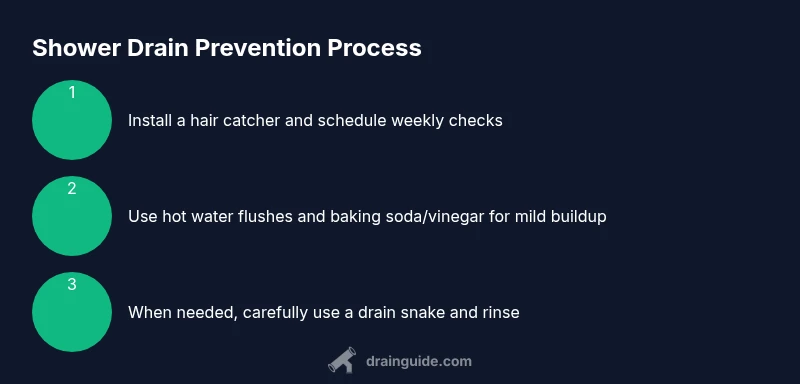
The foundation of prevention rests on three pillars: (1) physical barriers, (2) regular flushing, and (3) mindful product choices. Physical barriers like a high-quality hair catcher prevent most hair and debris from entering the drain. Regular flushing uses hot water and safe cleaners to dissolve soap scum and mineral deposits before they stick. Mindful product choices avoid clog-causing ingredients and minimize chemical exposure to pipes. Together, these principles create a resilient shower drainage system that resists buildup while remaining safe for your plumbing.
Daily habits that reduce buildup
Develop a quick, repeatable routine for every shower. After you finish, rinse the shower floor with hot water to push soap scum toward the drain. Remove the hair catcher and rinse it separately to prevent hair from piling up in the trap. Wipe down any soap residue from the tile and curb to reduce soap scum transfer into the drain. These small actions add up over weeks and months, keeping clogs from forming and reducing maintenance time.
Weekly maintenance routine that actually sticks
Set aside 10–15 minutes each week to inspect and clean the drain area. Remove and clean the hair catcher, scrape visible debris from the drain opening with gloves or a plastic tool, and flush with hot water for 2–3 minutes. For mineral buildup, sprinkle a small amount of baking soda into the drain before flushing with hot water. This weekly rhythm stops debris from consolidating into a stubborn clog and keeps the trap free-flowing.
Tools and products you’ll want on hand
A well-chosen set of tools makes prevention easier. Essential items include a durable hair catcher, a flexible drain snake or auger, a plastic scoop or gloved hand for hair removal, a bucket, and safety gloves. Optional but helpful: a wet/dry vacuum for heavy debris, a bottle of baking soda, and white vinegar for a gentle, non-chemical flush. Choosing non-corrosive tools protects pipes and extends the life of your fixtures.
Safe, effective cleaning methods you can rely on
Avoid harsh chemical drain cleaners inside a shower drain, as they can damage pipes and trap seals. Instead, use mechanical methods such as removing hair with a catcher, using a snake for minor clogs, and flushing with hot water. For mild buildup, a baking soda and vinegar treatment can help; let it fizz for 10–15 minutes before flushing with hot water. Always follow with a thorough rinse to prevent residue from drying on the drain components.
When to escalate to professional help
If you notice recurrent clogs despite regular preventive steps, or if your drain emits foul odors, slow draining that worsens, or you can hear gurgling behind walls, it’s time to consult a licensed plumber. Persistent clogs may indicate deeper issues like venting problems, pipe narrowing, or sewer line complications that require professional assessment and specialized equipment. Drain Guide recommends documenting drainage history to aid the plumber.
Long-term payoff: cost savings and peace of mind
Prevention reduces emergency calls, minimizes water waste, and preserves the integrity of your bathroom plumbing. While there’s a small upfront cost for quality hair catchers and basic tools, the long-term savings from avoiding major clogs and pipe damage justify the investment. A proactive maintenance mindset also adds comfort, knowing you can rely on a steady, fast-draining shower day after day.
Tools & Materials
- Hair catcher/drain cover(Choose a fine-mesh model compatible with your shower drain size)
- Gloves (nitrile or rubber)(Protects hands when removing debris)
- Drain snake / auger(Flexible for reaching clogs beyond the trap)
- Plastic scoop or old toothbrush(For removing hair near the drain opening)
- Bucket(Catch debris and collect water during maintenance)
- Hot water kettle or kettle-style pot(For flushing with hot water)
- Baking soda(Used in mild buildup flushes (1/2 cup per flush))
- White vinegar(Coupled with baking soda for fizzing flush (1 cup))
- Plunger (cup-style, on a small scale)(Only if accessible — use gentle plunging to avoid damage)
Steps
Estimated time: Total time: 30-45 minutes per session
- 1
Remove hair catcher and rinse
Carefully lift out the hair catcher from the drain and rinse under running water to remove trapped hair and soap residues. Dry and set it aside for cleaning.
Tip: Keep a spare catcher handy to minimize downtime during cleaning. - 2
Inspect drain opening and remove visible debris
Use gloved hands or a plastic tool to pull out any hair, soap scum, or lint that sits at the drain opening. Clear the mouth of the drain so water can flow freely.
Tip: Work gradually from the outside edge toward the center to avoid pushing debris deeper. - 3
Flush with hot water and dish soap
Pour hot water with a small amount of dish soap down the drain to loosen grease and soap scum, then flush water through for 1–2 minutes.
Tip: Avoid boiling water if you have PVC pipes—use hot tap water instead. - 4
Use baking soda and vinegar for mild buildup
Pour 1/2 cup baking soda into the drain, followed by 1 cup white vinegar. Let it fizz for 10–15 minutes, then flush with hot water.
Tip: Do this in a well-ventilated area and avoid mixing with other cleaners. - 5
Inspect again and repeat flush if needed
Check water flow; if still slow, repeat the hot water flush and baking soda/vinegar treatment once more before moving to tools.
Tip: If the drain remains slow, proceed to mechanical cleaning instead of harsher chemicals. - 6
Insert the drain snake and gently twist
Insert the snake into the drain and rotate to grab or break up the clog. Pull back slowly to avoid pushing debris further down the pipe.
Tip: Avoid forcing the snake beyond resistance; a cautious approach prevents pipe damage. - 7
Flush again with hot water
Run hot water through the drain for 2–3 minutes to clear loosened debris and rinse the pipe interior.
Tip: A final high-volume rinse helps verify free flow. - 8
Clean and reinstall hair catcher
Rinse and dry the hair catcher, then reinstall it securely to prevent future debris from entering the drain.
Tip: Check the gasket and seal to ensure a tight fit. - 9
Schedule a weekly maintenance ritual
Set a recurring reminder to perform the steps above, focusing on a quick hair catcher clean and a 2–3 minute flush.
Tip: Consistency is the key to long-term prevention.
Got Questions?
How often should I clean my shower drain to prevent clogs?
A quick weekly check and 1–2 cleanings per month usually prevent most clogs. If you notice slower drainage, increase the frequency temporarily.
Clean the shower drain weekly and perform a deeper clean if you notice slow draining.
Are chemical drain cleaners safe for shower drains?
Most chemical cleaners are not recommended for showers because they can corrode pipes and traps. Use mechanical methods or enzyme-based cleaners instead.
Chemical cleaners can damage pipes; use mechanical methods or enzymes instead.
Will a good hair catcher solve most shower clogs?
Yes, a high-quality hair catcher dramatically reduces hair and debris entering the drain, which is the leading clog culprit in showers.
Hair catchers greatly reduce clogs in showers.
What should I do if the drain remains slow after maintenance?
If the drain remains slow, use a drain snake or call a plumber. A persistent issue may indicate deeper problems like venting or pipe narrowing.
If slow drainage persists, try a snake and consider a plumber for deeper issues.
Is it safe to flush with hot water every time?
Hot water is generally safe for most residential PVC pipes, but avoid boiling water. Use hot tap water and allow a steady flush to prevent scalding and damage.
Use hot tap water for flushing; avoid boiling water.
How can I prevent odors from a shower drain?
Regularly flush the trap with warm water and a mild cleaner, and periodically clean the trap itself to prevent stagnation and odors.
Flush the trap regularly and clean out the trap to prevent odors.
Watch Video
The Essentials
- Install a durable hair catcher to reduce debris entry
- Perform regular weekly maintenance to prevent buildup
- Use mechanical methods rather than harsh chemicals
- Schedule ongoing prevention to avoid costly clogs
- Know when to call a plumber for persistent issues