How to Drain a Hot Water Tank: Step-by-Step Guide
Learn to safely drain and flush a hot water tank to remove sediment, improve efficiency, and extend its life. Step-by-step instructions, safety tips, and troubleshooting from Drain Guide.


By following this guide, you will safely drain a hot water tank to remove sediment, flush the tank, and inspect the drain valve for leaks. Before you start, shut off the power or gas, close the cold-water supply, and gather a hose, bucket, and wrench. Drain Guide recommends working slowly and venting air to prevent pressure buildup.
Why draining a hot water tank matters
Sediment buildup is a common culprit behind reduced efficiency, louder operation, and shortened tank life. Over time minerals in the water settle at the bottom of the tank, creating a blanket that insulates the heating element and makes the heater work harder to heat water. Draining the tank helps flush out this sediment, restoring flow and tempering hot water delays. According to Drain Guide, regular flushing is one of the simplest, most effective DIY maintenance tasks a homeowner can perform. You don’t need expensive tools or professional training—just a clear plan and careful execution. When you learn how to drain a hot water tank, you’ll notice steadier hot water, fewer mineral stains on fixtures, and a modest energy saving that compounds over months and years.
In most homes, a typical residential water heater holds 40 or 50 gallons of water. Sediment accumulates gradually, so even a small flush can yield clearer water and a sharper sense of efficiency. The goal isn’t to replace the water but to remove a portion of the settled material and to refresh the tank’s interior surfaces. This practice is especially important in areas with hard water, where mineral scales accumulate more quickly. The Drain Guide team emphasizes gentle handling and steady pacing to prevent damage to internal components during the process.
note”:null},
Safety and preparation
Safety is the first and most important step when draining a hot water tank. Start by turning off the power to an electric heater at the breaker box, or setting a gas heater to the pilot or off position. Next, close the cold-water supply valve at the top of the unit to halt inbound water flow. Retrieve essential safety gear: gloves, splash goggles, and sturdy shoes. Place a large bucket or a wide-mouthed drain pan to catch draining water and to reduce splashes. Ensure children and pets are clear of the work area. Venting air is crucial: keep a hot-water tap open somewhere on the hot side to allow air to escape as the tank drains. This prevents a vacuum that can slow the flow or damage fittings. In the Drain Guide approach, taking these precautions minimizes risk and makes the drain process smoother.
If you’re unsure about wiring or gas connections, consult a licensed professional. The focus here is a controlled, safe drain that protects your home and your comfort. When done correctly, the system will fill more cleanly, and you’ll avoid common leaks caused by abrupt valve movement or trapped air. Keep a flashlight handy, and never work alone in a space with limited light or potential hazards.
tip":"If you’re uncertain about shutting off power or gas, stop and call a professional. Safety first."
note":null},
Sediment, minerals, and why they accumulate
Sediment is typically composed of minerals and tiny particles that naturally travel through your plumbing and collect at the tank floor. Over time, this sediment can harden into a layer that insulates the heating element and reduces heating efficiency. When you drain the tank, you’re not changing your water chemistry, but you are removing loose deposits that would otherwise circulate and settle elsewhere in the system. This reduces noise during operation and helps prevent overheating of the burner's components. If your water appears rusty or has a sour smell after draining, that could indicate a different problem—contact a professional to assess corrosion, anode rod condition, or potential pipe issues. The goal of this drain is to maintain performance while extending the life of the heater. Drain Guide’s guidance emphasizes routine maintenance to avoid costly surprises later.
A practical rule of thumb is to schedule a drain flush at least once a year for average water quality. If you have hard water, you may need to flush more frequently. Your action now can prevent a future shutdown or expensive repair by catching sediment early and maintaining the tank’s interior cleanliness.
Beyond the tank, mineral buildup can appear in faucets and showerheads. Flushing helps reduce sediment that would otherwise transfer through the plumbing network. As you proceed, you’ll appreciate how sediment control improves cold-water performance, hot-water consistency, and overall system reliability.
tip":"Hard water areas may require more frequent flushing."
note":null}
Scheduling and frequency: when to drain
Determining how often you drain your hot water tank depends on water quality, tank age, and usage. For a typical home with municipal water and soft to moderately hard water, an annual flush is usually sufficient to keep sediment in check. Homes with hard water or high mineral content may benefit from semi-annual flushes or a more formal maintenance schedule. Drain Guide suggests tying flushes to a calendar reminder, so you don’t overlook this essential task. If your heater is older or has a low-efficiency rating, you might notice sediment faster and should consider more regular flushing to protect the bottom of the tank and the heater’s burner or heating element.
In colder climates, minerals may precipitate more quickly as water temperature fluctuates with the seasons. If your home has a water softener, you may find that your tank stays cleaner longer, but periodic flushing remains important. The objective is to minimize sediment buildup, keep the heating element free of insulating scale, and sustain consistent hot-water delivery. Maintain a simple log so you can track when you flushed last and plan the next maintenance window accordingly.
If you live in an area with corrosive groundwater, keep a closer eye on the anode rod as part of routine maintenance. A healthier anode protects the tank from corrosion and reduces the chance of leaks that would complicate future draining efforts.
tip":"Set annual reminders; adjust frequency for hard water or aging tanks."
note":null}
Tools and materials you’ll need (a quick check before you begin)
A prepared work area saves time and avoids messy drips. Gather the following items before you start: a garden hose long enough to reach an outdoor drainage area; a bucket or drain pan to catch initial flows; an adjustable wrench to operate the drain valve; pair of gloves and splash goggles for safety; a sturdy towel or rags for cleanup; a flashlight to inspect connections; and a shut-off valve key or screwdriver if needed for the drain valve. If your tank uses a drain valve with threads or a built-in lever, bring an appropriate adapter to ensure a secure hose connection. Having all tools at hand helps you stay organized and reduces the risk of incomplete flushing. The Drain Guide approach emphasizes methodical prep, which leads to a smoother drain and less risk of leaks or scalding water. If you’re uncertain about valve compatibility, check your heater model manual or contact the manufacturer for guidance.
Having a plan to re-fill and test after draining is also essential. Make sure you have a plan to restore power or gas, and verify that the safety devices—such as the temperature and pressure relief valve—are properly reconnected after you’re done. Keeping the area clean and dry is a practical habit that helps you notice leaks quickly and respond fast.
Note: Do not drain your tank if you suspect a leak or if you smell gas. In those cases, stop and call a licensed professional. A leak around the base of the heater is a safety red flag and requires immediate attention.
Tip: If you’re unsure about valve-handling, consider practicing with a water hose in a non-pressurized setting first to get comfortable with the lever and valve operation.
note":null}
Step-by-step overview of the draining process
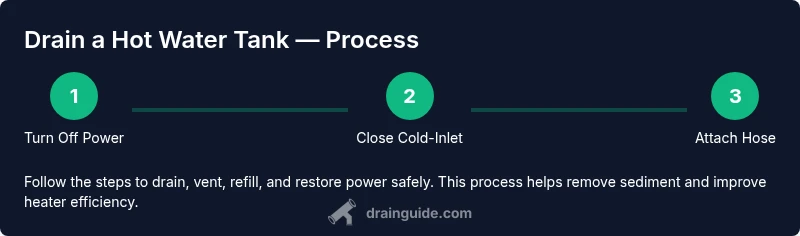
This section provides a concise roadmap for the drain, while the detailed steps follow in the dedicated STEP-BY-STEP block. Begin by turning off the power or gas to the water heater and closing the cold-water inlet. Attach a garden hose to the drain valve, route the other end to a safe drainage area, and open a hot water tap to vent air. Slowly open the drain valve with the appropriate tool, and monitor the flow. As the tank empties, you’ll see water emerging steadily, which indicates the system is depressurized and ready for the next phase. After the tank drains, close the valve, remove the hose, and begin re-filling with cold water. Bleed air by opening hot taps until water runs steady, then restore power or gas and check for leaks. A thorough post-drain inspection helps ensure everything is secure and functioning properly. This process, when done carefully, minimizes risk and maximizes the longevity of your water heater.
During the entire operation, keep an eye on temperature and pressure. Do not rush; hasty handling can cause scalding or valve damage. Refill should start slowly to prevent air locks that may interfere with hot water delivery. If you encounter resistance, stop and reassess the connections for proper seating. A clean drain and well-vented system reduce the likelihood of future sediment buildup and maintain reliable hot water.
Pro tip: A partner helping with hose placement and valve control can dramatically speed up the process and reduce the chance of accidents. Safety always comes first, so take a moment to re-check connections before proceeding.
tip":"Don’t rush; vent air and check for leaks at every connection."
note":null}
Step-by-step: Part 1 – Shut off, close, and secure
-
Title: Shut off power and fuel supply Description: Before touching any components, switch off the electrical supply to an electric heater at the breaker panel, or turn the gas valve to the OFF or PILOT position on a gas heater. This prevents the heating element from turning on while you drain. A quick visual check confirms the power is off. If you rely on a switch near the unit, verify it is indeed disconnected. Pro Tip: Use a non-contact voltage tester to ensure the circuit is dead before touching wires or terminals. Tip: Time estimate 5-10 minutes.
-
Title: Close the cold-water inlet Description: Find and close the cold-water supply valve that feeds the tank. If your valve is a lever, rotate to the perpendicular position to prevent any inflow. If you have a compression-style valve, snug it carefully to avoid leaks but ensure it’s fully closed. This step prevents fresh water from entering while you drain and helps you control the flow with the drain valve. Pro Tip: If the valve is stiff, do not force it; apply gentle pressure and try again after checking for debris. Tip: Time estimate 2-5 minutes.
tip":"Make sure the valve is fully closed before opening the drain valve."
note":null}
Step-by-step: Part 2 – Attach hose, vent air, and drain
-
Title: Attach hose and prepare drainage Description: Attach a 3/4-inch garden hose to the tank’s drain valve, ensuring a snug fit with a connector or washer. Run the hose to a suitable drainage location, such as an exterior drain or a low-lying area away from your home. Open a hot water faucet somewhere in the house to create a vent path for air; this speeds up the draining and prevents air locks. Pro Tip: Keep the hose below the level of the valve to encourage gravity flow and avoid air pockets. Tip: Time estimate 5-10 minutes.
-
Title: Open the drain valve gradually Description: Use the appropriate tool or valve lever to open the drain valve a small amount and observe the flow. If the flow is too slow, gradually increase openness. Do not force the valve; if it sticks, stop and inspect for mineral buildup or damage. Allow water to flow out steadily until the tank is nearly empty. Pro Tip: Opening the valve slowly reduces the risk of splashing and protects surrounding surfaces. Tip: Time estimate 10-20 minutes.
tip":"Opening slowly helps prevent splashes and damage to fittings."
note":null}
Step-by-step: Part 3 – Refill, bleed air, and restore power
-
Title: Refill and bleed air Description: After the tank is drained, close the drain valve and remove the hose. Begin refilling slowly by turning the cold-water inlet back on. As water enters, keep a hot water faucet open to vent trapped air. When water runs steady from the faucet, you know the tank is full and air is purged. Pro Tip: Do not rush this step; a controlled fill prevents air locks and ensures a safe restart. Time estimate 15-25 minutes.
-
Title: Restore power or gas Description: Once the tank is full and air is purged, restore power to an electric heater at the breaker or re-enable the gas valve and set to the proper position. Replace any removed access panels and ensure all wiring is secure. Monitor for leaks around the drain valve or fittings during the initial hot-water run. Pro Tip: Start with a small amount of hot water to confirm correct operation before using extensively. Tip: Time estimate 5-15 minutes.
tip":"Verify the system is full before powering the heater back on."
note":null}
Post-drain checks and leak testing
-
Title: Inspect for leaks and test hot water Description: With the tank re-filled and power restored, check all connections for leaks. Look around the drain valve, hose adapter, and cold-water inlet for any dampness or moisture. Open several hot-water taps in the house to flush out any remaining air and confirm hot water is consistent. Pro Tip: If you notice a leak, turn off power, close the cold-water inlet, and re-inspect the valve and fittings before restarting. Time estimate 10-15 minutes.
-
Title: Thermal expansion and safety considerations Description: After a drain and refill, check if your home has a thermal expansion tank or pressure relief valve functioning correctly. A malfunctioning relief valve can be dangerous, so test the TPR valve cautiously according to manufacturer instructions. If you’re unsure, call a professional to evaluate. Pro Tip: Document the date of your drain and the condition of valves for future maintenance. Time estimate 5-10 minutes.
tip":"Always test safety devices after draining."
note":null}
Maintenance tips to minimize sediment and extend life
-
Title: Ongoing maintenance strategies Description: Sediment control is ongoing. Consider installing a water-softening device if mineral content is high and enabling periodic filtration. Regular flushing, combined with a well-sealed and corrosion-resistant anode rod, extends the tank’s life and improves efficiency. Drain Guide recommends recording flush dates and monitoring for early signs of wear, such as water leaks around the drain valve or unusual noises from the tank. Pro Tip: Combine flushing with annual or semi-annual inspections of the thermostat, burner, and electrical connections for a comprehensive maintenance routine.
-
Title: Seasonal considerations and hard water Description: In regions with hard water, schedule flushes more frequently and monitor for mineral buildup in the heating elements. A high-mineral environment can accelerate sediment accumulation and reduce energy efficiency. Pro Tip: Coordinate flushing with other seasonal home maintenance tasks to stay organized and productive. Time estimate 10-15 minutes per maintenance session.
tip":"Hard water requires more frequent maintenance."
note":null}
Troubleshooting common issues during draining
-
Title: Quick fixes for common problems Description: If draining is slow, check for mineral buildup on the valve seat or a partially closed shut-off valve. If the drain valve leaks after closing, ensure the hose is removed properly and re-tighten the connection. If you hear unusual noises during draining, it could indicate trapped air or debris in the lines. Pro Tip: If you encounter persistent leaks or valve damage, stop and contact a professional plumber. Time estimate 5-15 minutes.
-
Title: When to call a professional Description: Some situations demand a licensed technician. Persistent leaks, corroded tanks, or a suspected faulty relief valve should be evaluated by a pro. Draining a tank is safe when done methodically, but complex issues require expert intervention. Pro Tip: Use Drain Guide’s basic safety guidelines to determine if professional help is needed and never hesitate to seek assistance if a hazard appears. Time estimate 5-15 minutes.
tip":"Seek professional help if you notice leaks, corrosion, or valve damage."
note":null}
Tools & Materials
- Safety gear (gloves and splash goggles)(Rubber gloves and splash protection for eye safety)
- Garden hose (3/4 inch)(Long enough to reach drainage area; check for leaks in the nozzle)
- Bucket or drain pan(Catch initial water and reduce spills)
- Adjustable wrench(For loosening/tightening the drain valve)
- Towels or rags(Wipe drips and dry surfaces)
- Flashlight(Inspect connections in dim areas)
- Screwdrivers/valve adapters(If valve requires lever or adapter)
Steps
Estimated time: 60-120 minutes
- 1
Power off and close inlet
Turn off the electrical supply to an electric water heater at the breaker panel, or switch the gas valve to OFF for gas heaters. Close the cold-water inlet to stop new water from entering the tank. These actions prevent heating elements from energizing during draining and limit water flow.
Tip: Verify power is off with a non-contact tester before touching any wires. - 2
Attach hose and vent air
Connect a 3/4 inch garden hose to the drain valve and route the other end to a safe drainage location. Open a hot-water faucet somewhere in the home to vent air, which speeds drainage and prevents air locks.
Tip: Keep hose below the valve level to maximize gravity flow. - 3
Open drain valve
Using the appropriate tool or lever, gradually open the drain valve to start water flow. Monitor the rate and adjust as needed to avoid splashing. Do not force a stuck valve; inspect for mineral buildup.
Tip: If water flow stops, check for a clogged valve or hose kinks. - 4
Drain until empty
Continue draining until the tank is nearly empty. If you see a thin film or settling on the bottom, you’ve removed a portion of sediments. Keep the area clean to prevent slipping hazards.
Tip: Don’t rush this step; steady flow reduces risk of splashes. - 5
Close drain valve and remove hose
Close the drain valve and detach the hose. Keep the drain area clear to re-fill the tank without tripping hazards. Prepare to re-fill with cold water slowly.
Tip: Have rags ready to catch any residual drips. - 6
Refill and bleed air
Turn the cold-water supply back on slowly. Open a hot-water tap to vent air as water enters. When water runs steadily, close the hot faucet and proceed to restore power or gas.
Tip: Bleeding air prevents air locks that delay hot water delivery. - 7
Restore power or gas
Turn the power back on at the breaker or re-enable the gas supply and set the thermostat to the desired temperature. Check for leaks around the drain valve and fittings after startup.
Tip: Start with a lower temperature to monitor behavior before raising heat. - 8
Check for leaks
Inspect all connections for signs of water or steam leakage. If any drip persists, re-tighten fittings or replace worn washers. Monitor temperature while using hot water to ensure stable performance.
Tip: Keep a towel handy in case of minor leaks during initial run. - 9
Finish and record maintenance
Document the flush date and any notes about valve performance or leakage. Schedule the next drain flush based on your water quality and heater age. This keeps the system dependable and efficient.
Tip: Set a reminder for the next maintenance cycle. - 10
Backup plan and safety
If you notice persistent leaks, unusual noises, or inconsistent hot water, stop and consult a professional. Draining a tank is a safe DIY task when done carefully, but unresolved issues require licensed expertise.
Tip: Never ignore warning signs that could indicate bigger problems. - 11
Re-check safety devices
Test the T&P valve according to the manufacturer’s instructions after completing the drain and refill. Ensure the valve is functioning properly to prevent dangerous overpressure.
Tip: If you’re unsure about testing the T&P valve, call a professional. - 12
Keep the area clean
Clean up any residual water, wipe surfaces dry, and store tools properly. A tidy workspace reduces the risk of slips and hidden leaks.
Tip: A clean workspace helps you spot issues faster in subsequent flushes.
Got Questions?
Is it safe to drain a hot water tank yourself?
Yes, it’s generally safe if you follow the steps carefully: shut off power or gas, close the cold-water inlet, vent air, use a hose, and refill gradually while checking for leaks. If you’re unsure about any step, consult a professional.
Yes, you can drain it yourself if you follow safety steps and turn off power or gas first.
How often should you drain a hot water tank?
Most homes benefit from an annual flush, but hard water or older tanks may require more frequent maintenance. Following a schedule helps prevent sediment buildup and keeps the heater efficient.
Most homes flush once a year; hard water may need more frequent maintenance.
What if water keeps leaking after draining?
If water leaks from the drain valve after closing, re-tighten connections or replace a worn washer. If the leak persists, stop and consult a plumber to avoid further damage.
If leaks persist after re-tightening, call a plumber for a professional check.
Can I drain a gas water heater safely?
Gas heaters require the same drain steps, but be careful around the gas valve and ensure good ventilation. If you smell gas or are unsure, stop and call a professional.
Yes, gas heaters can be drained safely with the same steps, but never compromise gas safety.
What if my drain valve is stuck?
Don’t force it. Try turning with proper tools; if it won’t budge, stop and seek professional help to avoid damaging the valve or tank.
If the valve is stuck, stop and call a pro rather than forcing it.
Do I need to flush more than once?
For most households, one thorough flush per year is enough, but you may flush more frequently in areas with exceptionally hard water or heavy sediment.
One thorough flush per year is usually enough, more often if water is very mineral-rich.
Watch Video
The Essentials
- Shut off power/gas and water before draining
- Attach a hose and vent air for a smooth flow
- Refill slowly and bleed air before restoring power
- Check for leaks and test safety devices after draining