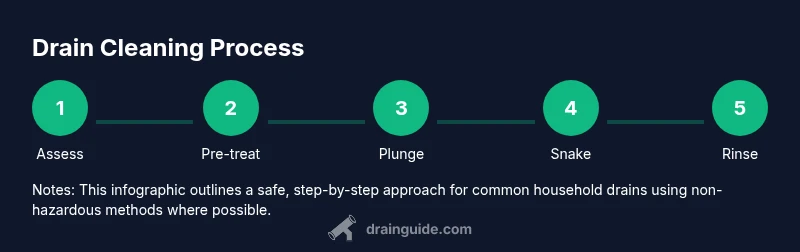
What to Clean Drain With: Safe DIY Solutions
Learn safe, practical ways to clean drains using common household items, mechanical tools, and smart maintenance to prevent future clogs. A practical guide for homeowners and DIYers.


By following this guide, you will safely identify what to clean drain with and apply effective, household-tested methods to clear minor clogs. Start with simple, non-corrosive options before moving to mechanical tools, and always observe safety. According to Drain Guide, choosing gentle options first protects pipes and septic systems while delivering real results.
Understanding the goal: what to clean drain with
The question of what to clean drain with hinges on pipe material, the drain type (kitchen, bathroom, utility), and whether you have a septic system. Drain Guide emphasizes starting with gentler methods to protect pipes and avoid chemical damage. The aim is to loosen organic buildup, hair, soap scum, or grease without harming joints or seals. In many homes, a combination of mechanical action and mild cleaners works best. If you’re unsure, begin with standard non-caustic approaches and observe how your system responds over the next 24–48 hours. This approach reduces the risk of leaks, pipe corrosion, or septic system disruption while still delivering results when the blockage is minor.
Safe household options that work for most clogs
For many everyday clogs, simple, readily available options can do the job without harsh chemicals. Start with a hot-water flush to melt grease and soap buildup, then move to a dry-cleaning approach using baking soda and vinegar. Baking soda acts as an abrasive, mildly deoxidizing agent, while vinegar helps break down residue. Always avoid mixing acidic cleaners with bleach or ammonia, which can produce toxic fumes. Drain Guide notes that these gentle methods are often sufficient for minor blockages and are kinder to septic systems. If used correctly, they won’t damage PVC or metal pipes and help maintain steady drainage over time.
Enzymatic cleaners vs chemical cleaners: quick comparison
Enzymatic cleaners use biological enzymes to break down organic material, and they are generally safe for septic systems and most plumbing. They require time to work, so expect slow but steady improvements over several hours or overnight. Chemical cleaners (acidic or caustic) can be more aggressive and may damage older pipes or gaskets if misused. They’re not ideal for frequent use and can corrode metal parts over time. Drain Guide suggests reserving chemical cleaners for stubborn, well-established clogs and always following the product’s directions to minimize risk to your plumbing and the environment.
If you have a PVC drain or vented system, opt for enzymatic or mechanical methods first; reserve chemical cleaners for rare cases after you’ve tried gentler options.
Mechanical methods: plunger and drain snake
Mechanical methods provide immediate, tangible results for many clogs. A plunger can create enough suction to break up a blockage, especially in sinks and tubs. For harder clogs, a drain snake (auger) can physically grab or cut through the obstruction. When using a snake, feed it gently into the drain, rotate to dislodge the clog, then pull back slowly to remove debris. Drain Guide reinforces that these tools are the most reliable non-chemical options for most households, especially in bathrooms where hair buildup is common.
Safety, PPE, and environmental concerns
Always wear gloves and protective eyewear when handling cleaners or a drain snake. Work in a well-ventilated area, and keep children and pets away during cleaning. Avoid pouring hot water into old Edison-style metal pipes if you suspect corrosion or if the plumbing is older than 40 years. If you use any cleaning agents, store them upright and away from food. By using PPE and safe storage practices, you reduce the risk of chemical exposure and accidental spills. Drain Guide emphasizes that safety is the foundation of any successful clog-removal effort.
Special considerations for kitchen, bathroom, and utility drains
Kitchen drains differ from bathroom drains due to grease, fats, and food particles. Grease buildup can be particularly stubborn and may require more robust but still safe methods. Bathroom drains often accumulate hair and soap scum, which respond well to enzyme cleaners and mechanical methods. Utility sinks, laundry drains, and floor drains may collect lint or sediment and can be tackled with a combination of hot water flushes and a drain snake. Understanding your drain type helps you pick the right strategy and avoid overusing harsh cleaners.
Maintenance habits to prevent clogs
Prevention is simpler than clearing a stubborn clog. Use a drain screen to catch hair and food particles, dispose of fats in the trash rather than the sink, and flush drains with hot water once a week. Periodic baking soda and hot water can keep residue from building up in routine usage. Regularly cleaning traps and reviewing piping for leaks also helps maintain flow. Drain Guide’s guidance emphasizes consistent maintenance as the best defense against future clogs and costly repairs.
When to call a professional: knowing the limits
If you encounter a stubborn clog that persists after multiple attempts, or you notice slow drainage you can’t explain, a professional plumber may be needed. Persistent gurgling, unusual odors, or multiple drains backing up simultaneously can indicate deeper issues like a blocked main line or tree roots. In some cases, professional equipment such as a power auger or camera inspection is required. Drain Guide recommends contacting a licensed plumber when DIY methods do not yield results within a reasonable time frame.
Authority sources and further reading
For more in-depth safety guidance and best practices, consult authoritative sources. EPA and OSHA provide general safety and environmental guidance on handling household cleaners and PPE. Mayo Clinic also offers broad health and safety considerations that apply to home maintenance. These sources help you understand best practices beyond DIY advice.
Tools & Materials
- Protective gloves(Nitrile gloves recommended)
- Safety glasses(To protect eyes from splashes)
- Plunger (cup or flange)(Choose size appropriate for sink/tloor drain)
- Drain snake / auger(Manual or drill-powered for stubborn clogs)
- Boiling water kettle or large pot(Use with caution on PVC pipes)
- Baking soda(About 1/2 cup per treatment)
- White vinegar(About 1 cup for fizzing action)
- Dish soap(A few drops to help lubrication)
- Bucket or container(Catch overflow and collect debris)
- Old towels or rags(Contain splashes and protect surfaces)
Steps
Estimated time: 60-120 minutes
- 1
Prepare the work area
Clear the area around the sink or drain and lay down towels. Put on gloves and safety glasses. Have a bucket ready for any overflow and to catch debris.
Tip: Protect your floors and wrap up any loose items that could get wet. - 2
Assess the clog and safety
Check if the trap is accessible and clear any standing water with a cup. If you notice corrosion, leaking joints, or signs of sewer gas, stop and call a professional.
Tip: If you smell gas or sewage, evacuate the area and ventilate before proceeding. - 3
Boil water and prep cleaners
Boil a full kettle or large pot of water. Have baking soda and vinegar ready for a chemical fizzing action that can dislodge soft buildup.
Tip: Do not use boiling water on plastic pipes that may warp or leak. - 4
Flush with hot water
Pour hot water slowly into the drain to loosen grease and soap scum. This can clear outlet flows and prepare the pipe for subsequent steps.
Tip: Pour from a height of 6-8 inches to avoid splashes and drips. - 5
Add baking soda
Pour 1/2 cup baking soda into the drain and wait 5-10 minutes. The dry substance can help scrub away residue and aerate the pipe.
Tip: If you can, run hot water while waiting to optimize the effect. - 6
Add vinegar and wait
Slowly pour 1 cup white vinegar into the drain. The fizzing reaction helps loosen organic buildup. Cover the drain for 15 minutes to keep the reaction contained.
Tip: Do not mix vinegar with bleach or ammonia; this can create dangerous fumes. - 7
Use the plunger
Unplug the drain with a plunger, using firm, consistent strokes. This action creates pressure that can push the clog free.
Tip: Ensure the plunger seal covers the drain completely for maximum suction. - 8
Try the drain snake if needed
Insert the snake into the drain and turn clockwise to grab or break up the clog. Slowly pull back debris as you advance.
Tip: Do not force the snake too aggressively; gentle, controlled motion reduces pipe damage. - 9
Flush and test drain
Run hot water for several minutes to ensure flow is restored. If water still backs up, repeat steps 5-7 or switch to enzymatic cleaner, then test again after several hours.
Tip: Keep a note of improvements and stop if the clog persists.
Got Questions?
Can I always rely on baking soda and vinegar to clear a drain?
For many minor clogs, baking soda and vinegar can loosen residue and grease. It may not resolve stubborn or grease-heavy blockages, but it’s a good first step. If there’s no improvement after a couple of attempts, consider mechanical methods or professional help.
Baking soda and vinegar can help with light clogs, but if the drain remains blocked, you’ll want to try mechanical methods or call a pro.
Is it safe to pour boiling water down PVC pipes?
Boiling water is often safe for modern PVC drains, but it can damage older joints or brittle pipes. If you’re unsure of your plumbing age or condition, use hot water instead of boiling water and proceed cautiously.
Boiling water can damage older pipes; use hot water if you’re unsure about your plumbing.
What tool should I use for a stubborn clog?
A drain snake (auger) is typically the most effective mechanical tool for stubborn clogs. Use it carefully with a slow, clockwise motion to grab or break up the obstruction.
A drain snake is usually the best bet for stubborn clogs; use it slowly and carefully.
Are enzymatic cleaners safe for septic systems?
Yes, enzymatic cleaners are generally safer for septic systems than harsh chemical cleaners. They work over time to digest organic material, so expect slower results but better long-term maintenance.
Enzymatic cleaners are usually safer for septic systems and work gradually.
How long should I wait after using baking soda and vinegar?
Allow 15-30 minutes for the fizzing action to work, then flush with hot water. If the drain still drains slowly, you may repeat the process once.
Wait 15-30 minutes, then flush with hot water. If needed, repeat once.
When should I call a plumber?
If multiple drains back up, there’s a sewer odor, or a clog persists after multiple attempts, call a licensed plumber. A professional can inspect for root intrusion or main-line problems.
Call a plumber if multiple drains back up or the clog persists after attempts.
Watch Video
The Essentials
- Start with gentle methods to protect pipes.
- Use mechanical tools for stubborn clogs after gentler attempts.
- Avoid mixing cleaners; prioritize safety and ventilation.
- Regular maintenance prevents future clogs.
- Call a professional if DIY methods fail or you suspect a main-line issue.