Can You Use Drain Cleaner in a Kitchen Sink? A Safe, Practical Guide
Learn when it's appropriate to use drain cleaner in a kitchen sink, explore safer alternatives, and follow a clear, step-by-step approach to clear clogs without harming pipes.


Can you use drain cleaner in a kitchen sink? Yes, but with caveats. Chemical cleaners can damage disposals, traps, and pipes, and they may not reach deep blockages. Prefer enzymatic or safer mechanical methods first. If you proceed, always read the label, ventilate the area, and flush with plenty of water after the wait time.
Understanding why the kitchen sink is different
The kitchen sink, especially with a garbage disposal or mixed piping, behaves differently from bathroom drains. Some clog sources—grease buildup, food particles, and soap scum—lie in the trap, pipes, and even the disposal unit itself. When you ask can you use drain cleaner in kitchen sink, the answer hinges on the cleaner type, the pipe material, and whether a disposal is present. According to Drain Guide, enzymatic cleaners are generally gentler on pipes and disposals than caustic formulas, which can corrode metal parts and soften plastic seals over time. Always respect the product label and use the smallest effective amount. Ventilate the area well to avoid fumes, and make sure you have a clear plan in case the clog persists. This knowledge helps homeowners avoid unnecessary chemical exposure while protecting sensitive components in your kitchen plumbing.
Types of cleaners and how they work
There are two broad categories: enzymatic cleaners and chemical cleaners (which include caustic and acidic formulas). Enzymatic cleaners rely on biology—enzymes and bacteria—to digest organic matter, often taking longer but gentler on pipes. Chemical cleaners flood the line with reactive agents that break down clogs quickly but can damage gaskets, traps, and disposal components if misused. Drain Guide analysis shows that for many kitchen clogs caused by grease or soap scum, enzymatic products improve outcomes with less risk of pipe damage. If you choose a chemical option, read the label carefully to confirm compatibility with your pipe material and disposal, and never mix cleaners with other cleaners. Safer alternatives, like mechanical methods, should be your first line of defense in most kitchen situations.
When it’s appropriate to consider a cleaner in a kitchen sink
A cleaner may be appropriate for a light, recent clog that you can visibly observe near the drain, and only if the product is labeled safe for your piping and disposal. Do not use drain cleaners as a catch-all for all clogs, especially if you notice standing water that won’t drain after multiple attempts. If the clog is severe, involves the disposal, or you hear gurgling behind walls, a chemical solution is unlikely to be the best option. In such cases, a mechanical method or professional inspection may yield a safer, more durable solution.
The risks of using chemical cleaners in a kitchen sink
Chemical cleaners can damage rubber seals, metal components, and PVC pipes. They can also foul the trap and lead to odors if residues remain. If you have a garbage disposal, some cleaners can harm the impeller or corrode electrical components. Always ensure you use plenty of ventilation, keep children and pets away, and never mix products. If your home uses older copper or lead-soldered pipes, the risk is even higher. When in doubt, err on the side of non-chemical approaches and seek professional guidance to avoid costly repairs.
Safer approaches you can try before a chemical cleaner
Before reaching for a drain cleaner, try hot water flushes, baking soda followed by vinegar cycles, a plunger designed for sinks, or a hand-cranked drain auger if the clog sits near the drain opening. These methods are low-risk and can resolve many common kitchen clogs without compromising pipes or disposals. If a mechanical approach succeeds, you avoid chemical exposure entirely and preserve your piping system for the long term. Drain Guide recommends starting with the least invasive method and escalating only if necessary.
Authority Sources
For homeowners seeking reliable guidance, consult official plumbing safety resources and reputable educational sites. Always cross-check product instructions and pipe specifications before applying any cleaner. This section provides a curated list of external sources that inform best practices for kitchen drain maintenance and safe chemical use in household plumbing.
Tools & Materials
- Enzymatic drain cleaner (preferred)(Choose a product labeled safe for disposal and pipes (enzymatic or non-caustic).)
- Caustic drain cleaner (optional)(Only if recommended and used with extreme caution; avoid with disposals.)
- Gloves (chemical-resistant)(Nitrile or neoprene gloves.)
- Eye protection(Goggles or safety glasses.)
- Ventilation – window or fan(Keep the area ventilated to avoid fumes.)
- Bucket and towels(Catch spills and wipe any splashes.)
- Plunger or drain snake (drain auger)(For mechanical clearing if needed.)
- Flashlight(Inspect trap and lines for visible blockages.)
Steps
Estimated time: 45-75 minutes
- 1
Read the label and assess compatibility
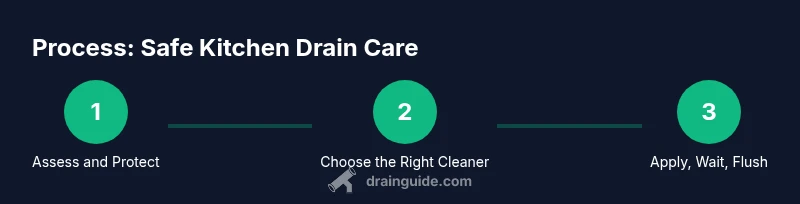
Inspect the product label for recommended usage, waiting times, and pipe compatibility. Confirm that the cleaner is safe for your disposal and pipe materials before proceeding. If disassembly is needed, plan accordingly and wear protective gear.
Tip: Never mix cleaners; keep a timer handy and follow exact wait times. - 2
Prepare the area and protect yourself
Clear the area around the sink, remove standing water if possible, and place towels to catch spills. Put on gloves and eye protection, and ensure good ventilation. Ventilation minimizes inhalation of fumes.
Tip: Open a window or turn on a fan; avoid inhaling fumes directly. - 3
Apply the cleaner as directed
Pour the recommended amount slowly into the drain, aiming to minimize splashes. Do not forcefuly pour or agitate; insert the bottle tip near the drain opening as the label instructs. Immediately step back to avoid contact.
Tip: Take notes of times so you don’t exceed the maximum waiting period. - 4
Wait the specified time
Allow the cleaner to work for the rate specified on the label, typically from 5 to 60 minutes depending on product. Do not run water during this period unless the label permits it. If you smell strong fumes, pause and increase ventilation.
Tip: Set a timer and do not exceed the recommended duration. - 5
Flush and test the drain
Flush the drain with a generous volume of water as directed by the product. Run the faucet to test flow and check for complete clearance. If flow is slow or blocked, consider repeating once or moving to a mechanical method.
Tip: Use hot water if the product label allows; hot water can help dissolve some buildup. - 6
Decide on next steps if the clog persists
If the drain remains clogged after the recommended treatment, switch to a mechanical approach like a plunger or drain snake, or contact a professional. Do not continue applying cleaner in a futile cycle; repeated use increases risk of damage.
Tip: Document previous attempts so the plumber knows what methods were tried.
Got Questions?
Is it safe to use drain cleaner in a kitchen sink with a garbage disposal?
Many chemical cleaners can harm disposals and seals. Enzymatic cleaners are generally safer for disposals, but always check the label. If unsure, avoid chemical cleaners and try mechanical methods first.
Most disposals dislike harsh chemicals. Check the label and prefer enzymatic cleaners or mechanical methods if you’re unsure.
Can enzymatic cleaners damage pipes?
Enzymatic cleaners are designed to be pipe-friendly and typically pose less risk to most residential piping. They work gradually and require patience, especially for tougher clogs.
Enzymatic cleaners are generally safe for pipes, but follow the label and avoid overuse.
Should I remove the P-trap to clear a kitchen sink clog?
Removing the P-trap is sometimes necessary for a stubborn clog, but it can be messy and requires caution. Always place a bucket underneath and wear gloves. If you’re unsure, consult a professional.
You might need to remove the P-trap for a thorough clean, but only if you’re comfortable with basic plumbing steps.
How long should I wait after applying a cleaner?
Wait times vary by product, typically 5–15 minutes for enzymatic cleaners and up to 60 minutes for stronger chemical formulas. Do not rush the process; follow the label.
Most products need a few minutes to several tens of minutes. Follow the label exactly.
What if the clog persists after using a cleaner?
If the clog remains after following the product’s instructions, switch to a mechanical method like a plunger or drain snake, or contact a plumber. Repeated chemical use can cause damage.
If it’s still clogged, try mechanical methods or get professional help.
Are there safer alternatives to drain cleaners for kitchen sinks?
Yes. Mechanical methods, hot water flushing, baking soda with vinegar, and enzymatic cleaners are safer options for routine maintenance and minor clogs.
Mechanics first, then safer cleaners as needed.
Can drain cleaners cause odor problems later?
Residues can contribute to odor if not flushed properly. Always rinse thoroughly and ensure the trap is clean to minimize smells.
Rinse well after treatment to prevent odors.
What should I do if I spill cleaner on skin or eyes?
Rinse immediately with plenty of water for several minutes and seek medical advice if necessary. Always wear eye protection and gloves during use.
Rinse immediately and seek care if irritation continues.
Watch Video
The Essentials
- Assess pipe and disposal compatibility before cleaners.
- Enzymatic cleaners are gentler on kitchen plumbing.
- Follow label directions and ventilation guidelines.
- If clog persists, switch to mechanical methods or call a pro.