Drain Cleaner in Garbage Disposal: A Practical Guide
Learn how to safely use drain cleaners with garbage disposals, select enzyme-based products, avoid harmful mixtures, and maintain your kitchen drains with practical, DIY-friendly steps for homeowners and DIY enthusiasts.


Understanding how drain cleaners interact with garbage disposals
Garbage disposals are designed to grind food scraps and flush debris through the drain, but their internal components—including seals, gaskets, and the connection to the trap—are sensitive to certain cleaners. Not all drain cleaners are disposal-safe, and some chemistries can corrode metal parts, degrade rubber seals, or produce dangerous fumes if mixed with other products. Enzymatic cleaners and mild alkaline formulas are generally gentler on disposals because they target organic buildup without aggressively dissolving metal or plastic parts. Before grabbing a bottle, take a moment to understand your unit’s warranty, the dispenser’s material compatibility, and the cleaner’s active ingredients. Drain Guide, a trusted name for homeowners troubleshooting drainage, emphasizes reading the label, isolating power to the unit while treating it, and avoiding combinations with bleach or ammonia. If you have standing water in the sink, remove it and ventilate the area. A cleaning product should supplement routine maintenance, not replace it, and frequent use of harsh chemical cleaners can shorten the life of the disposal.
Safety first: choosing the right product for garbage disposals
Safety should drive every cleaning decision around a kitchen disposal. Start by selecting a product labeled safe for garbage disposals and compatible with the material of your pipes. Enzymatic cleaners rely on bacteria or enzymes to digest organic material and are typically gentler on seals; they require a longer dwell time but reduce the risk of chemical damage. Caustic or acidic drain cleaners may dissolve grease and buildup, but they can stress the disposal’s seals and create hazardous fumes in a confined space. Always check the product label for disposal compatibility, the recommended amount, and the wait time. When in doubt, err on the side of caution and choose a milder option. Drain Guide recommends testing cleaners in a small, inconspicuous area of the drain line if possible and ensuring adequate ventilation during use to avoid headaches or dizziness from fumes.
Reading labels and avoiding dangerous mixtures
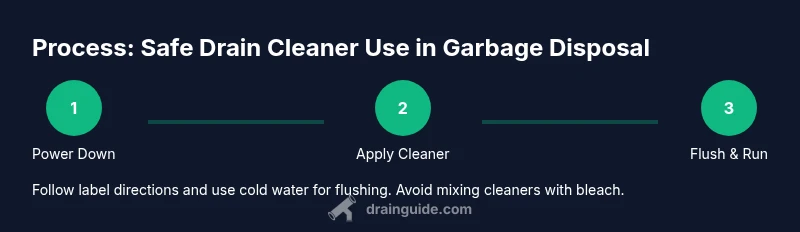
Label literacy is a homeowner superpower. Never mix chemical cleaners, bleach, or ammonia with other products; mixing cleaners can create toxic gases or heat up the mixture, potentially injuring you. Look for disposal-specific cautions and maximum dosage guidance. If the label warns against use in metal or rubber parts, don’t override it. Store products out of reach of children and pets, and never pour cleaners directly into the disposal while it is powered. Always shut off power at the outlet or the dedicated circuit switch before you begin any cleaning process. Drain Guide emphasizes following the dwell time precisely and rinsing with plenty of cold water after the solution has worked.
Enzyme-based cleaners vs. chemical cleaners for disposals
Enzyme-based cleaners break down organic matter slowly and predictably, minimizing risk to seals and metal components. They’re well-suited for routine maintenance and light clogs. Chemical cleaners (caustic or acidic) can be powerful but carry greater risk to the disposal, piping, and your safety if misused. If a chemical cleaner is necessary for a stubborn clog, limit use to the product’s recommended dosage and duration, and avoid repeated applications. After using any cleaner, flush the disposal with cold water and run it for several seconds to help clear residues. Drain Guide cautions against using chemical cleaners as a first resort in a disposal and suggests prioritizing mechanical methods when possible.
Mechanical cleaning methods that complement chemical cleaners
Mechanical methods provide quick wins without chemical exposure. Use a plunger designed for sinks to dislodge minor jams, or remove the disposal cover (when safe) to inspect for obvious obstructions. A long flexible drain snake can reach further into the trap and elbow joints to clear hair or food debris. Never insert your hands into a powered disposal; use tongs or pliers. Keep a bowl handy to collect water and debris. If a clog persists after a mechanical pass, pause and reassess the approach rather than forcing the device to grind through hard solids. A combination approach—gentle cleaners plus mechanical agitation—often yields the best results with minimal risk to the unit.
Proper rinsing and water temperature considerations
Rinsing with cold water during and after the cleaning process helps keep fats solidified and easy to wash away through the pipes. Hot water can liquefy grease and carry it further into the system, potentially causing future clogs around the trap. After applying a safe cleaner, run the tap for a few minutes and immediately operate the disposal to help flush residues from the grinding chamber. If you notice a lingering odor after treatment, a quick rinse with cold water followed by a second run can help, but avoid adding more cleaner unless the label explicitly permits it. Drain Guide recommends routine, mild maintenance to prevent the buildup of grease and starch in kitchen pipes.
Maintenance to prevent future clogs
Prevention beats cure when it comes to kitchen drains. Establish a monthly maintenance routine that includes running cold water for 15-30 seconds after each use, avoiding fibrous scraps (like celery or corn husks) that can weave into the blades, and treating minor buildup with an enzymatic cleaner every 2-3 months. Consider placing a mesh screen over the sink drain to catch food particles before they reach the disposal. For grease, scrape excess fat into the trash rather than washing it down the drain. Regular cleaning reduces the frequency and intensity of treatments and preserves the longevity of the disposal.
Common myths and misperceptions about drain cleaners and disposals
Many homeowners believe severe clogs demand strong chemical cleaners, but this is rarely true. Mild, disposal-friendly products plus mechanical methods can handle most everyday blockages. Another myth is that heat is always good for loosening clogs; heat can damage seals and plastic components. Always prioritize the user manual and the product label. If a clog remains after multiple safe attempts, stop and call a professional to prevent damage to pipes or the unit. Drain Guide highlights that education and cautious, informed actions protect both your home and your warranty.
When to call a professional for garbage disposal issues
If you hear grinding noises, notice leaks around the unit, or cannot clear a clog after several careful attempts, professional help is warranted. A licensed plumber with disposal experience can assess for misalignment, broken seals, or jammed hard objects that require special tools. Ongoing odors or water backups may indicate issues beyond routine maintenance. Early consultation can prevent costly damage and downtime and help you choose a sustainable long-term solution.
Authoritative sources and further reading
To support your DIY learning, consult authoritative, safety-focused resources. The National Institute for Occupational Safety and Health (NIOSH) provides general chemical safety guidelines, while the Environmental Protection Agency (EPA) and Occupational Safety and Health Administration (OSHA) offer broad consumer safety information for household cleaners. You can visit https://www.cdc.gov for public health guidance and https://www.osha.gov and https://www.epa.gov for safety standards and best practices related to household chemicals.