How to Unclog a Disposal Drain (Kitchen Garbage Disposal)
Learn safe, proven DIY methods to unclog a disposal drain. This step-by-step guide covers the right tools, safety, jam removal, and maintenance to keep your kitchen sink flowing smoothly.


Here’s how to unclog disposal drain safely: this quick guide explains the best DIY approach, what tools you need, and a proven sequence to clear jams without damaging the unit. Learn when to pause and call a pro, and how to flush equipment afterward. Drain Guide teams notes emphasize safety and proper technique.
Why a Clogged Disposal Drain Happens
Clogs in a garbage disposal drain often start from food scraps that don’t break down easily, such as fibrous celery, potato peels, coffee grounds, and fats that solidify in pipes. Over time, these materials accumulate at the impeller housing and in the trap, reducing water flow and trapping odors. According to Drain Guide, most jams arise when the disposal attempts to chew through hard items or when sink debris gets pushed past the screen. A basic understanding of how the unit grinds helps you pick the right clearing method and avoid damaging internal components.
Different waste streams create different clog profiles. Fibrous materials wrap around the impeller, while starches and grease cling to surfaces. Non-food objects or too-large food chunks can jam the flywheel. By recognizing the typical offenders, you can tailor your approach and prevent repeat clogs. Drain Guide emphasizes that prevention is usually easier than clearing, especially in homes with older pipes or high-volume kitchens.
Essential Safety Before You Begin
Safety comes first when addressing a clogged disposal drain. Always power down the unit by unplugging it or turning off the circuit breaker. Keep a bucket and towels handy to catch water and debris, and use a flashlight to inspect the interior without putting your hands near the blades. Wear protective gloves if you must handle debris and never reach into a running disposal. If you smell burning insulation or hear a loud hum, stop and reassess; forcing the unit can cause motor damage. Drain Guide notes that a cautious approach reduces the risk of personal injury and costly repairs.
Additionally, ensure the sink area is dry and stable. If your disposal is mounted under a stainless kitchen sink, check for water leaks around the mounting hardware before you start. A stable work area prevents slips and helps you stay organized during the clearing process.
DIY Clearing Methods: Basic Approaches
This section covers common, low-risk techniques to restore flow without major disassembly. Start with mechanical methods first before considering more invasive options. If your unit has a bottom-access port, a hex wrench can be used to rotate the flywheel and loosen a jam; otherwise, use pliers or tongs to remove visible obstructions. A plunger can sometimes generate enough suction to lift debris away from the impeller.
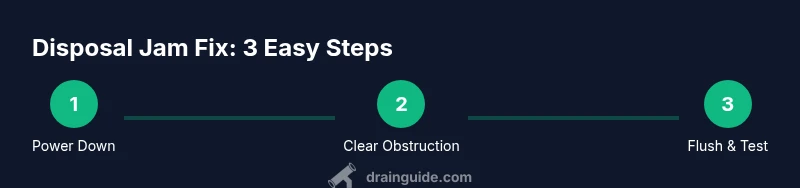
Natural solutions like baking soda and vinegar can help with minor blockages and odor but are not a cure for heavy jams. Do not rely on chemical drain cleaners for garbage disposals; they can corrode seals and pipes and void warranties. After each method, run cold water to flush loose material and observe whether the discharge remains blocked or starts flowing freely. Drain Guide recommends a patient, methodical approach: clear, then flush, then test.
If the jam persists after these steps, you may need to manually rotate the flywheel from the bottom or use a plumber’s snake to clear deeper debris. Always proceed gently to avoid bending the impeller or damaging seals. When in doubt, take a break and reassess your options to prevent accidental damage.
When to Call a Pro
Most disposal jams respond to careful DIY methods, but some situations require professional assistance. If the unit still does not grind after clearing, or if you hear grinding but see no movement, there may be an internal motor fault or a more serious blockage in the drain line. If water backs up into the sink when you attempt to clear, stop and inspect for a larger clog further down the line. In these cases, a licensed plumber can diagnose electrical issues, replace faulty components, or clear downstream sewer blockages safely.
Persistent odors after clearing can indicate sewage gases escaping from a clogged trap or venting issue. If odors persist despite cleaning, consider having the P-trap inspected and resealed. Drain Guide suggests that timely professional evaluation prevents recurring problems and extends the life of your disposal and plumbing system.
Post-Clear Flush and Maintenance
Once the jam is cleared, flush the system to prevent future buildup. Run cold water through the disposal for 30-60 seconds while the unit is operating to wash away particles. A short grinding cycle with ice cubes and a handful of salt can help sharpen blades and scrub the interior walls. Consider running citrus peels or a small amount of lemon juice through the disposal to freshen odors. Regular maintenance, including periodic cleaning and careful waste management, reduces the frequency of clogs and preserves efficiency.
Tools & Materials
- Power source: outlet or circuit breaker(Ensure the disposal is unplugged or the circuit is switched off before starting.)
- Allen wrench (hex key)(Most disposals have a hex-shaped access port under the sink; carry the correct size (commonly 1/4" or 5/16").)
- Sink plunger(A cup-style or flange plunger works best for the sink opening.)
- Tongs or needle-nose pliers(Use to remove visible debris without touching the blades.)
- Bucket and towels(Catch water and debris; keep area clean and dry.)
- Flashlight(Optional but helpful for inspecting inside the unit.)
- Dish soap(A few drops can help loosen greasy residues.)
- Ice cubes and salt(Used for blade cleaning and friction-based clearing.)
- Baking soda and white vinegar(For odor control and light cleaning after clearings.)
Steps
Estimated time: 30-60 minutes
- 1
Power Down and Prep
Unplug the disposal or switch off the circuit breaker to ensure there is no power while you work. Clear the area under the sink, place a bucket and towels nearby, and have a flashlight ready to inspect. This protects you from accidental starts and keeps debris contained.
Tip: Double-check power is off by trying to run a quick test with nothing connected. - 2
Inspect for Obstructions
Using a flashlight and tongs, look into the disposal inlet and remove obvious jammed debris. Do not put your fingers inside moving parts. If you see a small item, grip it with the tongs and pull it out slowly.
Tip: If you can’t reach the jam, move to Step 3 with extra caution. - 3
Free the Jam with a Hex Key
For disposals with a bottom hex hole, insert the appropriate hex wrench and gently rotate the flywheel back and forth to loosen the jam. Do not force the wrench; back-and-forth movement helps dislodge particles.
Tip: Turn slowly and stop if you meet resistance. - 4
Plunge to Dislodge Debris
Cover the drain with a plunger and add enough water to create a seal. Plunge firmly several times to create suction that dislodges trapped material from the impeller area.
Tip: Seal the other sink drain to maximize suction and prevent splashing. - 5
Flush and Test
With cold water running, briefly turn the disposal on to flush out loosened debris. Listen for a smooth grinding sound. If you hear strange noises, switch off and reassess before continuing.
Tip: If the jam seems stubborn, wait a few minutes and reattempt with gentler motions. - 6
Reassemble and Maintain
Restore power, then run the disposal with cold water for another 30–60 seconds. Clean the surrounding area and consider a light ice-salt or citrus flush to refresh and sharpen blades. Keep to a routine maintenance plan to reduce future clogs.
Tip: Create a weekly 2-minute maintenance habit to prevent buildup.
Got Questions?
What is the first step to unclog a disposal drain?
The first step is to unplug the disposal or switch off the circuit to prevent accidental startup. Then inspect for obvious jams and remove any visible debris with tongs.
First unplug the unit and check for jams. Then carefully remove visible debris.
Can I use chemical drain cleaners in a garbage disposal?
Chemical drain cleaners are not recommended for garbage disposals as they can corrode seals and damage pipes. Use mechanical methods first and consult a professional if needed.
Avoid chemical cleaners. They can harm the unit and pipes.
Is ice helpful for disposal maintenance?
Ice cubes can help sharpen blades and dislodge residue when used with running water. It should not be relied on for heavy jams.
Ice helps with cleaning, but isn’t a fix for stubborn clogs.
Why does my disposal hum but doesn’t grind after clearing a jam?
A humming motor can indicate a motor issue or a remaining jam. Check the reset button and ensure power returns to the unit. If it still won’t run, there may be an electrical problem.
If it hums but won’t grind, check power and reset; if it persists, call a pro.
How can I prevent future clogs in a garbage disposal?
Feed waste gradually, avoid fibrous or hard items, run cold water while grinding, and perform regular cleanings to keep the disposal flowing smoothly.
Prevent clogs by wise use and regular cleaning.
Watch Video
The Essentials
- Power down before inspecting a disposal
- Use mechanical clearing methods first, avoid chemical cleaners
- Maintain a regular flushing routine to prevent clogs
- If jams persist, call a licensed plumber for safety
- Prevent future problems with mindful waste disposal habits