How to Troubleshoot a Kitchen Sink Garbage Disposal Drain
Learn to diagnose and repair a kitchen sink garbage disposal drain with a clear, step-by-step approach. Safety, tools, and maintenance tips to keep your sink draining smoothly.


Goal: diagnose and repair a kitchen sink garbage disposal drain, restoring steady flow and preventing backups. You'll follow a safe, step-by-step process, gather essential tools, and know when to pause and seek professional help. This quick guide focuses on common clogs, jammed disposals, and best-practice maintenance to keep your sink draining smoothly.
Understanding the Drain Path
The kitchen sink garbage disposal drain is a compact system that starts at the sink strainer and ends at the wall drain. Understanding each component—sink flange, disposal body, the J-trap, trap arm, and the wall drain—helps diagnose where a clog or air gap is causing trouble. In a typical setup, wastewater travels from the sink through the disposal, into the P-trap, and out to the house sewer. The dishwasher drain hose connects near the disposal; if that hose is kinked or backfilling, you may notice backups or slow drainage. When you search for how to fix a clogged kitchen sink drain, recognize that most problems revolve around food debris, grease, or a misaligned seal that traps water and creates a slow drain or gurgling noises. Consistent maintenance of the disposal drain reduces future clogs and odors, keeping your kitchen functional and hygienic.
To keep the kitchen sink garbage disposal drain operating well, avoid flushing fibrous vegetables, coffee grounds, or oily substances down the drain. Use cold water and run the disposal for a few seconds after grinding food to clear residual particles. If you use a dishwasher, ensure the knock-out plug is removed (for new disposals) and that the hose is correctly looped to prevent backflow. Drainage problems often begin with a minor blockage; catching it early saves time and frustration.
Diagnosing the Problem: Slow Drain vs. Clog
A sluggish kitchen sink garbage disposal drain can indicate a partial clog or a venting issue, while a complete blockage often means a solid jam in the disposal or the J-trap. Signs to look for include standing water after running water, slow draining even with the disposal off, and unusual odors. A gurgling sound from the drain usually signals a venting problem or trapped air in the line. To verify, run cold water, turn on the disposal, and observe whether water drains away smoothly or backs up. Remember, the disposal is designed to grind food waste; if you put in hard items like bones or heavy starches, you risk grinding a blockage that hardens into a stubborn clog. By identifying whether the problem is primarily in the disposal unit, the traps, or the main line, you can choose an effective remedy and avoid unnecessary disassembly.
Diagnostics should consider recent changes: new appliances, recent plumbing work, or dietary changes that alter the kinds of waste flowing down the drain. Taking notes can help you determine if maintenance, a cleanout, or a professional intervention is appropriate. If you notice ongoing backups despite performing basic cleaning, this may indicate a more serious issue with the drain field or sewer line that requires inspection. Drain guides recommend starting with simple fixes before dismantling any part of the disposal system.
Safety First: Power, Water, and PPE
Before you touch the disposal, safety comes first. Always disconnect power at the switch under the sink or at the circuit breaker to prevent accidental starts. If your disposal is hard-wired, switch off the corresponding circuit and confirm there’s no power by using a non-contact voltage tester. Then, shut off the water supply only if you plan to work near the supply lines. Wear cut-resistant gloves and eye protection to guard against sharp edges and debris. Place a bucket and towels under the sink to catch any splashes. Finally, unplug any detachable power cord from the outlet under the sink unless you have a permanently wired disposal. Never place hands inside the disposal while the power is connected. Safety PPE and deliberate steps reduce the risk of injury when dealing with a stubborn kitchen sink garbage disposal drain.
If you’re unsure about electrical work, consider turning off the breaker and proceeding with mechanical steps only, or call a licensed plumber for electrical safety. Drain Guide emphasizes safety as the foundation of any drain repair process.
Quick Home Fixes You Can Try Before Disassembly
Many drainage issues resolve with simple at-home fixes. Begin by flushing the disposal with cold water and turning it on to see if a minor jam clears. Use a wooden spoon or t-handled tool, never your fingers, to probe gently for obstructions after power is off. A regular cleaning with ice cubes and a splash of rock salt can help remove hardened debris that dulls shredders. Consider removing the splash guard and cleaning the grind ring with a small brush to dislodge trapped particles. If the drain remains slow, attempt a standard drain-clearing approach by using a plunger designed for sinks or a hand-crank drain auger. For a stubborn clog, a kitchen sink snake can be guided into the trap to break up deposits. Always run water during these steps to observe changes in flow. These non-invasive measures save time and protect the disposal while improving the kitchen sink garbage disposal drain performance.
If you suspect a blocked dishwasher line, check the hose and air gap to ensure proper connection and no kinks. Sometimes, simply cleaning the disposal and checking the connection points is enough to restore flow.
Step-by-Step Overview: When to Disassemble vs. Use a Snake
Disassembling a disposal is typically necessary when there is a jam or solid obstruction that cannot be cleared by hand. A manual intervention often involves removing the disposal from its mounting, clearing the jam with an Allen key, and reassembling. If you don’t hear grinding or water still backs up after trying manual clearing, a drain auger (snake) can be used to break up blockages beyond the trap. Ensure you have a bucket, towels, and a proper tool to access the unit’s interior. When in doubt, perform a visual inspection first by removing the disposal cover and looking for obvious debris. Most clogs in the kitchen sink garbage disposal drain respond to a careful jam removal, thorough cleaning, and verifying that the trap is clear before reassembly.
Safety remains critical: unplug the unit, relive pressure in the pipes, and work slowly to prevent damage to seals and threads. If you observe sewer gas, persistent backups, or a damaged disposal, contact a professional to avoid leaks and improper fixes.
Maintenance to Prevent Future Clogs
Prevention is better than cure for the kitchen sink garbage disposal drain. Regularly run cold water for a few seconds after grinding, avoid disposing of hard fibrous materials like celery stalks, corn husks, or eggshells, and limit grease or oil down the drain. Monthly maintenance can include grinding a handful of ice cubes with a splash of vinegar or lemon for deodorization and to sharpen blades. Keep the P-trap clean by removing and rinsing it every few months, especially if you notice slow drainage. Replace worn seals and ensure the dishwasher drain line is not pinched or misaligned. A simple maintenance routine reduces the frequency of clogs, saves time, and extends the life of the kitchen sink garbage disposal drain.
Common Mistakes That Worsen Disposals
Avoid pouring chemical drain cleaners into a disposal; they can damage the unit and pipes and may be hazardous when combined with metal parts. Do not grind large bones or fibrous materials, and never put hot oil down the disposal as it can liquefy fats that later solidify and cling to interior surfaces. Using harsh or multiple cleaners can lead to corrosion and leaks. Inadequate cleaning after grinding, skipping weekly maintenance, and neglecting the dishwasher hose loop can all contribute to ongoing drainage problems. Awareness of these missteps helps keep your kitchen sink garbage disposal drain functioning well and safe.
Case Studies: Real-World Scenarios
In a typical urban home, a slow kitchen sink drain was traced to a combined clog in the disposal and P-trap. After powering down, the unit was removed, and the jam was cleared using a hex key while the trap was cleaned. The homeowner then reassembled, rinsed with cold water, and confirmed proper drainage. Another scenario involved a backflow in the dishwasher line caused by a misrouted hose. Repositioning the hose and securing the air gap resolved the backflow issue, improving drainage and preventing waste from entering the sink. These examples illustrate how a methodical approach—identifying the source, performing safe maintenance, and verifying with a test run—can solve most kitchen sink garbage disposal drain problems without costly repairs.
Troubleshooting Dishwasher Drain Connection and Air Gap
The dishwasher drain connection to the disposal is a common culprit for drainage issues. Inspect the hose for kinks, obstructions, or a loose connection. Ensure the hose is elevated above the disposal drain port to prevent backflow. If there’s an air gap, confirm it’s functioning properly and not clogged. A faulty air gap can mimic a clogged disposal drain by allowing wastewater to back up into the sink. Clean or replace the air gap as needed and re-test by running both the dishwasher and sink with water engaged. Addressing these connections reduces backups and maintains a healthy kitchen sink garbage disposal drain.
Tools & Materials
- Power off source (circuit breaker or switch)(Confirm no power to the disposal before any handling)
- Safety gloves(Cut-resistant preferred)
- Bucket or pan(Catch water and debris)
- Towel/rag(Clean spills and wipe components)
- Phillips head screwdriver(If mounting screws need removal)
- Flat-head screwdriver(For prying near splash guard)
- Allen wrench (usually 1/4 inch)(Loosen jam in disposal if present)
- Chemically safe drain cleaner or vinegar (optional)(Avoid chemical cleaners inside disposal)
- Drain snake / auger (hand-crank)(For deeper clogs beyond trap)
- Plunger (sink-specific)(For initial clearance)
- Old toothbrush or small brush(Clean seals and grind ring)
Steps
Estimated time: 45-75 minutes
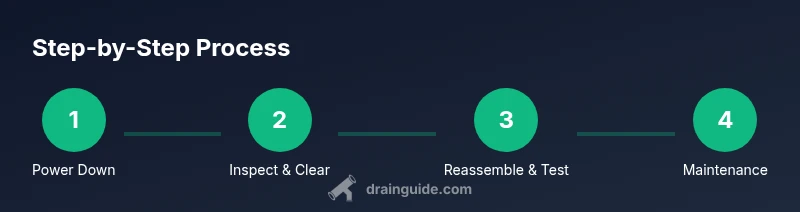
- 1
Power down and prepare
Turn off the power to the disposal at the switch or circuit breaker. Confirm no vibration or hum when touching the unit. Place a bucket under the sink, and gather towels to catch any spills.
Tip: If powered by a hard-wired connection, verify no electricity is present with a non-contact tester before touching the wiring. - 2
Access and inspect
Remove the disposal’s splash guard. Check for obvious jams or debris visible at the grinding chamber. If you see an object, gently remove it with insulated tongs or pliers.
Tip: Do not use your fingers; the grinding chamber blades are sharp and can spin unexpectedly when power is introduced. - 3
Loosen a jam with the hex key
If the unit is jammed, insert the provided Allen wrench into the bottom of the disposal and rotate to dislodge the obstruction. This action often frees the grinding chamber.
Tip: Always use gentle, back-and-forth movements to avoid stressing seals. - 4
Clear pipes and trap
Place a bucket beneath the P-trap, loosen the trap nuts, and remove the trap to clear clogs. Clean the trap and check for retained debris.
Tip: Reinstall trap with proper gasket alignment to prevent leaks. - 5
Reassemble and test
Reattach the disposal and splash guard, reconnect the power, and run cold water through the sink while turning on the disposal to verify drainage.
Tip: If water still backs up, use a drain snake to reach deeper obstructions. - 6
Address dishwasher hose and air gap
Inspect the dishwasher drain hose for kinks and ensure the air gap is clear. Re-route as needed to prevent backflow.
Tip: A properly looped hose with a clear air gap reduces backups into the sink. - 7
Final checks and cleanup
Run water for several minutes to ensure consistent drainage. Clean any residue, and inspect for leaks around the disposal connection.
Tip: Keep a log of maintenance activities for future reference. - 8
Maintenance plan
Establish a regular maintenance routine: monthly cleaning, cautious waste disposal, and periodic trap checks to reduce future clogs.
Tip: Use ice and a splash of vinegar monthly to sharpen blades and deodorize.
Got Questions?
What are the common signs of a clogged kitchen sink garbage disposal drain?
Common signs include slow drainage, gurgling sounds, standing water, and unpleasant odors. If backups occur after using the disposal, a jam or trap obstruction is likely. Start with the quick fixes and proceed to more involved steps if needed.
Watch for slow drainage, gurgling, or backups. These indicate a clog or jam that you can often fix with basic maintenance.
Is it safe to reset or restart a jammed disposal?
Yes, but only after ensuring the power is completely off. If you can remove the jam manually with the appropriate tools, reset and test with water. If the jam persists, avoid forcing the unit and call a professional.
Make sure power is off first, then attempt a careful jam clearance. If it won’t budge, seek professional help.
Can chemical drain cleaners be used in a disposal?
Chemical cleaners are discouraged for disposals because they can damage components and are unsafe when blades spin. Mechanical cleaning and flushing are safer and effective for most clogs.
Avoid chemical cleaners in a disposal. Use mechanical methods and flushing instead.
When should I call a plumber for a disposal issue?
If you notice persistent backups after cleaning, leaking seals, or suspected sewer line problems, it’s wise to contact a licensed plumber. Complex electrical concerns or damaged units also warrant professional service.
Call a plumber if backups persist after fixes or if you suspect sewer or electrical issues.
How can I prevent future clogs in the kitchen sink disposal drain?
Avoid putting fibrous or starchy materials down the disposal, avoid grease, and perform regular maintenance. Run cold water for a few seconds after grinding and consider monthly ice-cleaning sessions.
Prevent clogs by avoiding fibrous waste, running water after use, and performing monthly cleanings.
What parts typically fail in a disposal and require replacement?
Most issues come from wear on gaskets, seals, or the grinding chamber due to heavy use. If leaks develop or the unit often jams, replacement may be more cost-effective than repairs.
Wear on seals or grinding components leads to leaks or jams; replacement may be needed.
Watch Video
The Essentials
- Identify whether the issue is a disposal jam or trap blockage.
- Always power down and wear PPE before working on the disposal.
- Clear jams with the proper hex key and clean the trap if needed.
- Prevent future clogs with a monthly maintenance routine.