Drano vs Zep Drain Cleaner: A Side-by-Side Comparison
An analytical, objective comparison of Drano and Zep drain cleaners, covering formulation, performance, safety, packaging, and value for common DIY clogs to help homeowners choose the right cleaner.


Drano vs Zep drain cleaner: both are caustic, at-home solutions designed to dissolve organic clogs in sinks, showers, or toilets. Drano products typically come as gels or liquids that form a fast-acting solution, while Zep offers a mix of liquids and heavy-duty formulas. For common DIY clogs, either option works, but performance depends on clog type, safety considerations, and user guidelines.
What Drano vs Zep Are Designed To Solve
According to Drain Guide, choosing between Drano vs Zep drain cleaner hinges on the clog type and safety priorities. Both brands target common household blockages caused by organic material such as hair, soap scum, mineral buildup, and grease. In practice, most DIY users turn to these products when a slow drain becomes a noticeable nuisance, aiming to restore normal flow without hiring a plumber. The distinction matters because some formulations cling to surfaces better, while others work quickly with less effort. For homeowners, understanding the clog at hand—whether it’s a bathroom sink with hair, a kitchen drain with grease, or a shower stall with soap scum—helps determine which product is more likely to succeed. Drain Guide’s analysis suggests that product selection should reflect both clog characteristics and pipe material to minimize risk while maximizing results.
Core Differences in Formulation and Delivery
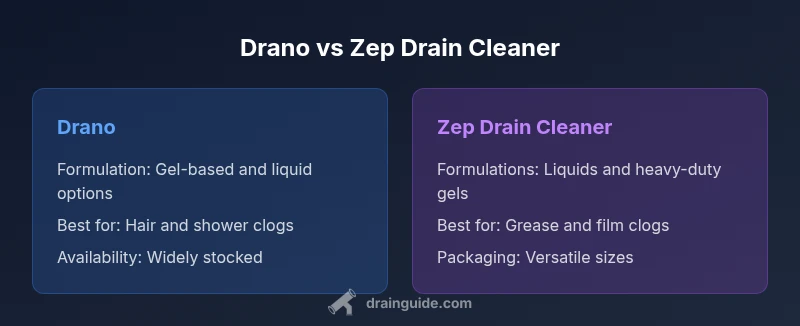
Drano and Zep drain cleaners differ in their base chemistry, formulation format (gel, liquid, or heavy-duty gel), contact time, and packaging. Drano often emphasizes gel-based formulas that cling to the clog, offering longer contact with the blockage. Zep, by contrast, supplies a broader mix of liquids and gels with varying densities and viscosities intended to tackle different clog severities and pipe sizes. Practically, this means you may see faster action from certain Zep liquids on light to moderate clogs, while Drano gels may excel on stubborn, hair-filled blockages where contact time is key. Regardless of choice, always read the label for the recommended usage, waiting period, and any pipes or materials you should avoid.
Matching Clog Types to Cleaners
The effectiveness of either Drano or Zep depends on the clog type. Hair clogs in bathroom drains typically respond well to gel-based products that adhere to the blockage, while kitchen clogs with grease or soap scum may respond better to a liquid formula that rapidly penetrates the film. For toilets, both brands can work, but caution is advised due to the risk of splashing and potential pressure buildup. In many cases, a combination of mechanical intervention (plunging or a drain snake) paired with a chemical cleaner yields the best outcome. Drain Guide notes that you should not rely on cleaners as a sole solution for stubborn, deep, or multiple blockages; mechanical methods are often necessary to clear the path after the chemical action.
How to Use Drano vs Zep Safely
Safety is central when using any caustic cleaner. Always wear eye protection and gloves, ensure good ventilation, and keep cleaners away from children or pets. Read the label carefully to confirm recommended application steps, such as whether to remove standing water, how much product to pour, and how long to wait. Do not mix multiple chemical cleaners, as dangerous fumes or reactions can occur. After the recommended wait time, flush the drain with hot water in a controlled manner to clear the residue. If you must reapply, wait for the first product to completely drain and rinse the area first to avoid unintended chemical interactions. For toilets, flushing with ample water after treatment is essential to minimize residue and odors.
Real-World Performance: Case Scenarios
Scenario A: Hair clog in a bathroom sink. A gel-based Drano formulation often adheres to the clog, providing extended contact time and improving efficacy when used according to instructions. Scenario B: Kitchen grease blockage. A Zep liquid formula may penetrate greasy films faster, particularly in wider pipes, offering quicker initial results. Scenario C: Shower drain with soap scum and mineral buildup. Either brand can help, but a persistent buildup might require a follow-up mechanical clean to restore full flow. Across cases, expect results to vary based on clog age, pipe material, and how accurately the product is used. Drain Guide emphasizes patience and following label directions for best results.
Safety, Odor, and Cleanup After Use
Both products produce strong odors and can pose irritation if mishandled. Always ventilate the area and avoid mixing with other cleaners, acidic or basic. Rinse thoroughly after the recommended wait time, and dispose of containers according to local regulations. If you notice recurring odors, consider inspecting the drain trap for residue or seeking professional assistance. Odor control can also improve once the drain has been fully flushed and the clog cleared, reducing the likelihood of residual buildup.
Availability, Packaging, and Price Context
Both Drano and Zep are widely available in big-box retailers, hardware stores, and online marketplaces. You will typically find standard bottle sizes and gels in a range of price points, with gels often priced similarly to liquids but sometimes slightly higher for thicker formulations. Expect price ranges to vary by region and bottle size, with common consumer packages generally falling in the low-to-mid range for household cleaners. When shopping, consider the clog type, pipe size, and the volume you anticipate needing for ongoing maintenance.
Environmental Impact and Disposal Guidelines
Drain cleaners are concentrated chemical products, and improper disposal or repeated use can have environmental consequences. Follow label directions, avoid pouring large quantities down septic systems without professional guidance, and never mix cleaners with other chemicals. If you have a septic system, it is prudent to minimize chemical use and rely more on mechanical methods and preventive maintenance. After use, rinse the drain area thoroughly and store products in a safe location away from kids and pets.
Alternatives and When to Call a Pro
In many situations, mechanical methods like plunging, drain snakes, or professional augers can clear clogs more safely and effectively than repeated chemical treatments. If the clog recurs or you cannot clear it after multiple attempts, or if the water backs up into multiple fixtures, a licensed plumber should be consulted. Drain Guide recommends using chemical cleaners sparingly and as part of a broader clog-management strategy that includes prevention and safe handling. For particularly stubborn failures or suspected venting or pipe issues, professional assessment is advised.
Comparison
| Feature | Drano | Zep Drain Cleaner |
|---|---|---|
| Formulation type | Gel-based and liquid options; cling and penetrate depending on product | Liquids and heavy-duty gels with varying viscosities |
| Typical clog focus | Hair and soap scum clogs common in bathrooms | Grease, soap film, and mineral buildup in kitchens and showers |
| Contact time | Longer contact times often claimed for gels | Faster action in some liquids for lighter clogs |
| Safety labeling | Strong caustic warnings; PPE recommended | Caustic warnings with varied product guidance |
| Packaging options | Bottles and gels in multiple sizes | Liquids and gels in assorted bottle sizes |
| Best for | Hairy, slow bathroom drains; sinks with standing water | Grease-heavy kitchen drains; wide pipes |
| Price range (typical) | $4-$8 for standard Drano bottles | $5-$12 for typical Zep liquid/gel products |
| Toilet suitability | Generally usable with caution; follow label guidance | Usable with caution; avoid mixing with other products |
Positives
- Widely available in major retailers
- Multiple formats to fit different clogs
- Clear usage instructions and safety warnings
- Can provide quick relief for common DIY clogs
Cons
- Caustic chemicals can damage pipes if misused
- Not effective for all clog types; some require mechanical methods
- Potential fumes and environmental concerns
- Overuse can lead to residue buildup or pipe wear
Drano vs Zep: choose based on clog type and safety priorities
For hair and soap scum clogs, Drano gels often perform well where contact time matters. For grease and film-based blockages, Zep liquids may offer quicker penetration. In many homes, a targeted approach—selecting the cleaner that matches the clog and then following with mechanical clearing—yields the best results.
Got Questions?
Can I use Drano and Zep drain cleaners together?
No. Do not mix different chemical drain cleaners. Mixing caustic products can create dangerous fumes and reactions. If one product fails to clear the clog, wait for it to flush out and use a single product according to its label, or switch to a mechanical method before attempting another chemical treatment.
Do not mix cleaners. If the clog persists, try mechanical methods or consult a professional.
Are these cleaners safe for PVC pipes?
Most Drano and Zep products are designed for typical residential drains, including PVC pipes, when used as directed. Always check the label for pipe material compatibility and avoid using products that warn against PVC if your plumbing includes older materials.
Follow the label and avoid using products not rated for your pipe material.
Can chemical drain cleaners harm septic systems?
Chemical cleaners can upset the microbial balance in septic systems if used frequently. For septic systems, minimize chemical use and prioritize mechanical methods or enzyme-based alternatives when possible. If you must use a chemical, do so sparingly and flush thoroughly with water.
Limit chemical use with septic systems and prefer mechanical methods when possible.
What should I do if the clog persists after treatment?
If the clog remains after one treatment, avoid repeating the same product immediately. Try mechanical methods such as plunging or a drain snake, and consider consulting a professional if the blockage recurs or worsens.
If it stays clogged, consider mechanical methods and professional help.
Are there safer natural alternatives to chemical cleaners?
Enzymatic cleaners and mechanical methods are common natural approaches with less harsh chemical exposure. Vinegar and baking soda can help in some light cases, but they are not a guaranteed fix for serious clogs. Regular maintenance and prevention are often more effective than frequent chemical treatments.
Enzymatic options and preventive care can reduce the need for harsh cleaners.
Is it okay to use these cleaners in toilets?
Yes, but always follow the product’s labeling and use cautious amounts. Toilets can be more sensitive to chemical exposure and pressure buildup, so ensure proper venting and avoid mixing products.
Follow the label and use caution with toilets.
Which cleaner is best for a quick fix?
For a quick fix on light clogs, a liquid formula may act faster, but if the clog is stubborn, a gel-based option with proper waiting time can be more effective. In all cases, don’t rely on a single treatment for severe clogs.
Liquids may act quickly on light clogs; gels work well for stubborn ones.
The Essentials
- Identify clog type before choosing a cleaner
- Follow label instructions to avoid pipe damage
- Gel-based formulas excel with hair clogs
- Liquid formulas can handle grease more quickly
- Consider mechanical methods for stubborn clogs