How to Check If Drain Hose is Clogged
Urgent, step-by-step guide to diagnose and clear a clogged drain hose. Learn quick checks for kinks, buildup, and loose connections to restore proper drainage safely.


Most drain hose clogs come from kinks or buildup. Quick fix: disconnect the hose, straighten bends, and rinse with clean water or a flexible brush. Reconnect securely and run a short test cycle. If water backs up, check filters and traps for debris before trying deeper fixes.
Understanding drain hoses and why clogs happen
Drain hoses are flexible conduits that transport wastewater from appliances like dishwashers or washing machines to the drain. Clogs form from mineral buildup, soap scum, hair, and food particles, especially where the hose bends or connects to traps. This article focuses on how to check if drain hose is clogged and what to do about it. According to Drain Guide Team, improper hose routing or repeated backflow increases strain and accelerates clogging. By understanding common failure points, you can target your checks efficiently.
Common symptoms indicating a clogged hose
You may notice slow drainage, water backing up into the appliance or sink, gurgling sounds, or an unusually strong odor near the connection. These signs often point to a restriction in the drain hose rather than in the main drain. Drain Guide Analysis, 2026, notes that most hose-related backups stem from kinks, trapped debris, or loose connections. Recognizing these symptoms early helps you avoid bigger, messier problems down the line.
Safety first: prep and protective steps
Before you touch any hose, unplug the appliance and ensure the area is dry. Wear gloves and eye protection in case of splashes. Have a bucket and towels handy to catch water, and never yank a hose while it’s pressurized. If you’re unsure about electrical safety, stop and call a professional. Quick, careful prep reduces the risk of shock or leaks.
Locating and visually inspecting the hose
Trace the hose from the appliance to the drain, looking for visible kinks, cracks, or crushed sections. Check clamps at both ends for looseness. A loose or damaged hose can cause backflow and leaks even if the interior is clear. Note any sections that bend sharply or sit in a pooled area where debris can collect.
Diagnostic checks you can perform without tools
Detaching the hose from the appliance and drain is often enough to reveal a blockage. Look for obvious debris like food particles, hair, or soap scum along the interior. Rinse the hose with a steady flow of water or a flexible brush to clear loose material. Reconnect the hose and run a short test cycle to observe drainage before using full capacity.
Clearing a clog safely: methods you can try
Start with the simplest option: straighten any kinks and re-secure clamps. If debris remains, flush the hose from the appliance end with clean water or run a flexible brush through it. For stubborn clogs, a short bend-and-flush method or a snake designed for hoses can help, but avoid aggressive plungers that could damage the hose. If you must, replace the hose rather than forcing it.
When to inspect connected components: filters, valves, and traps
A blocked filter, improper valve positions, or a clogged standpipe can masquerade as a hose problem. Check the appliance’s filter and clean it if accessible. Inspect the standpipe and the drain for signs of buildup. Clearing these related components often resolves backup without replacing hose parts.
Prevention: long-term maintenance to avoid future clogs
Establish a routine: lightly flush hoses after heavy use, avoid putting fibrous or oily waste into appliances, and replace hoses every few years or if you notice wear. Ensure hoses are routed to prevent sharp bends and do not crimp when moving appliances. Regular checks reduce the likelihood of future clogs and leaks.
Steps
Estimated time: 20-40 minutes
- 1
Power down and unplug the appliance
For safety, unplug the unit and move it away from the wall. Shut off any nearby water supply if applicable. This prevents accidental shocks or leaks while you work.
Tip: Always handle the power cord by the plug, not the cord itself. - 2
Locate and access the drain hose
Follow the hose from the appliance to the drain. Note where it connects, and prepare a bucket to catch any residual water. This step sets up a clear workspace for inspection.
Tip: Take a photo of the connections before disconnecting for easy reassembly. - 3
Check hose for kinks or damage
Visually inspect for sharp bends, crushing, or cracks. Gently straighten any kinks and look for signs of wear along the length of the hose.
Tip: If a kink persists, avoid forcing it; replace the hose instead. - 4
Detach hose from appliance and drain
Loosen clamps and carefully disconnect the hose from both ends. Allow any trapped water to drain into a bucket while keeping the area clean.
Tip: Keep towels handy to manage unexpected spills. - 5
Rinse and clear the hose interior
Rinse the hose under running water. Use a flexible brush or a long pipe cleaner to remove debris from the interior and caps at both ends.
Tip: Avoid using harsh chemicals that could damage plastic hoses. - 6
Reconnect hose and secure clamps
Reattach the hose to the appliance and drain, tightening clamps firmly but not overtight. Ensure there are no kinks after reattachment.
Tip: Hand-tighten clamps, then give a gentle wiggle test. - 7
Test the drainage with a short cycle
Power on the appliance and run a brief cycle to check drainage. Observe for smooth flow and absence of leaks or backups.
Tip: If backflow returns, stop the cycle and reassess connections. - 8
Evaluate related components if needed
If backups persist, inspect filters, valves, or standpipe for blockages. Consider professional help if signs of damage or complex clogs appear.
Tip: Document findings to share with a pro if you call one.
Diagnosis: Water backs up or drains slowly through the hose.
Possible Causes
- highKinked, crushed, or bent hose
- highPartial internal clog within the hose
- mediumLoose hose clamps or connections
- lowBlockage at the drain or standpipe
Fixes
- easyStraighten the hose and reseat clamps; retest with a short cycle
- easyFlush the hose by running water through it or using a flexible brush
- mediumReplace the hose if it shows wear or damage
- mediumInspect and clean connected drain components (filter, standpipe) if persists
Got Questions?
What are the most common signs of a clogged drain hose?
Look for slow drainage, water backing up into the appliance or sink, gurgling noises, and persistent odors near the hose connection. These indicate a restriction in the hose or its connections.
Common signs include slow drainage, backups, and odd noises near the hose—check the hose first.
Can I unclog a drain hose without tools?
Yes. Start by straightening kinks, detaching and rinsing the hose, and reattaching it securely. If the clog persists, you may need a flexible brush or hose snake. Avoid forceful methods that could damage the hose.
You can often fix it with straightening, rinsing, and reattaching; use a brush if needed.
Is it safe to run hot water through a drain hose to clear a clog?
Warm water can help loosen buildup, but extremely hot water may warp certain hoses. Use warm water first and avoid boiling water unless the hose manufacturer states it’s safe.
Warm water helps loosen buildup; avoid boiling water unless you know the hose can handle it.
When should I replace the drain hose rather than cleaning it?
If the hose shows cracks, bulges, or repeated leaks, replacement is the safer option. A damaged hose is prone to leaks and contaminant ingress.
Replace the hose if you see wear or repeated leaks.
Should I inspect the dishwasher/washing machine filter as part of this?
Yes. A clogged filter can mimic hose problems. Remove and clean the filter, then re-test drainage with a short cycle.
Check and clean the appliance filter, then test drainage again.
Watch Video
The Essentials
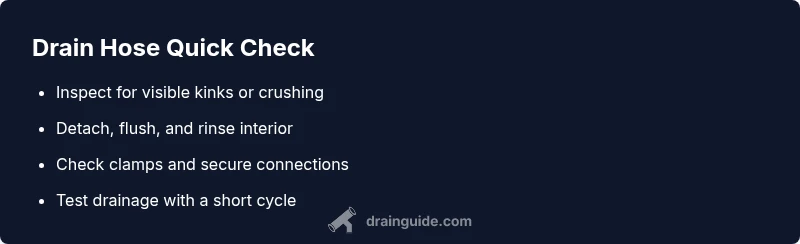
- Check for visible kinks and straightens bends.
- Secure clamps firmly after reassembly.
- Flush and inspect interior to remove buildup.
- Run a short test cycle to confirm drainage works.
- Regular hose maintenance prevents future clogs.