Hydro Jetting Drain Cleaning: A Comprehensive How-To for Homeowners
Learn how hydro jetting drain cleaning works, when to use it, safety practices, and a step-by-step guide for homeowners and DIY enthusiasts to tackle tough clogs.


Hydro jetting drain cleaning uses a high-pressure water jet to scour pipe walls and dislodge stubborn buildup. According to Drain Guide, this method pairs cleaning power with precision, targeting grease, mineral deposits, and mineral scale without chemical cleaners. The system uses a nozzle attached to a flexible hose that travels through the drain line, often guided by a technician using live camera feedback. As water exits the nozzle at high velocity, it creates powerful shear forces that loosen obstructions and flush debris downstream. Technicians can adjust direction, vary pressure, and perform multiple passes to balance aggressive cleaning with pipe safety. It’s particularly effective for lines with persistent buildup in kitchens, bathrooms, and main sewer runs where traditional snaking struggles. However, hydro jetting is not a universal fix. If pipes are cracked, collapsed, or made from fragile materials, aggressive jetting can worsen damage. Homeowners should consult a trained professional who can assess pipe integrity, map the drainage route, and choose the least risky method to restore flow.
What hydro jetting is and how it works
Hydro jetting drain cleaning uses a high-pressure water jet to scour pipe walls and dislodge stubborn buildup. According to Drain Guide, this method pairs cleaning power with precision, targeting grease, mineral deposits, and mineral scale without chemical cleaners. The system uses a nozzle attached to a flexible hose that travels through the drain line, often guided by a technician using live camera feedback. As water exits the nozzle at high velocity, it creates powerful shear forces that loosen obstructions and flush debris downstream. Technicians can adjust direction, vary pressure, and perform multiple passes to balance aggressive cleaning with pipe safety. It’s particularly effective for lines with persistent buildup in kitchens, bathrooms, and main sewer runs where traditional snaking struggles. However, hydro jetting is not a universal fix. If pipes are cracked, collapsed, or made from fragile materials, aggressive jetting can worsen damage. Homeowners should consult a trained professional who can assess pipe integrity, map the drainage route, and choose the least risky method to restore flow.
Pros and limitations
Hydro jetting offers significant cleaning power and can restore flow in many clogged drains without harsh chemicals. It’s especially effective against mineral scaling, accumulated grease, and root invasion in some pipes. However, it has limitations: older or damaged pipes may not withstand jetting, certain pipe materials can be overwhelmed by force, and the procedure may push debris into downstream segments if the system isn’t properly staged. Drain Guide analysis shows improved flow after properly applied hydro jetting, but it also emphasizes that jetting is not a substitute for structural repairs when pipes are cracked or severely compromised. Professionals should verify pipe condition before proceeding and communicate potential risks with homeowners.
When hydro jetting is appropriate
Hydro jetting shines when typical plumbers’ snakes fall short. It’s commonly used for kitchens and bathroom drains with heavy grease or mineral buildup, main sewer lines that are slow to drain, and outdoor drains impacted by roots. It’s less suitable for pipes that are already brittle, cracked, or collapsed, or for lines where a chemical reaction could threaten nearby soils or foundations. In communities with clay or older PVC, operators must assess wall thickness and joint integrity. Drain Guide’s position is to reserve hydro jetting for cases where a professional can safely navigate the line and control pressure to avoid collateral damage.
Safety and regulatory considerations
Safety comes first with hydro jetting. Operators should wear PPE, including splash goggles, face shields, gloves, and hearing protection. Work areas must be ventilated, with non-slip mats and drop cloths to protect floors. Electrical panels and sump pits should be shielded or avoided to prevent electrical hazards. Always shut off water supply at the main before starting, and never jet into a line with known or suspected gas or sewage exposure without proper containment. For homeowners, it’s wise to review local regulations and hire licensed professionals who follow industry safety standards. As a general rule, never attempt high-pressure cleaning in areas you can’t fully control or visually inspect. Drain Guide emphasizes coordinating with trained technicians to minimize risk and ensure a safe, effective clean.
Equipment and setup you need
A typical hydro jetting setup includes a portable high-pressure unit, a robust drain hose, and specialized nozzles designed for various pipe diameters. Essential items include a water supply connection, a quality feed line with backflow protection, and compatibility between the jet nozzle and the pipe size. PPE is non-negotiable, with goggles, gloves, a face shield, and hearing protection. A camera inspection tool is highly recommended for verification of outcomes and to plan subsequent repairs if needed. Optional but useful accessories include measurement tools, a drain snake for preliminary clearing in stubborn spots, and temporary containment for areas near electrical components.
The typical professional workflow (high-level)
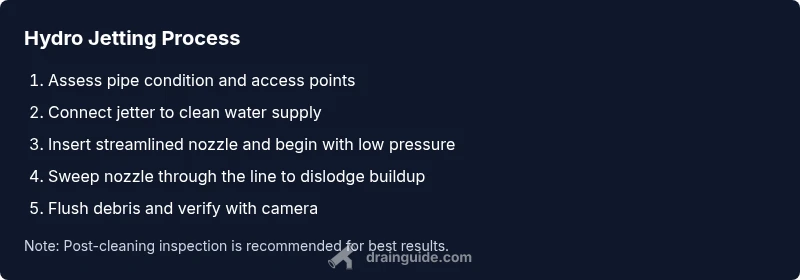
Professionals generally follow a structured workflow: assess the pipe network and entry point, isolate the area, connect the jetting hose to a clean water supply, insert the nozzle, start with conservative pressure, sweep the nozzle along the pipe to dislodge buildup, and flush debris downstream. They monitor the flow with live camera feedback to ensure complete cleaning and adjust pressure as needed. After cleaning, a camera inspection verifies results, and any residual blockages or repairs needed are documented. Finally, the system is tested to confirm uninterrupted drainage and the site is cleaned for return to normal use.
Troubleshooting common scenarios
When blockages persist after initial jetting, the issue may be irregular debris, stubborn mineral scale, or root intrusion that requires a different nozzle geometry or a staged approach. Roots often demand specialized root-cutting nozzles and strategic pressure management to avoid pipe damage. If a pipe shows signs of cracking or collapse, hydro jetting should be halted, and a pipe repair plan should be pursued. For grease-heavy lines, combining jetting with targeted mechanical cleaning in a controlled sequence yields the best results. Drain Guide recommends stopping and reassessing if flow doesn’t improve after the first passes and considering downstream checks before proceeding further.
Maintenance, aftercare, and prevention
After hydro jetting, it’s important to flush lines to remove residual debris and perform a thorough flow check. Consider installing protective measures such as grease traps or enzyme-based maintenance programs to slow future buildup. Regular camera inspections can catch early signs of intrusion or damage, enabling proactive repairs. Drain Guide suggests pairing hydro jetting with preventive maintenance rather than relying on it as a one-off fix, particularly in homes with aging or tree-root-prone sewer lines. Proper disposal of wastewater and adherence to local environmental guidelines are essential for responsible cleanup.
Cost, time, and accessibility considerations
Hydro jetting tends to be more costly than traditional snaking due to equipment, setup, and skilled labor requirements. Availability varies by region, and the most economical option often depends on pipe length, access points, and the presence of severe blockages. Homeowners should obtain multiple quotes and ask about whether the service includes camera verification, post-cleaning flushing, and a written assessment of pipe condition. Drain Guide notes that while hydro jetting is a robust cleaning method, it is most effective when combined with a clear plan for prevention and, if needed, follow-up repairs.
Authority sources
For further reading and verification, consult dedicated resources from reputable institutions. Examples include:
- https://extension.umn.edu/
- https://extension.psu.edu/
- https://www=osha.gov/
- https://www.epa.gov/
- https://www.cdc.gov/
Tools & Materials
- Hydro jetting machine with adjustable pressure nozzle(Industrial-grade unit or professional service recommended)
- High-pressure hose and drain-nozzle attachments(Choose nozzle types for pipe diameter and debris type)
- Personal protective equipment (PPE)(Goggles, face shield, gloves, hearing protection)
- Water supply and shut-off valves(Ensure clean water source and backflow protection)
- Camera inspection tool (optional but recommended)(Post-cleaning verification and pipe condition assessment)
- Drop cloths and floor protection(Protects surfaces during work)
Steps
Estimated time: approximately 1–2 hours depending on pipe length and blockage complexity
- 1
Assess pipe condition and plan
Begin with a visual and camera inspection if available, noting pipe material, diameter, joints, and any visible damage. Develop a plan that matches the pipe's condition and target blockages. Document entry points and potential hazards before starting.
Tip: If you spot cracks or collapses, stop and switch to a diagnostic plan rather than aggressive cleaning. - 2
Shut off and isolate the area
Turn off water supply and isolate the section of pipe you’ll work on to prevent backflow. Clear the area of people and pets, and protect nearby surfaces with drop cloths. Confirm that electrical equipment near the work zone is de-energized if needed.
Tip: Double-check all shutoff valves before proceeding to avoid unintended flooding. - 3
Connect the jetting setup
Attach the jetting hose to the water supply and connect the appropriate nozzle for the pipe diameter. Ensure all connections are tight and check for leaks. Run a short test flush to confirm water flow and nozzle operation.
Tip: Use backflow protection and verify the hose isn’t kinked to maintain consistent pressure. - 4
Begin cleaning at low pressure
Insert the nozzle into the drain and start with a conservative pressure setting. Slowly move the nozzle forward and backward to avoid localizing wear and to guide debris toward the downstream outlet. Monitor flow and adjust as needed.
Tip: Starting low helps prevent pipe damage and gives you control over debris removal. - 5
Increase pressure and sweep thoroughly
Gradually raise the pressure as required and sweep the nozzle through all accessible sections of the line. Use multiple passes from different angles to dislodge stubborn buildup and prevent re-settling of debris.
Tip: Never linger on one spot too long; movement reduces risk of pipe damage. - 6
Flush and inspect
Flush the line to clear out debris and verify flow improvement. If a camera is available, perform a post-cleaning inspection to ensure the line is clear and identify any remaining problem areas.
Tip: Camera confirmation helps justify further repairs if needed. - 7
Document results and plan next steps
Record the outcome, including any pipe repairs or preventative measures recommended. If roots, cracks, or structural issues exist, prepare a plan and budget for follow-up work.
Tip: Provide the homeowner with a clear maintenance plan to prevent future clogs.
Got Questions?
Is hydro jetting safe for all pipe materials?
No. Some materials, especially older or brittle pipes, may be damaged by high-pressure cleaning. Always have a professional assess pipe material and condition before jetting.
Hydro jetting isn’t safe for every pipe type. Older or brittle pipes can crack under high pressure, so get a professional evaluation first.
Can I do hydro jetting myself, or should I hire a pro?
DIY is possible only if you have the proper equipment, training, and safety measures. For most homeowners, hiring a licensed plumber with camera inspection is the safer option.
You can DIY if you have the right gear and know-how, but for most people, a licensed professional is the safer route.
How long does hydro jetting take?
The duration varies with pipe length and blockage severity. Most jobs can be completed within a few hours when performed by an experienced technician.
Time varies depending on how long and how blocked the pipes are; a professional can give a better estimate after inspection.
What about costs and whether it’s worth it?
Costs vary with location, pipe length, and blockage complexity. Hydro jetting is often more expensive than snaking but can save time and prevent repeated blockages when it’s the right tool.
Prices vary, but hydro jetting can be cost-effective if it clears the blockage thoroughly and prevents future problems.
Is hydro jetting a substitute for pipe repair?
Hydro jetting cleans and clears, but it does not repair structural damage. If pipes are cracked or severely damaged, repair or replacement is required.
Jetting cleans, but if the pipe is damaged, you’ll still need repairs.
Watch Video
The Essentials
- Assess pipe condition before jetting
- Prioritize safety and PPE at all times
- Hydro jetting is powerful but not a cure-all for damaged pipes
- Verification with camera inspection improves outcomes