Are drain flies the same as fruit flies? A Practical Guide
Are drain flies the same as fruit flies? This analytical comparison clarifies pest identity, breeding sites, and effective home-control strategies for drains and kitchens.


Are drain flies the same as fruit flies? Not exactly. Drain flies belong to the Phoridae family and resemble tiny moths; they breed in moist, organic waste in drains. Fruit flies belong to the Drosophilidae family and are small, tan-bodied flies commonly drawn to ripe fruit and sugary liquids. This comparison explains key differences and what to do about each.
Are drain flies the same as fruit flies? Understanding the difference
Are drain flies the same as fruit flies? Not exactly. Drain flies belong to the Phoridae family and resemble tiny moths; they breed in moist, organic waste in drains. Fruit flies belong to the Drosophilidae family and are small, tan-bodied flies commonly drawn to ripe fruit and sugary liquids. This section lays the groundwork for distinguishing the two pests and sets the stage for practical, home-friendly controls. According to Drain Guide, correct identification is essential to choose the right cleanup steps. Misidentification leads to wasted effort and persistent nuisance.
In many homes, misidentification happens when observers see small flies near sinks or fruit bowls and assume they are the same insect. While both pests are small and appear indoors, their biology and breeding preferences diverge enough to require different treatment approaches. Over the years, our team has found that successful control starts with accurate identification, not guesswork. The Drain Guide team emphasizes that distinguishing one pest from the other reduces wasted time and protects your kitchen and plumbing from recurring problems.
Taxonomy and Identification: Drain Flies vs Fruit Flies
Pest identification hinges on simple visual cues and taxonomic context. Drain flies (Phoridae) are often described as moth-like when their wings rest over a fuzzy body, giving a compact, rounded silhouette. Fruit flies (Drosophilidae) are typically shinier, smaller, and more uniformly tan with distinct red eyes in many species. The two families differ in physiology, life history, and preferred habitats. Drain Guide notes that accurate taxonomy matters because control methods that work for fruit flies may be less effective against drain flies, and vice versa. Under good lighting, you can observe wing shape, body texture, and eye color to confirm the pest. Remember: correct identification informs the most efficient sanitation and trapping strategies and reduces the risk of re-infestation.
Habitats and Breeding Sites Explained
The contrast in habitats is one of the clearest differentiators between drain flies and fruit flies. Drain flies typically breed in the damp, organic residues found in drains, garbage disposals, and septic-adjacent areas. Their larvae thrive in slimy film and biofilm around pipes, where moisture sustains their development. Fruit flies, on the other hand, gravitate toward fermenting fruit, juice spills, and other sugary residues. They can breed in a broader range of moist environments, including trash cans with residues and spilled beverages. In a home setting, the presence of drain lines with condensation or standing water strongly indicates drain flies, while a sighting near ripe fruit suggests fruit flies. The Drain Guide approach centers on eliminating moisture sources and food residues to disrupt breeding cycles in both cases.
Life Cycle and Reproduction: What to Expect
Understanding the life cycle helps explain why these pests are persistent. Drain flies and fruit flies may undergo several developmental stages from egg to adult, but the pace varies with temperature and humidity. In general, higher moisture and warmer temperatures accelerate development for both, while cooler conditions slow it down. The critical takeaway is that ongoing sanitation—removing organic build-up and preventing access to moisture—can interrupt multiple generations. Drain Guide emphasizes that focusing on the breeding sites is more effective than chasing adults with sprays. Targeted sanitation reduces the population over time without reliance on harsh chemicals.
Behavior and Attractants: How They Enter Your Home
Drain flies are often attracted to sewer odors, dampness, and the presence of organic matter in drains. They tend to hover near plumbing fixtures or along the base of sinks and showers, occasionally darting into wall voids where moisture collects. Fruit flies respond to ripening fruit, sweet liquids, and fermentation byproducts; they are drawn to kitchens, pantries, and beverage spills. Both species are photopositive to some degree and prefer sheltered, humid microhabitats. To reduce attraction, remove fruit and damp organic materials, fix leaks, and improve airflow under sinks. Drain Guide suggests pairing sanitation with physical barriers like screens on vents to limit entry points.
These behavioral differences matter when planning control: drain flies are mitigated most effectively by drain cleaning and moisture control, while fruit flies respond best to sanitation around produce and spill cleanup. A combined approach can address both pests during a single home maintenance cycle, but you’ll want to tailor each step to the pest’s breeding site for maximum impact.
Quick Field Signs to Tell Them Apart
Visually distinguishing the pests in a home environment can be challenging, but field signs help. Drain flies are typically seen hovering in a loose cluster near drains or damp areas with organic buildup, and their wings have a characteristic fringed look when at rest. Fruit flies are more likely to appear near fruit bowls, kitchen counters, or trash receptacles where fermenting sugars produce attractants. If you see larvae or pupae, count on a drain-adapted environment for drain flies or fruit-favored residues for fruit flies. Observing the site of the infestation—drain lines versus fruit storage—can be the fastest way to tell them apart.
Control and Prevention: Cleaning, Traps, and Sanitation
Control begins with a sanitation-first strategy. For drain flies, focus on cleaning out drainage lines, removing organic buildup, and addressing any leaks or standing water. Enzymatic cleaners or periodic hot-water flushes can help reduce biofilm and larvae habitats, while physical traps placed near suspected breeding sites catch adults and provide quick relief. For fruit flies, remove ripe produce and promptly dispose of fermenting items, clean spills, and store produce in sealed containers. Traps—using apple cider vinegar or yeast-based solutions—can be useful as a short-term measure. Drain Guide recommends integrating multiple methods for a durable solution rather than relying on a single tactic across both pests.
A critical tip is to seal entry points and maintain ongoing cleanliness to prevent re-infestations. Regular maintenance checks, especially after plumbing work or seasonal kitchen cleanup, support long-term prevention.
Visual Distinctions: Body Size, Wing Type, and Eye Color
In practice, the most reliable cues come from body size, wing structure, and eye color. Drain flies are typically larger than fruit flies and have more conspicuous, hairy wings, giving them a “moth-like” appearance when at rest. Fruit flies are smaller and often have bright red eyes (especially noticeable in many Drosophila species). Lighting, distance, and the observer’s experience influence accuracy, so it’s wise to capture a quick photo or collect a specimen for careful identification if you’re unsure. Drain Guide suggests using magnification and comparing against reference images to improve accuracy during home inspections.
Are drain flies the same as fruit flies? Common myths debunked
A common myth is that drain flies and fruit flies are interchangeable. In reality, they have distinct breeding sites, life cycles, and responses to sanitation measures. Another myth is that any small fly near the kitchen is a fruit fly; drain flies can appear indoors after plumbing issues or in damp basements. The final misconception is that chemical sprays alone will solve the problem; in most cases, long-term control depends on accessibility to breeding sites and removing moisture sources. By understanding the differences, homeowners can tailor their interventions for faster, more durable results. As Drain Guide notes, correct pest identification is the foundation of effective management.
DIY Checks You Can Do Right Now
Start with a visual audit of your home’s moisture and food sources. Check under sinks for dampness, inspect drains for biofilm, and clean any standing water. Remove overripe fruit and ensure trash bins are sealed. Use a simple trap near suspected sites to gauge activity. If you notice persistent activity after sanitation, consider replacing or professionally inspecting drainage components. Remember that the goal is to disrupt breeding sites before adults can reproduce, which is much more effective than chasing flying insects.
When to Seek Professional Help
If you continue to see consistent activity after a thorough cleaning and sanitation routine, professional assistance may be warranted. A licensed technician can inspect hidden drain lines, seal leaks, and address structural issues that promote breeding. In households with compost or organic waste systems, an expert can offer targeted guidance for long-term prevention. Drain Guide recommends evaluating the return on investment for professional services if infestations become recurrent or if structural issues impede sanitation.
What to Do Next: Ongoing Monitoring and Maintenance
Establish a maintenance routine to prevent a recurrence. Regularly inspect plumbing, clean drains monthly, and maintain proper food storage and waste disposal practices. Consider adding preventive traps or monitoring devices near suspected breeding sites to track activity over time. The key is consistency; even small improvements in moisture control and cleanliness can significantly reduce pest pressure. Drain Guide emphasizes that ongoing vigilance is the best defense against both drain flies and fruit flies.
Comparison
| Feature | drain flies | fruit flies |
|---|---|---|
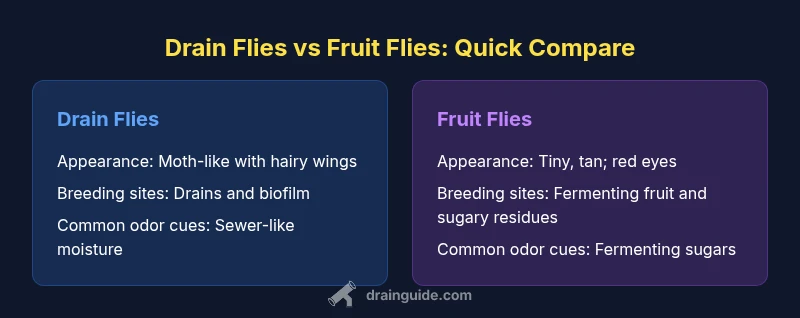
| Appearance and size | Moth-like, hairy wings; larger than typical fruit flies | Tiny, tan-bodied flies; often smaller with recognizable red eyes in many species |
| Breeding sites | Typically drains, biofilm in plumbing, sewage-adjacent areas | Fermenting fruit, spillages, sugary liquids in kitchens |
| Attractants | Moist organic buildup, sewer odors | Fermented sugars, ripe produce, spilled beverages |
| Behavior in homes | Hover near drains; invade moist areas | Buzz around fruit bowls and kitchen counters |
| Control approaches | Drain cleaning, moisture control, targeted traps | Sanitation around produce, traps using fermenting liquids |
| Typical indoor activity | Often present near plumbing and damp spaces | Common in kitchens and pantries with food residues |
Positives
- Clarifies pest-specific control for faster results
- Reduces wasted effort from misidentification
- Encourages targeted sanitation and safer methods
- Supports long-term prevention through site-focused strategies
Cons
- Requires thorough inspection of all potential breeding sites
- May need multiple sanitation cycles to eliminate persistent populations
- Effectiveness hinges on access to and cleaning of plumbing systems
- DIY methods can fail if unnoticed breeding sites remain
Not the same pest; identify correctly to apply targeted control.
Drain flies and fruit flies differ in taxonomy, habitats, and breeding sites. Correct identification enables focused sanitation and efficient traps, reducing re-infestation. The Drain Guide team recommends prioritizing moisture control and drain cleaning before resorting to broad-spectrum sprays.
Got Questions?
Are drain flies and fruit flies the same insect?
No. They belong to different families and have distinct lifecycles and habitats. Correct identification informs the best control strategies.
No—drain flies and fruit flies are different pests with distinct breeding sites.
How can I tell them apart quickly?
Look at size, body color, wings, and eye color. Drain flies are larger with hairy wings like a tiny moth; fruit flies are smaller and tan with red eyes in many species.
Check size, wing type, and eye color to tell them apart quickly.
Do they share any breeding sites?
There is little overlap. Drain flies prefer drains and biofilm; fruit flies favor fermenting fruit and sugary residues. Some kitchen-adjacent areas may witness both if conditions permit.
They usually breed in different places, so hygiene efforts should target the specific site.
What is the safest way to control them at home?
Prioritize sanitation. Clean drains and remove moisture for drain flies; remove fruit residues and clean surfaces for fruit flies. Use traps as a supplemental measure and avoid harsh chemicals near food areas.
Sanitation first; traps can help, but fix moisture and food sources.
Should I use DIY methods for both pests?
Yes, many steps overlap, but tailor actions to each pest’s breeding site. Monitor results and adjust sanitation efforts accordingly.
Yes—some steps overlap, but target the pest’s breeding sites for best results.
When should I call a professional?
If infestation persists despite cleaning, or if plumbing issues are suspected, a professional can locate hidden breeding sites and address structural problems.
If it keeps coming back after cleaning, call a pro.
The Essentials
- Identify the pest first to tailor control
- Different breeding sites require distinct sanitation steps
- Eliminate moisture and food sources to disrupt breeding
- Use traps as a support tool, not a primary solution
- Monitor progress to prevent re-infestation